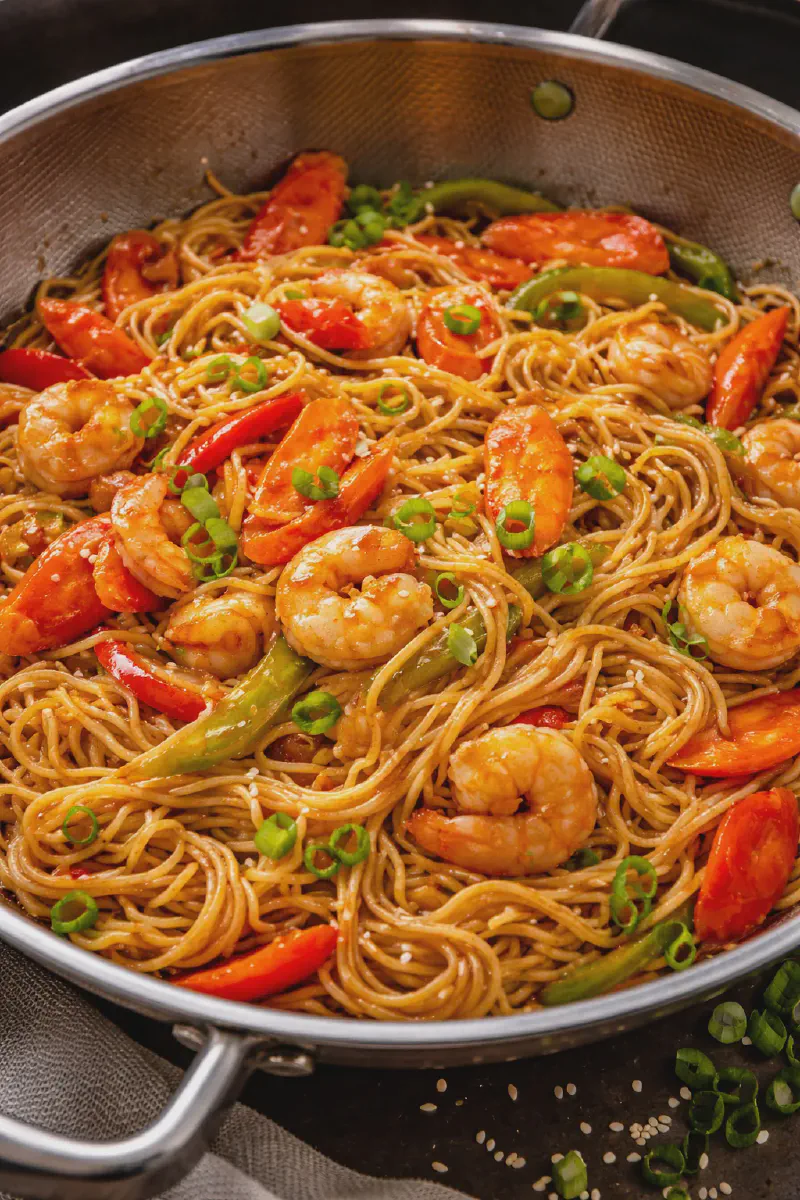
Shrimp Lo Mein That Hits Hard, Saucy, and Better Than Takeout
If there is one noodle dish that never lets me down, it is shrimp lo mein. Slurpable noodles, glossy sauce, juicy shrimp, and that perfect balance of sweet, salty, and savory that somehow feels cozy and indulgent at the same time. This is the kind of meal I make when I want takeout vibes without the wait, the delivery fee, or the regret.
This version is bold but balanced. The sauce clings instead of pooling at the bottom of the bowl. The veggies stay crisp, not sad and limp. And the shrimp stay tender, not rubbery. That is the difference between “good enough” lo mein and the kind you keep going back to the pan for.
It is fast, flexible, and forgiving — perfect for busy weeknights, fridge clean-outs, or anytime you want something deeply satisfying with minimal effort. Once you make it this way, you will not go back.
Why this shrimp lo mein just works
The magic is in the sauce. Soy sauce provides the savory backbone. Brown sugar adds sweetness that caramelizes slightly on the hot noodles. Hoisin brings depth and a hint of umami. Rice wine vinegar brightens everything so it does not feel heavy. And cornstarch thickens the whole mixture into a glossy coating that adheres to every strand.
The shrimp do not need much — they are already cooked, so you are just warming them through and letting them soak up flavor. Overcooked shrimp become tough and bland. These stay plump and juicy because they only hit the heat for a minute or two at the end.
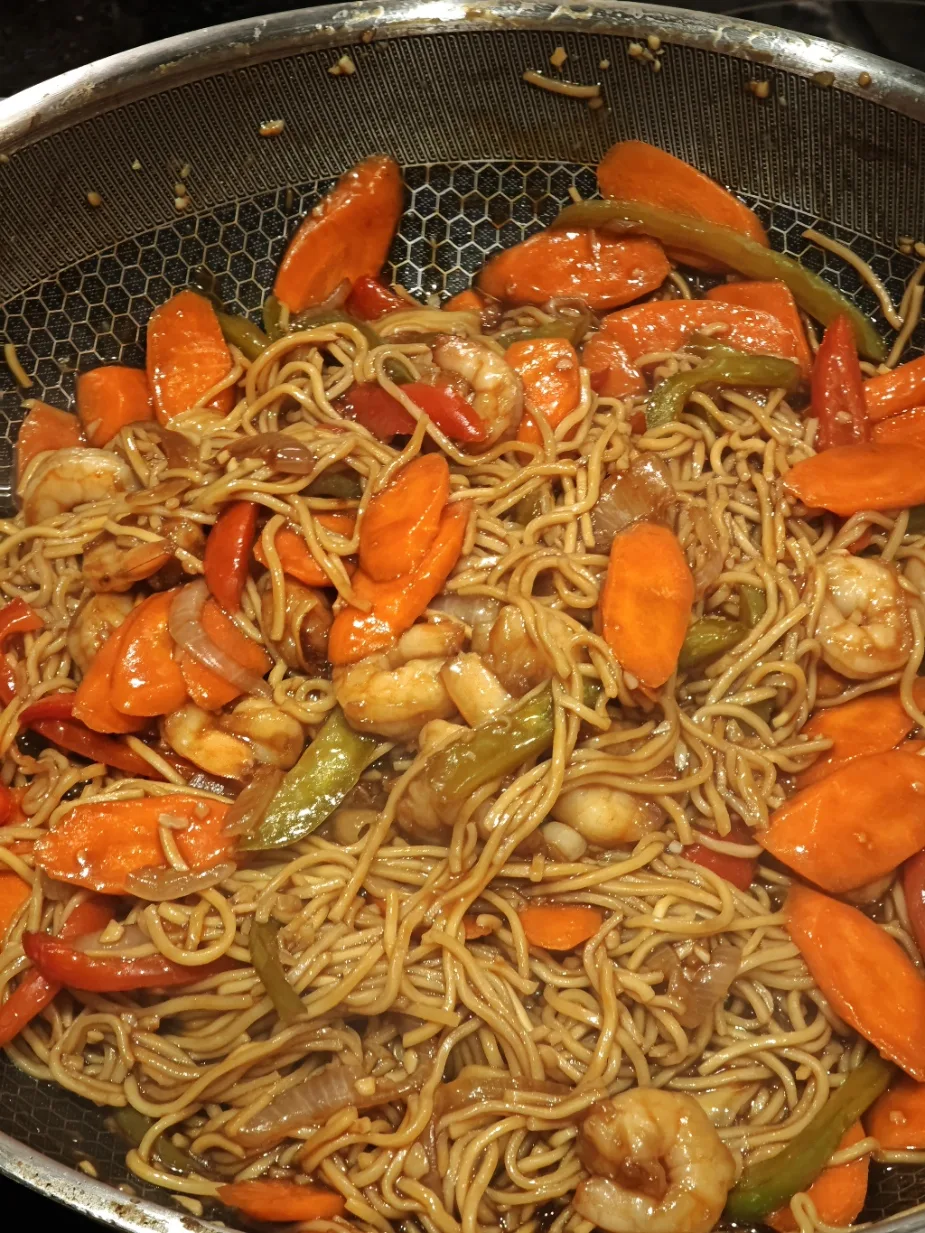
The vegetables are where you get texture contrast. Bell peppers stay slightly crisp. The onion softens enough to be sweet but not mushy. Shredded carrots disappear into sweet little pockets throughout. And the scallions go on at the very end to keep their sharp, fresh bite.
This is an easy weeknight dinner that beats most takeout versions I have tried.
Everything you need for the sauce
The sauce ratio matters. Too much soy and it becomes salty. Too much sugar and it overwhelms. This balance — three quarters cup soy sauce, half cup brown sugar, quarter cup hoisin, two tablespoons each rice wine vinegar and cornstarch — coats the noodles without drowning them.
The browning sauce is optional but it gives the finished dish that darker, restaurant-style color. If you skip it, the lo mein will still taste incredible, just lighter in color.
Sauce ingredients
- 3/4 cup low sodium soy sauce
- 1/2 cup dark brown sugar
- 1/4 cup hoisin sauce
- 2 tablespoons rice wine vinegar
- 2 tablespoons cornstarch
- 1/4 cup browning sauce (optional)
Variations and smart swaps
This dish is incredibly adaptable. Swap shrimp for chicken, beef, pork, or tofu if that is what you have on hand. Each protein takes well to the same sauce and cooking method.
Want more heat? Add chili crisp, sambal oelek, or a drizzle of chili oil at the end. The heat cuts through the sweetness and makes the whole dish feel more dynamic.
You can also throw in snow peas, mushrooms, broccoli, or baby corn without changing the method. Just add any dense vegetables to the wok before the peppers so they have extra time to cook through.
If your noodles are thinner, reduce the sauce slightly so it does not overwhelm them. Thicker noodles can handle more sauce without becoming soggy.
This also reheats beautifully, making it solid for meal prep. The noodles absorb a bit more liquid overnight but a splash of water or broth when reheating brings them right back.
When to make this
This is a perfect weeknight dinner when you want something comforting but fast. It comes together in about thirty minutes if you have everything prepped before you start cooking.
It is also great for casual entertaining, late dinners, or those nights when you are craving Chinese takeout but want control over the ingredients. Cozy, reliable, and endlessly satisfying.
Pro tips for next-level lo mein
Have everything prepped before you start cooking. Once the pan is hot, this moves fast. Slice the vegetables, measure the sauce, and have your noodles drained and ready. That mise en place approach is the difference between a smooth cooking experience and a frantic one.
Keep the heat high but controlled so the sauce thickens quickly without burning. If the noodles look dry at any point, add a splash of water or stock to loosen everything up and help the sauce distribute evenly.
Do not skip the rest time for the sauce. Letting it sit for a few minutes allows the cornstarch to fully hydrate and the sugar to dissolve, which means it will thicken faster and more consistently when it hits the hot wok.