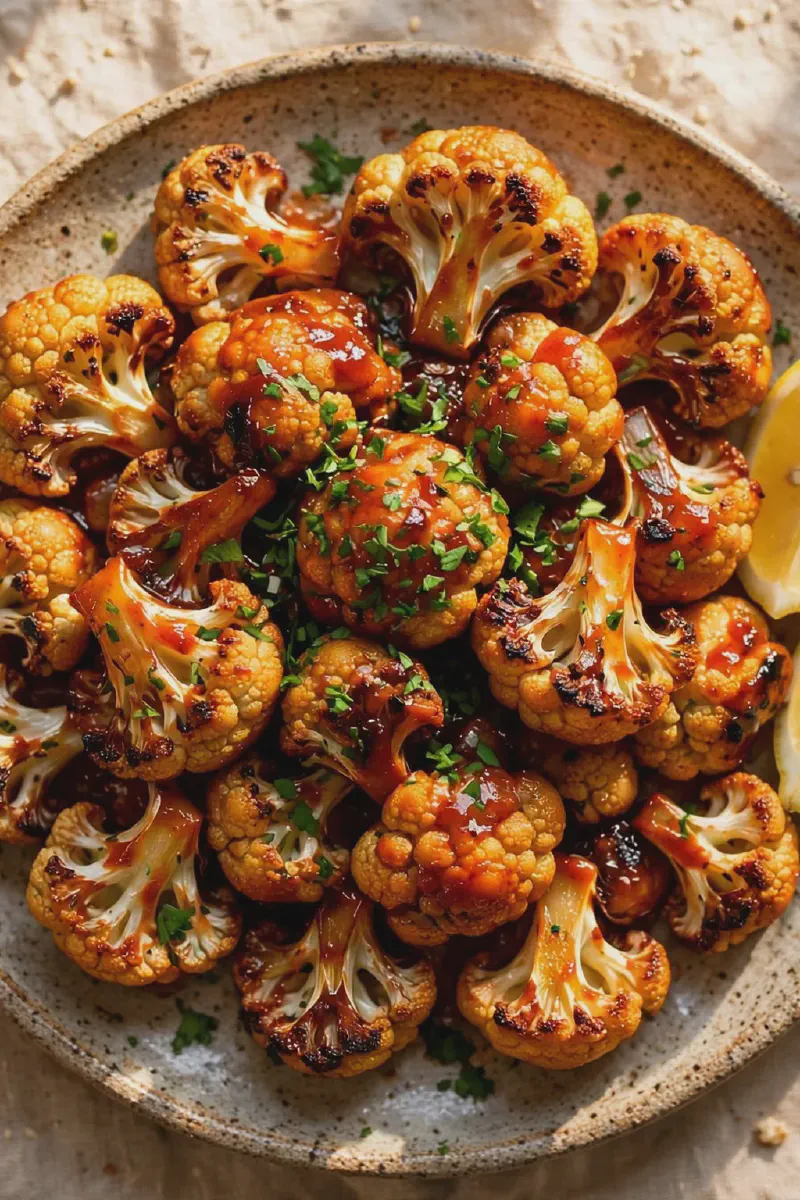
Cauliflower takes a bold glaze well, and this one proves it: maple syrup for the sweetness that caramelizes, Sriracha for heat that arrives after the first bite and stays just long enough. The florets roast at 425°F (220°C) for 25 to 30 minutes, stirred once, and come out tender in the middle with sticky, browned edges. Fresh parsley and a squeeze of lemon at the end keep the plate bright instead of heavy.
The 35 minutes break down simply. Prep is 5 minutes: cutting the head into florets and whisking the glaze. Cook time is the 25 to 30 minutes in the oven, counted at the full 30. There is no marinating, resting, or cooling step in this recipe, so 5 plus 30 is the honest 35 on the card. The variable is floret size. Big florets, around 2 inches, need the full 30 minutes; small ones can finish at 22 or 23. Cut them roughly the same size so everything lands together, and judge doneness by colour and a fork sliding in without resistance, not by the clock alone.
A glaze that stays on the cauliflower
The olive oil is what makes the whole thing work. Most roasted vegetable glazes pair something sweet with something hot; what sets this one apart is the balance and the body. Two tablespoons of maple against one and a half of Sriracha keeps the sweet flavour in front and the heat in a supporting role, and the garlic and onion powders give the glaze enough substance to cling to the florets instead of running off onto the pan and scorching there. Whisk until the mixture looks smooth and slightly thick before the cauliflower goes in; unmixed streaks of syrup caramelize faster than the rest and can go too dark. Coat every floret properly. Dry spots roast pale and taste flat next to the glazed pieces.
The halfway stir is not optional
A single layer, with a little space between pieces, is what separates roasting from steaming. Crowded together, the florets release steam faster than it can escape, and the glaze stays watery instead of reducing down sticky. A large rimmed sheet pan takes the whole head comfortably; if yours runs small, split the batch across two pans rather than piling it up.
Stirring halfway, around the 12 to 15 minute mark, turns the caramelized sides up and puts the pale surfaces against the hot pan. Use tongs or a spatula and flip the bigger pieces individually instead of dragging everything around; the goal is two browned faces on each floret by the end, not one.
Setting the heat without rebuilding the glaze
- Milder: drop the Sriracha to 1 tablespoon and keep the maple at 2. The dish turns mostly sweet, with the heat well in the background.
- Hotter: go to 2 tablespoons of Sriracha, or add a pinch of red pepper flakes to the glaze.
- No maple: honey swaps in at the same 2 tablespoons. The flavour changes; the caramelization does not.
- No Sriracha: another bottled hot sauce works at the same amount, but sodium and heat vary by brand, so taste the glaze before it goes on.
Serving, making ahead, and leftovers
On a holiday table this is the dish that brings the heat. The slow cooker sausage, apple and sage stuffing and the hot honey maple glazed carrots cover the warm, earthy flavours; the cauliflower supplies the one real kick, and the lemon wedges on the side let everyone decide how much brightness they add. On a weeknight it goes over rice or next to plain roast chicken, where the sticky glaze doubles as a sauce.
The cauliflower can be cut and the glaze whisked a day ahead, the two kept in separate containers in the fridge; combine them only when it is time to roast, or the florets drink in the liquid and roast poorly. Leftovers keep 3 to 4 days in the fridge. Reheat them on a sheet pan at 425°F (220°C) for 8 to 10 minutes: the oven brings the crispy edges back in a way a microwave cannot. Creamy stovetop mac and cheese is the right partner for those leftovers, the spicy cauliflower cutting through the richness.