The Story
The short answer
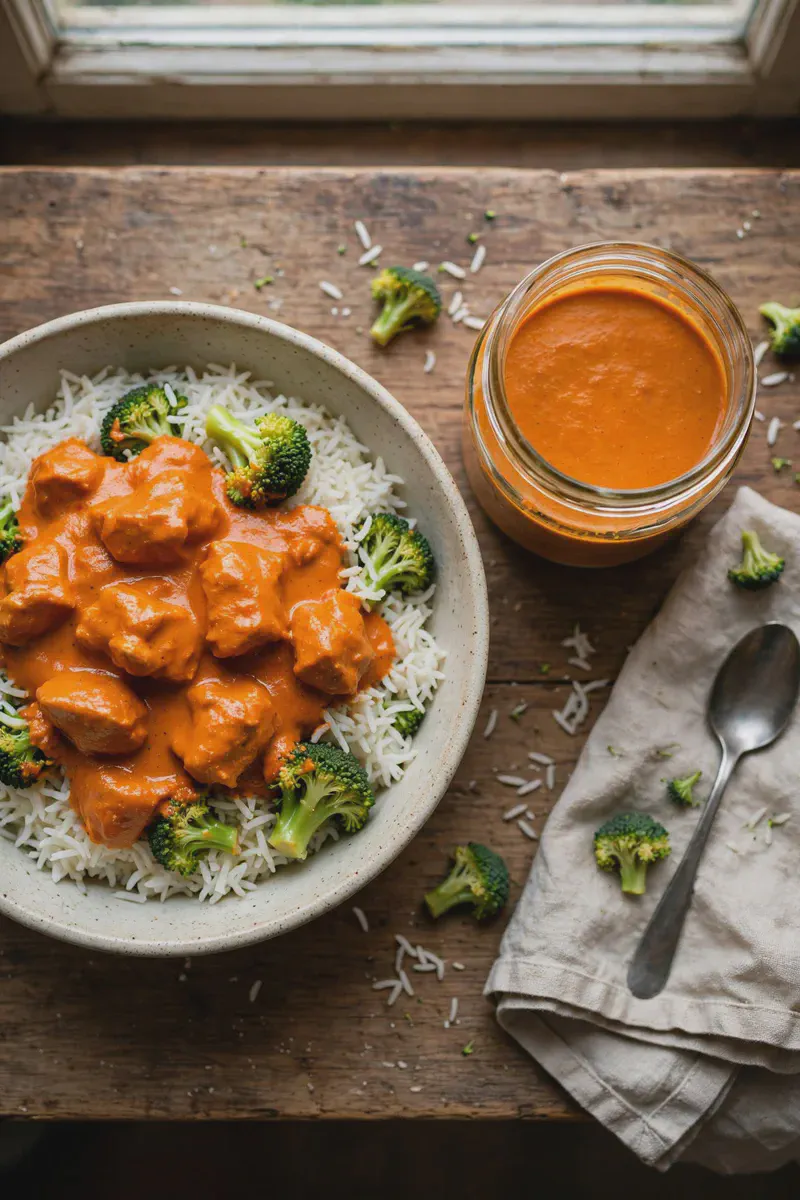
Open the jar, but do not just pour it over raw chicken and hope. Brown 2 chopped chicken breasts in a pan first, pour in the whole 650 ml jar of KFI Butter Chicken Sauce, then swirl 1 cup of water in the empty jar, add that too, and bring the pan to a gentle boil. Stir in vegetables, drop the heat, and simmer for 10 to 15 minutes, until the thickest piece of chicken reads 165°F (74°C) on a thermometer. Spoon it over basmati rice. One jar makes dinner for 3 in about 30 minutes, and the full method is written out in the KFI butter chicken recipe.
A jar of sauce looks like the whole job is done for you, and most of it is. The seasoning, the tomato base, and the cream are already in there. What the jar cannot do is brown meat, cook vegetables, or judge how much water your pan needs. Those three small jobs are the difference between a sauce that tastes like it came from a jar and one that tastes like dinner.
What one jar covers
The 650 ml jar is built for 2 chicken breasts and serves 3 people once rice and vegetables join the pan. That ratio matters more than it looks. Too much chicken for the jar and every piece gets a thin coating instead of a proper sauce. Too little and the plate turns into soup with chicken in it.
Scaling up is simple arithmetic. Two jars cover 4 chicken breasts and serve about 6. Use a wider pan for the bigger batch so the chicken still browns in something close to a single layer. Crowded chicken steams in its own juices instead of browning, and no amount of simmering later puts that flavour back.
What goes in besides the sauce
Three additions do the real work:
- 1 cup of water. Pour it into the empty jar, put the lid back on, and shake. That catches the sauce clinging to the glass, and it loosens a thick jar sauce enough to coat rice properly.
- Vegetables. A bag of frozen broccoli at about 500 g is the standard partner for the butter chicken jar. It goes in frozen, straight from the bag, and cooks in the sauce.
- Rice to serve on. One cup of basmati, cooked on its own while the pan simmers. The rice is not optional padding. It is what the sauce is for.
That is the whole shopping list. The jar carries the spices, so there is no spice blend to measure and nothing to bloom in oil first.
The cooking, step by step
- Start the rice first. It cooks in the background while the pan does its work, and both finish at close to the same time.
- Chop the chicken into bite size pieces and brown them in a hot pan with a little oil. They do not need to cook through at this stage. They need colour, because the sauce will never give it to them.
- Pour in the jar of sauce, then the shaken jar of water. Stir and bring the pan to a gentle boil.
- Add the frozen broccoli and stir it through.
- Drop the heat and simmer for 10 to 15 minutes, until the broccoli is tender and the thickest piece of chicken reads 165°F (74°C). Cut one large piece open and probe the centre if you are unsure where the thickest spot is.
- Rest the pan for a minute off the heat, then spoon everything over the rice.
The full ingredient list and timing live in the KFI butter chicken recipe if you want the card version of the same dinner.
Getting the consistency right
Jar sauce starts thick, and the water plus the juices from the chicken and the frozen broccoli thin it as it simmers. Where it lands depends on your pan and your heat, so judge it at the end rather than at the start.
Too thin usually means the simmer ran with the lid on, trapping every bit of steam. Take the lid off and give it a few extra minutes at a gentle simmer and it will reduce. Too thick usually means the water never went in, or the pan simmered hard enough to cook it off. Stir in water a few spoonfuls at a time until the sauce coats the back of a spoon and falls in a slow ribbon. Aim for a sauce that pools around the rice instead of sitting on top of it in a slab.
What to serve it with
Basmati is the default for a reason. The grains stay separate, so the sauce coats them instead of turning the bowl into porridge. If you would rather have the rice cook in the sauce itself, butter chicken rice is the one pot version of this dinner, with the grains simmering right in the pan.
Warm naan alongside is worth the two minutes it takes. It handles the sauce left at the bottom of the bowl better than a spoon does. A plain cucumber salad or a spoonful of plain yogurt on the side cools the plate down between bites, which helps on the nights the jar tastes spicier than you remembered.
Mistakes that make jar sauce taste flat
- Skipping the browning. Raw chicken simmered pale in sauce tastes boiled, and the sauce picks up that plainness. Five minutes of browning is the cheapest flavour in the whole recipe.
- Boiling hard. A rolling boil can split a cream based sauce and leave it grainy, with fat pooling on top. A gentle simmer keeps it smooth.
- Drowning it. The 1 cup of water is measured for this jar size. Doubling it because the sauce looks thick at the start gives you a thin sauce at the end, once the chicken and vegetables release their own liquid.
- Trusting the clock over the thermometer. Ten to 15 minutes covers most pans, but piece size decides the real finish. The 165°F (74°C) reading is the finish line, not the timer.