When Crispy Meets Saucy
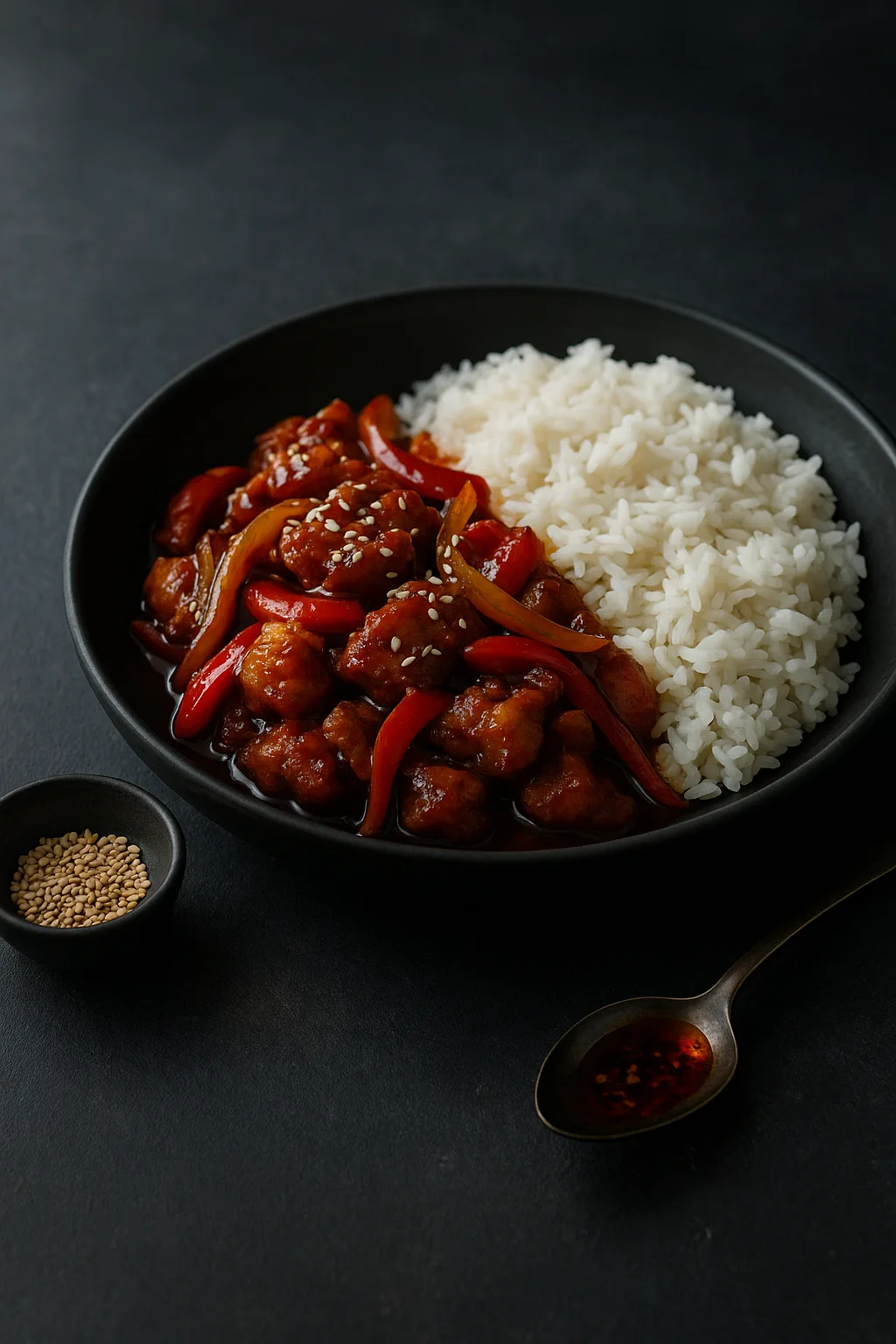
Dragon Chicken With Rice is a dish that grabs your attention from the very first bite. Crispy fried chicken tossed in a fiery, glossy sauce with peppers and onions, then served over a bed of fluffy rice — this is the kind of recipe that makes takeout night feel like an event. The sauce alone is worth writing home about: a double-dose of tomato ketchup and soy sauce creates layers of sweet, savory, and tangy that coat every piece of chicken and every strand of rice in sticky, addictive flavor.
What I love most about this dragon chicken recipe is how it manages to feel simultaneously restaurant-quality and completely doable on a weeknight. Yes, there are a few steps. Yes, you are juggling a wok, a pot of rice, and either a deep fryer or air fryer. But none of it is difficult, and all of it comes together in under thirty minutes. The vegetables cook in the time it takes to heat your oil. The rice steams while you fry the chicken. The sauce comes together in one quick whisk. It is a rhythm that works, and once you have made this dish once, you will have the timing down pat for every time after.
This is an Indo Chinese chicken recipe at its heart — the kind of bold, saucy, slightly sweet and slightly spicy stir fry that you find at Chinese restaurants across India, or at Indo Chinese food stalls in cities around the world. The use of dried red chilies, sesame oil, garlic, and ginger is classic to this style, as is the liberal use of tomato ketchup in the sauce, which gives the dish its signature reddish color and a sweetness that balances the heat.
The Magic of the Double Sauce
The sauce in this dragon chicken recipe is what separates it from a simple chicken stir fry. It starts with tomato ketchup — yes, ketchup — which sounds unusual until you realize that ketchup is already a perfectly balanced blend of sweet, tangy, and slightly acidic. Combined with soy sauce for salt and umami, chili garlic sauce for heat, rice vinegar for brightness, and a touch of sugar to round everything out, you get a sauce that is complex, layered, and deeply satisfying.
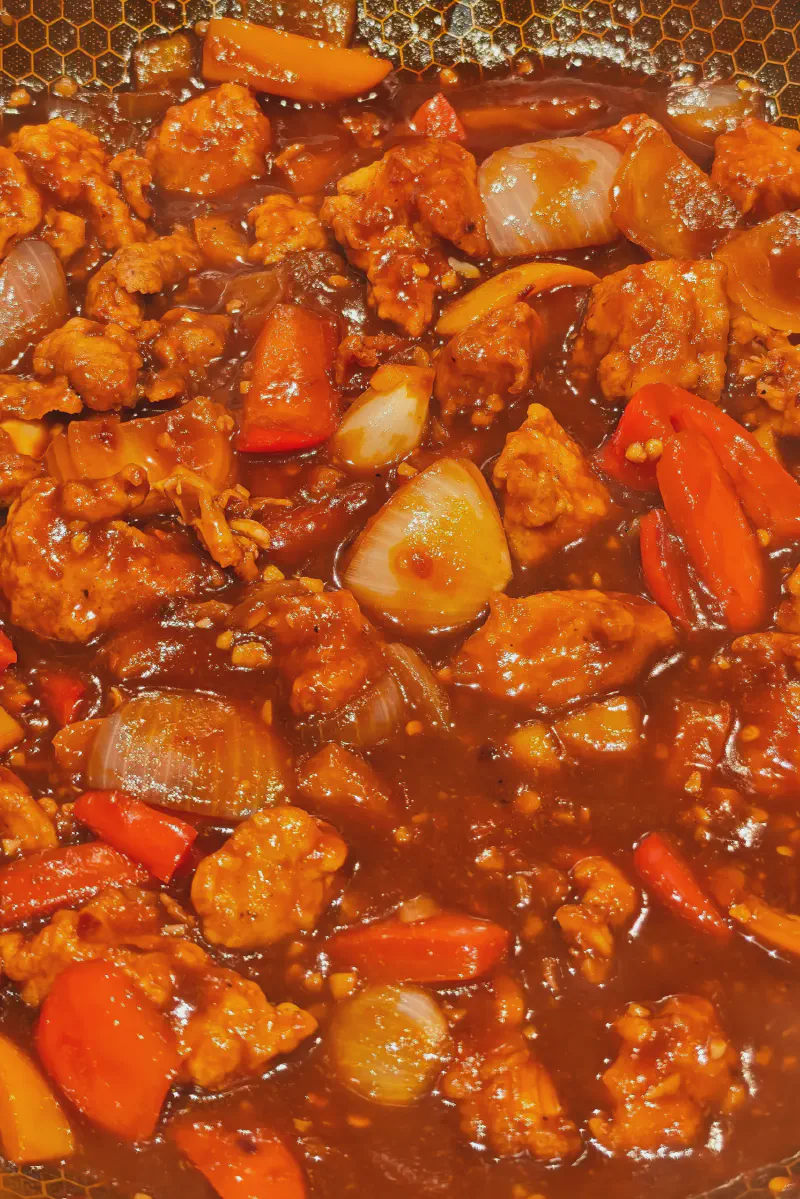
Simmered down until it thickens, this sauce becomes glossy and sticky, clinging to every piece of crispy chicken and every strip of tender pepper and onion. There is plenty of it — hence the “double sauce” in many versions of this dish — because the best part is spooning the excess over your rice and watching it soak in, transforming a simple bowl of steamed rice into something that tastes like it came from a wok that has been properly seasoned over years of high-heat cooking.
Choosing Your Cooking Method
This recipe works with both a traditional deep fryer and an air fryer, and both methods produce excellent results — they just taste slightly different.
Deep frying gives you that truly authentic crispy texture, with a shell that crunches satisfyingly when you bite through it and holds up well even after being tossed in the saucy glaze. The trade-off is that you are dealing with a pot of hot oil, which requires more attention and proper safety precautions. Fry in small batches, and do not crowd the chicken or the oil temperature will drop and the coating will turn out soft and soggy instead of crisp.
The air fryer method is the more hands-off approach. Spray the chicken lightly with oil, arrange it in a single layer, and let the hot air do the work. You still get a genuinely crispy coating — it is lighter and less heavy than deep-fried, with a slightly different texture — and the convenience of not having to monitor a pot of oil makes this method appealing for weeknight cooking. Both methods produce chicken that is cooked through and coated beautifully in the sauce, so choose based on your preference and your kitchen setup.
Building Layers of Flavor
The vegetables in this dragon chicken recipe are not an afterthought. onions and bell peppers are cooked until they are soft and slightly caramelized, with char on the edges that adds a smoky sweetness to the dish. They are removed from the wok before frying the chicken, then added back at the end so they maintain some of their texture and do not turn mushy.
The aromatics — garlic, ginger, and dried red chilies — are bloomed in sesame oil at the end, creating the fragrance that fills your kitchen and signals that something really good is about to happen. These three ingredients are the backbone of Indo Chinese cooking, and the way they perfume the oil in under two minutes is a technique worth mastering. Garlic burns quickly, so keep the wok moving and do not let it sit undisturbed.
Making It Your Own
The beauty of a recipe like this is how adaptable it is. Swap the chicken for shrimp or tofu if you prefer — both work beautifully with the crispy coating and the glossy sauce. For a vegetarian version, use cauliflower florets instead of chicken and proceed with the same cooking method; the result is a crispy, saucy dish that even committed carnivores will love.
Want more vegetables? Add carrots cut into matchsticks, broccoli florets, snow peas, or mushrooms. Anything that can withstand a quick stir fry and hold its texture will work. Some versions of dragon chicken add cashews for crunch; others finish with a squeeze of fresh lime juice at the table for brightness that cuts through the richness of the sauce.
The spice level is entirely in your hands. The dried red chilies and chili garlic sauce provide heat, but you can control how much you add. If you are cooking for people who prefer mild, use the lower end of the range and offer extra chili garlic sauce on the side. If you want it fiery, double the chilies and add a teaspoon of Asian chili oil when you add the sauce to the wok.
Meal Prep and Leftovers
Dragon chicken with rice is one of those dishes that actually tastes better the next day, once the sauce has had time to penetrate the crispy coating and the flavors have melded together. Store the chicken and rice separately in airtight containers in the refrigerator for up to three days. When you are ready to eat, reheat the rice in the microwave or with a splash of water in a covered pot. For the chicken, reheat in a skillet over medium-high heat with a small splash of water or chicken broth to help loosen the sauce and restore some of the crispness to the coating.
Best Times to Make It
Dragon chicken with rice works perfectly for weeknight meals when you want something bold and satisfying without spending hours in the kitchen. It is also great for weekends when you have a little more time to play in the kitchen and want to impress without stress. Anytime you want a takeout-style experience in your own kitchen — whether it is movie night, a casual dinner with friends, or a weeknight that deserves something more exciting than usual — this saucy chicken recipe will deliver every time.
Tips for Success
The most important tip for this recipe is to keep the oil hot — whether you are deep frying or air frying. For deep frying, use a thermometer to monitor the temperature and adjust your heat as needed to maintain 350°F. For air frying, do not skip the preheat and make sure the chicken pieces are in a single layer with space between them for the air to circulate.
Do not rush the sauce. Let it simmer and thicken properly before adding the chicken. If it is too thin when you toss the chicken, it will slide off instead of clinging. A properly thickened sauce should coat the back of a spoon and hold a trail when you run your finger through it.
Finally, serve this dish immediately after assembling. The longer the chicken sits in the sauce, the more the coating will soften. Plate it up, garnish it, and get it to the table while the sauce is glossy and the chicken is still carrying that satisfying crunch.
Garnishes and Finishing Touches
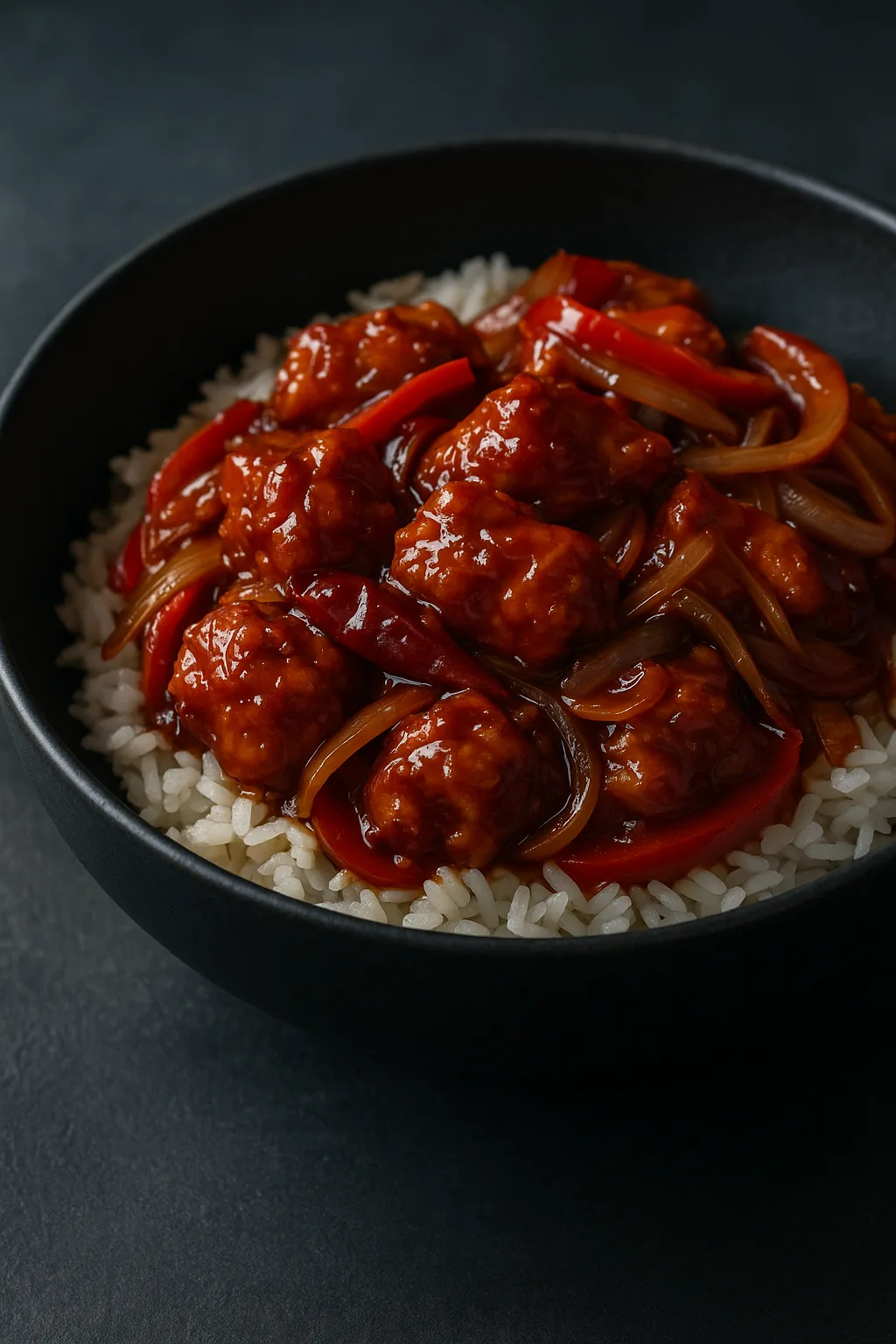
The right garnish does more than add visual appeal — it adds layers of flavor and texture that make each bite more interesting. Toasted sesame seeds bring a nutty crunch that contrasts with the soft chicken and tender vegetables. Sliced green onions add a sharp, fresh bite that cuts through the richness of the sauce. Fresh cilantro or Thai basil leaves contribute bright, herbal notes that lift the whole dish.
A drizzle of toasted chili oil at the table is the finishing touch that heat seekers will appreciate. It pools on top of the rice and chicken, adding a warm, fragrant heat that builds with each bite without overwhelming the existing flavors. Start with a small amount and add more to taste — you can always increase the heat, but you cannot take it away.