The Story
The short answer
No, if the spray comes from an aerosol can. Do not spray the basket, the crisper plate, or the racks with canned cooking spray, and do not spray food while it sits inside the machine. The oil in the can is not the issue. The issue is everything else in the can, which can bake onto the coating in a sticky film that washing struggles to lift. Plain oil applied with a pump sprayer, a brush, or your hands gives you the same thin coat with none of that residue.
The can feels like the tidy option. One short burst, no puddle, no brush to wash. That neatness is exactly why so many baskets end up tacky after a few months of regular use, while the owner blames the coating and starts shopping for a replacement machine. The damage arrives slowly, one invisible layer at a time, and by the time food starts tearing on the grate the film has usually been building for weeks.
What else is in that can besides oil
Turn a can of aerosol cooking spray around and read the ingredient line. Alongside the oil you will usually find soy lecithin, dimethyl silicone, and a propellant such as propane or butane. Each one has a job in a skillet context. Lecithin is an emulsifier, and it keeps the oil spread in an even mist instead of spitting out in drops. Dimethyl silicone holds down foam. The propellant pushes the whole mixture out of the can.
None of those helpers was designed for a small chamber where hot air blasts the same coated surface at 375°F to 400°F (191°C to 204°C) cook after cook. A skillet gets washed, dried, and put away between uses, and its surface is often metal or enamel rather than a thin coating. A basket lives a harder life. It takes direct heat, direct airflow, and repeated coats of whatever lands on it, and the coating that helps food release is the surface that pays.
Your manual may say this plainly. Several makers warn owners away from aerosol sprays by name, and that warning is worth following even if a basket still looks fine today, because the film is a slow build rather than a single bad cook.
How a thin mist becomes a sticky patch
Lecithin breaks down at a lower heat than plain oil does. Sprayed onto a hot or soon to be hot basket, it does not wash away or burn clean. It sets. The first cooks leave almost nothing you can see. Later cooks land on top of that set layer and add another, and the stack turns tacky to the touch, a bit like the residue a sticker leaves behind on glass.
Once that patch exists, it changes how the basket cooks. Food that once slid now catches on the rough spots, breading tears where it used to lift, and fish skin stays behind on the grate. The guide to why food sticks to an air fryer basket covers the other causes, from crowding to turning food too soon, and a tacky patch can sit underneath several of them at once. Scrubbing harder is not the fix either. Abrasive pads and harsh scouring take coating off along with the film, and then the basket sticks for a second and permanent reason.
The fan makes the spread worse. A burst sprayed inside the machine does not land only where you aim it. Moving air carries fine droplets onto the walls and toward the element shield, places you cannot scrub and may not even see. Spraying the food outside the machine, on a plate or a board, keeps every drop where it belongs.
Oil the food and leave the basket dry
Most foods in a basket need oil on their own surface, not on the metal under them. Vegetables, potato wedges, and chicken pieces all crisp at the surface where salt and heat meet, and a coat on the food puts the oil at that surface. A coat on the basket mostly cooks onto the basket.
Three ways to apply it, all of them plain:
- Toss the food in a bowl with 1 to 2 teaspoons of oil and the seasoning, then load the basket. This coats wedges and vegetables most evenly.
- Brush oil on with a silicone brush. This suits fillets, chops, and anything delicate that a bowl would break up.
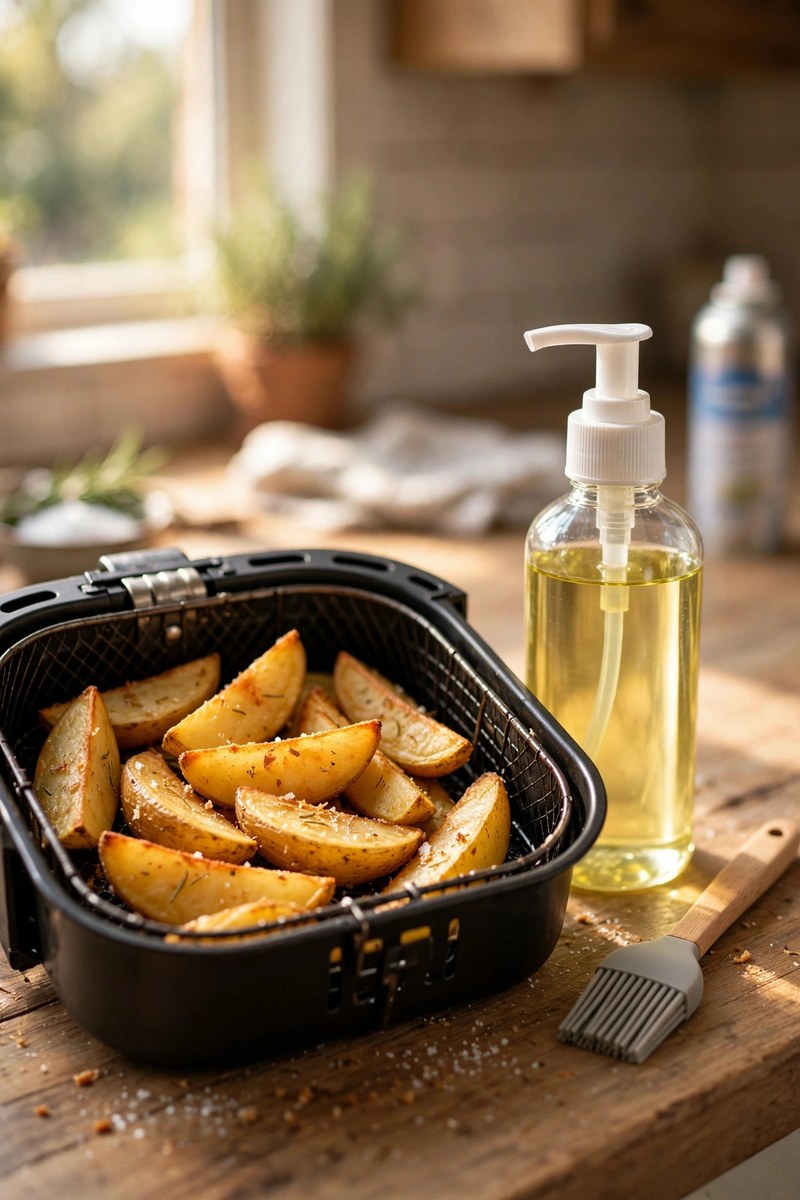
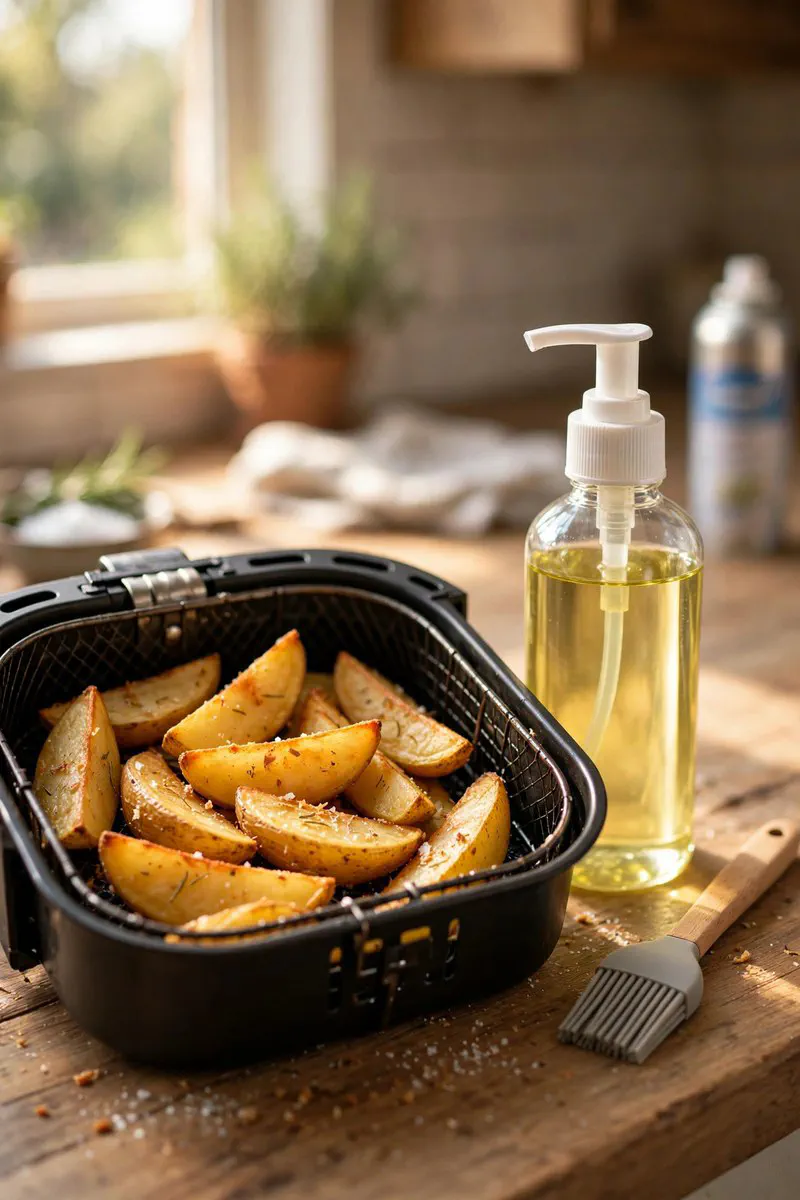
- Mist the food with a refillable pump sprayer filled with plain oil, with the food resting on a plate outside the machine. This suits breaded foods, where a brush can drag the coating off.
Breaded foods gain the most from that last option. A dry crumb coating can come out pale and dusty in hot air, and a light mist right before cooking helps it colour and set. Keep the mist light. Food dripping with oil smokes, spatters, and steams against its own coating, which works against the crisp finish the oil was meant to help.
Fatty foods need no added oil at all. Bacon, sausages, and skin on chicken render enough fat of their own, and extra oil only adds smoke.
Plain oils that handle basket heat
Any plain oil with a smoke point above your cooking temperature works here. Avocado oil sits at the top of the range and has almost no flavour of its own. Canola oil and sunflower oil cost less and behave well at 400°F (204°C). Peanut oil suits foods where a faint nutty note fits. Light olive oil is a sound middle option, and the guide to using olive oil in an air fryer sorts out which olive oils handle the heat and which belong at the table instead.
What matters is that the bottle contains oil and only oil. A refillable sprayer lets you check that once, when you fill it, rather than reading a can label in the store aisle. Wash the sprayer with hot water and dish soap whenever you refill it, because old oil left in a nozzle can turn stale and clog the pump.
Butter belongs later, brushed on after cooking for flavour. Its solids brown and burn quickly at basket temperatures, and a spray can built around butter flavour still carries the same additives as any other aerosol can.
If the basket already feels tacky
Start gentle. Soak the basket and the drawer in hot water with dish soap for 15 to 20 minutes, then wash with a soft sponge and dry fully. For a stubborn patch, make a paste of baking soda and a little water, spread it over the spot, let it sit for about 15 minutes, and wipe it away with the sponge. The full routine in the guide to cleaning an air fryer covers the element shield and the body as well.
Work through that routine twice before you judge the result. A film that built up over months rarely lifts in a single soak, and patience with a sponge protects the coating that force would strip. If the coating itself is peeling or flaking, stop cooking on that surface and check the manual or contact the maker about a replacement basket, because a new spray habit cannot repair a coating that is already coming away.
Before the next cook, do one small thing. Read the ingredient line on whatever spray sits in your cupboard. If lecithin or a propellant shows up on it, that can belongs with the skillets, and the basket gets plain oil from here on.