The Story
The short answer
Mostly no. A basket cooks food by moving hot air around every exposed surface, and a stack blocks that movement. Pieces buried in the middle steam in their own moisture, stay pale, and finish well behind the pieces on top. The exception is a loose pile of small food. Frozen fries and diced vegetables can sit in a shallow heap if you shake the basket two or three times during cooking, so each piece spends time on the outside of the pile. Anything large, breaded, or thick needs a single layer with a gap between pieces.
The basket looks small the moment dinner involves more than two people, and piling food higher feels like the obvious fix. It rarely saves time in the end. A crowded batch cooks longer, needs more turning, and still comes out uneven, while two smaller batches run back to back with no rescue work at all.
What happens inside a stack
The top layer gets everything. It faces the element and the fastest air, so it browns and can even scorch. Layers below it get air that has already cooled and picked up moisture from the food above. That moisture has nowhere to go. It settles on the surfaces under it, and a wet surface cannot brown. Browning needs a dry surface at high heat, and a stack keeps the middle surfaces wet for most of the cook. The result is the pattern described in the guide to why air fryer food turns out soggy: crisp edges on top, soft and pale food underneath.
Heat also arrives unevenly. The centre of a stack warms by contact with the pieces around it, which is slow, so a thick piece buried in the middle can lag far behind its colour. With raw meat that lag matters beyond texture. Colour on the outside says nothing about the centre, so stacked poultry still needs a thermometer reading of 165°F (74°C) in the thickest part, clear of bone, before it is done.
Small foods that forgive a shallow pile
Small pieces behave differently because they move. Frozen fries, chickpeas, green beans, and diced potatoes or sweet potatoes all tumble when you shake the basket, and tumbling is what saves them. A piece that starts at the bottom lands on top after a shake, and every surface takes a turn in the open air. The guide to cooking frozen french fries in an air fryer leans on exactly that shake for the same reason.
Two limits keep the pile honest. Fill the basket no more than halfway, because a deeper pile buries pieces that shaking cannot rescue, and shake every 4 to 5 minutes rather than once in the middle of the cook. If pieces still look pale after that routine, spread them thinner next time instead of adding heat. Extra temperature browns the outside of the pile faster and leaves the centre of the pile exactly as steamed as before.
Foods that need air on every side
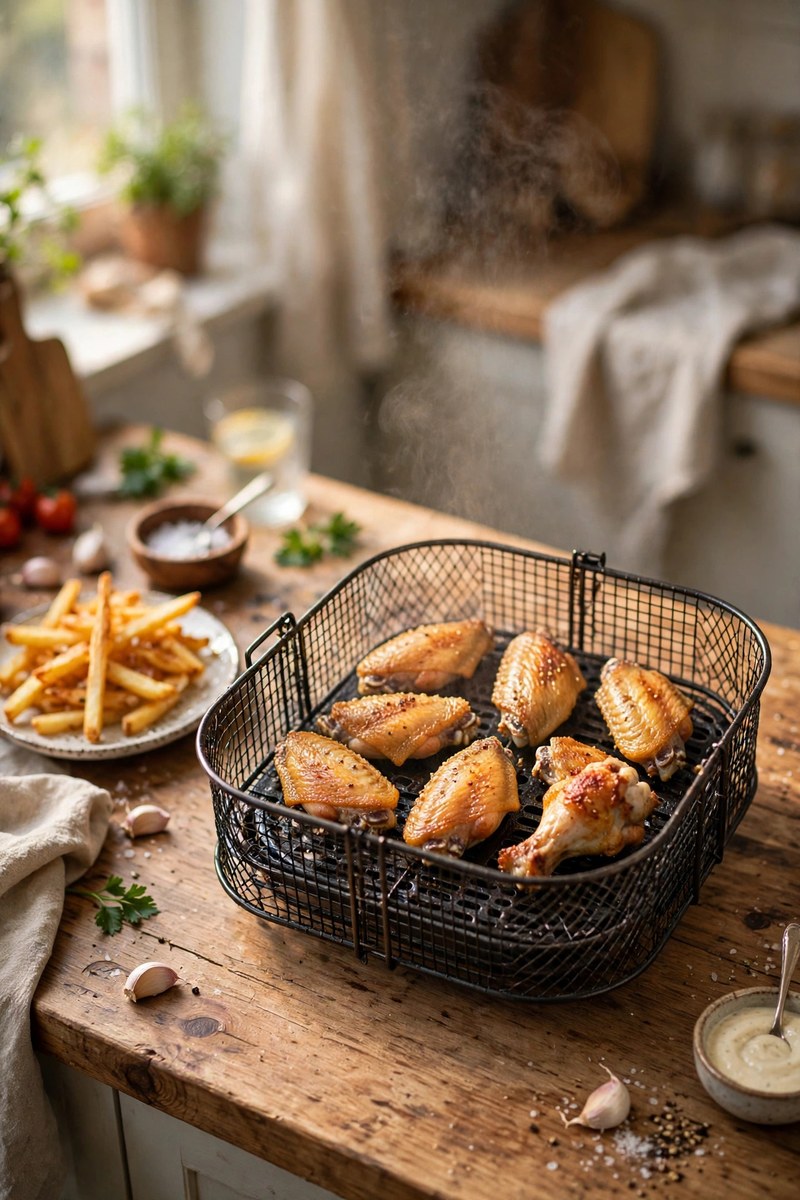
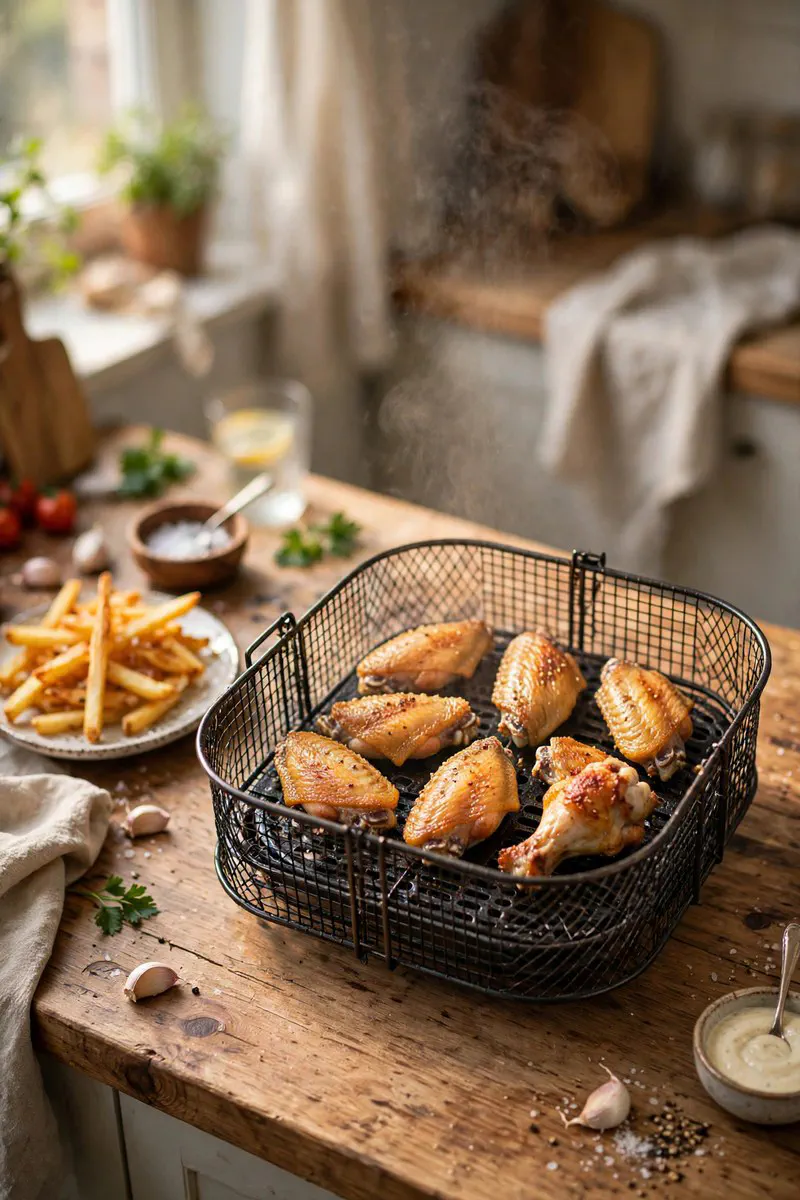
Large pieces cannot tumble, so every side has to face the air from the start. Chicken wings, thighs, and breasts belong in a single layer, and the method in the guide to cooking chicken wings in an air fryer depends on that spacing for crisp skin. Pork chops, burgers, and fish fillets need the same room. Where two pieces touch, the skin or crust at the contact point steams, and breaded coatings go soft and can stick to the piece above them and tear when you pull the pieces apart.
Bacon sits in its own category. Strips laid flat with a slight overlap shrink as they cook and usually finish fine, but strips folded or piled in a heap fuse into a mat that cooks unevenly and renders fat in a rush. Flat and nearly flat works. A mound does not.
Feeding more people without piling food up
Cook in two batches and hold the first one warm. A low oven at 200°F (93°C) keeps cooked food hot without cooking it much further, and a rack set over a tray keeps the undersides off any pooled fat or juices. Put the finished batch on the rack rather than on a plate, because a plate traps steam under the food and softens the crust you just made.
Order matters more than speed here. Cook the food that holds well first, such as wings or chops, and cook fries or breaded items last, because crisp coatings fade fastest while they wait. If the first batch cools more than you wanted, give it 1 to 2 minutes back in the basket after the second batch comes out. That short return brings the surface back without drying the centre.
A second batch sounds slower than one tall pile. In practice the pile usually needs extra minutes and extra turning and still serves uneven food, while the two batch route serves every piece in the condition the basket is good at making. When the food needs to touch, the plan needs another batch, not another layer.