The Story
The short answer
Yes, but only a little, and only in one place. Add 1 to 2 tablespoons of water to the drawer under the basket before you cook food that gives off a lot of fat, such as bacon, sausages, or fatty burgers. The water catches dripping fat and holds it at a lower temperature, so it smokes less. Check your manual first, because a few makers tell owners not to add water at all, and their word wins. Never fill the basket with water, never cook food sitting in water, and never use the machine to boil water or to steam food.
People arrive at this question from two directions. Half of them have a machine that pours out white smoke halfway through a batch of bacon and want it to stop. The other half have read that a splash of water turns the basket into a small steamer and keeps food moist. The same spoon of water sits behind both ideas, but it only earns its place for one of them, and the difference comes down to where the water sits and what job you expect it to do.
The drawer is the only place water belongs
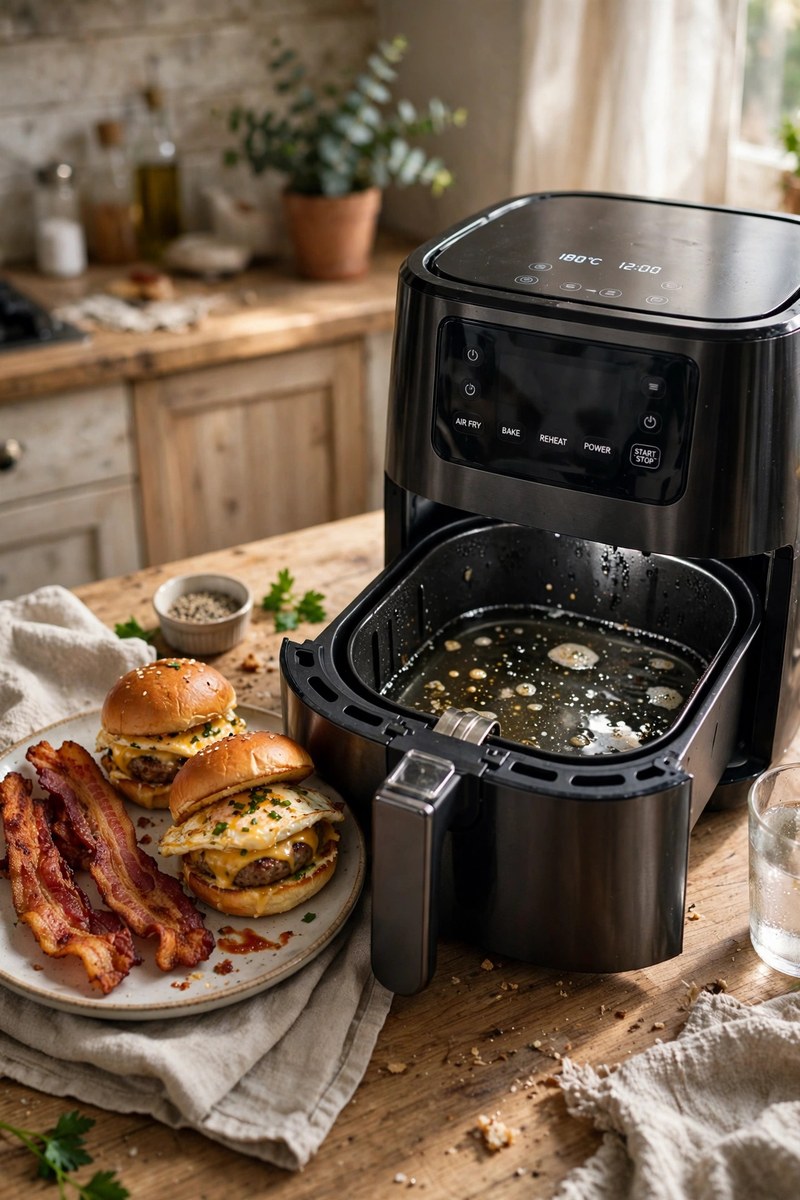
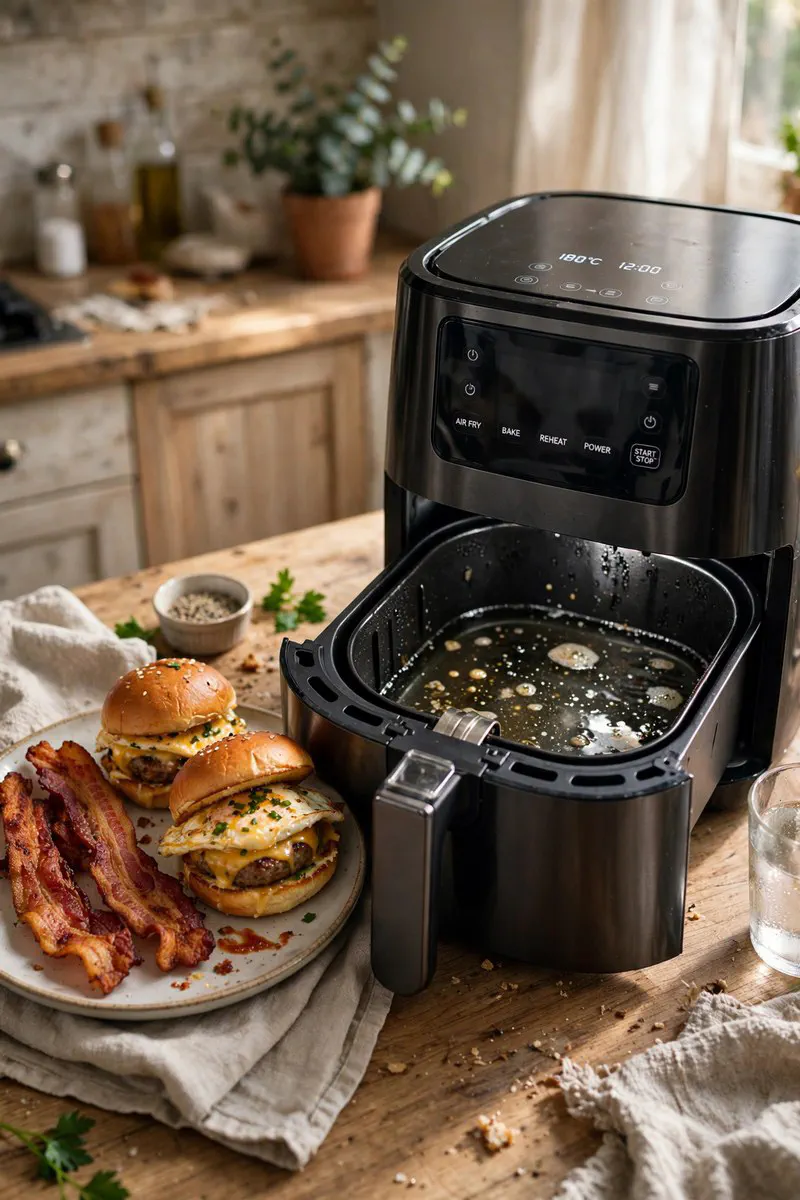
On a basket model, the food sits in a perforated basket and the basket sits inside a solid drawer, with a gap between the basket floor and the drawer bottom. That gap is the whole story. Water goes into the drawer bottom while the machine is off and cool, the basket goes back in above it, and the food cooks in hot air as usual, with the water sitting underneath and never touching a bite of it.
Water in the basket itself is a different and worse idea. Food sitting in water cannot crisp, the fan moves loose liquid around the chamber, and droplets thrown upward land on the element shield. Water poured over food from above just runs off, taking seasoning with it and pooling where it does no good. Every useful version of this trick keeps the water below the food, in a thin layer, added before the heat starts. Oven style models catch drips on a tray instead of in a drawer, and the tray version of the trick has its own limits, which the questions at the end of this page cover.
Why a splash of water cuts the smoke
Fat is the source of nearly all of it. Bacon, sausages, burgers with a high fat content, and skin on chicken pieces all render fat as they cook, and that fat rains down through the basket onto the drawer. On bare hot metal, pooled fat keeps climbing toward the cooking temperature of 350°F to 400°F (177°C to 204°C), passes its smoke point, and turns into the white haze that drifts out of the machine and sets kitchens coughing. The guide to why an air fryer smokes walks through the other causes, from old grease to food stuck near the element.
A thin layer of water changes what the fat lands in. Liquid water stays at or below 212°F (100°C) while it lasts, so fat dripping into it cools instead of frying on contact, and it stays well under its smoke point. The fat still renders and the food still crisps, because none of that happens in the water. It happens up in the basket, in the moving air, exactly as it would with a dry drawer. The water only manages the landing zone.
That is also why the trick has a short list of foods it suits. It helps when a cook will produce a steady drip of fat, which means bacon, sausage, fatty ground beef, and skin on chicken. The timing guide for cooking bacon in an air fryer covers the batch that sends most people looking for this answer in the first place. For lean food, the drawer catches almost nothing, and the water solves a problem the cook never had.
| What is cooking | Water in the drawer? |
|---|---|
| Bacon, sausages, fatty burgers | Yes, 1 to 2 tablespoons, added before cooking |
| Skin on chicken pieces | Yes, 1 to 2 tablespoons, added before cooking |
| Breaded or frozen foods | No, extra steam works against crisping |
| Lean chicken breast, fish, vegetables | No, too little fat drips to make it worth doing |
| Soup, stew, or loose sauce | Never, cook those in a pot instead |
| Boiling water or steaming as the method | Never, the machine is not built for either job |
What water will not do in there
It will not steam your dinner. Steaming needs a sealed space full of steam for the whole cook, and a basket machine is the opposite of sealed. Air pours through it constantly, by design, and a tablespoon or two of water makes a brief wisp of steam and then it is gone. Vegetables lowered into the basket still cook in dry hot air, and they still need oil, salt, and space between pieces to come out well. If a food truly needs steam, it needs a pot with a lid.
It will not boil, simmer, or reheat soup either. Loose liquid in quantity sloshes when the drawer moves, splashes when the fan runs, and pours dangerously when you carry a hot drawer across the kitchen. Sauces that cling to food are fine, because they travel with the food and stay in a thin coat. A sauce pooled loose in the drawer is just soup with worse handling. The machine cooks with moving air, and every job that asks it to behave like a pot of water ends with a mess, a poor result, or both.
Too much water also works against crisp food even in the drawer. A deep pool throws off enough steam to soften breading and slow browning, which is why the amount stays at a spoon or two. You want a film across the drawer bottom, not a pond the basket sits over.
Adding it without a spill or a steam burn
- Start with the machine off and cool. Pull the drawer out, lift the basket free, and pour 1 to 2 tablespoons of cold water into the drawer bottom.
- Set the basket back in, load the food, and slide the drawer closed slowly and level, so the water stays spread out instead of sloshing to one end.
- Cook as usual. When you open the drawer to turn food, wear a mitt, keep the drawer level, and set it down on a stable surface, because the water below the basket is now hot and mixed with fat.
- When the cook ends, let the drawer sit and cool before you carry it to the sink. Hot water and fat spill as one slick puddle, and a cooled drawer pours off safely and washes faster.
The washing point is a small bonus of the whole method. Fat that landed in water lifts off the drawer with a sponge instead of baking into a film, and the full routine in the guide to cleaning an air fryer covers the basket and the element shield as well.
Bread does the same job with no sloshing
A slice of plain bread laid in the drawer under the basket absorbs fat as it drips, and it cuts smoke for the same reason water does. The fat ends up held in the bread instead of pooling on hot metal. Bread suits long cooks better than water does, because a spoon of water can cook away during a long batch while the bread keeps absorbing to the end. It also suits anyone who would rather not carry a drawer of hot liquid fat across the kitchen. The slice goes in the bin afterward, since it is soaked through with grease, and a fresh slice goes in for the next fatty cook.
So the rule is simple to carry into the next cook. If the food will drip fat, a spoon or two of water under the basket earns its place, and bread covers the longer jobs. If nothing fatty is cooking, leave the drawer dry and let the hot air do its work alone.