The Story
The short answer
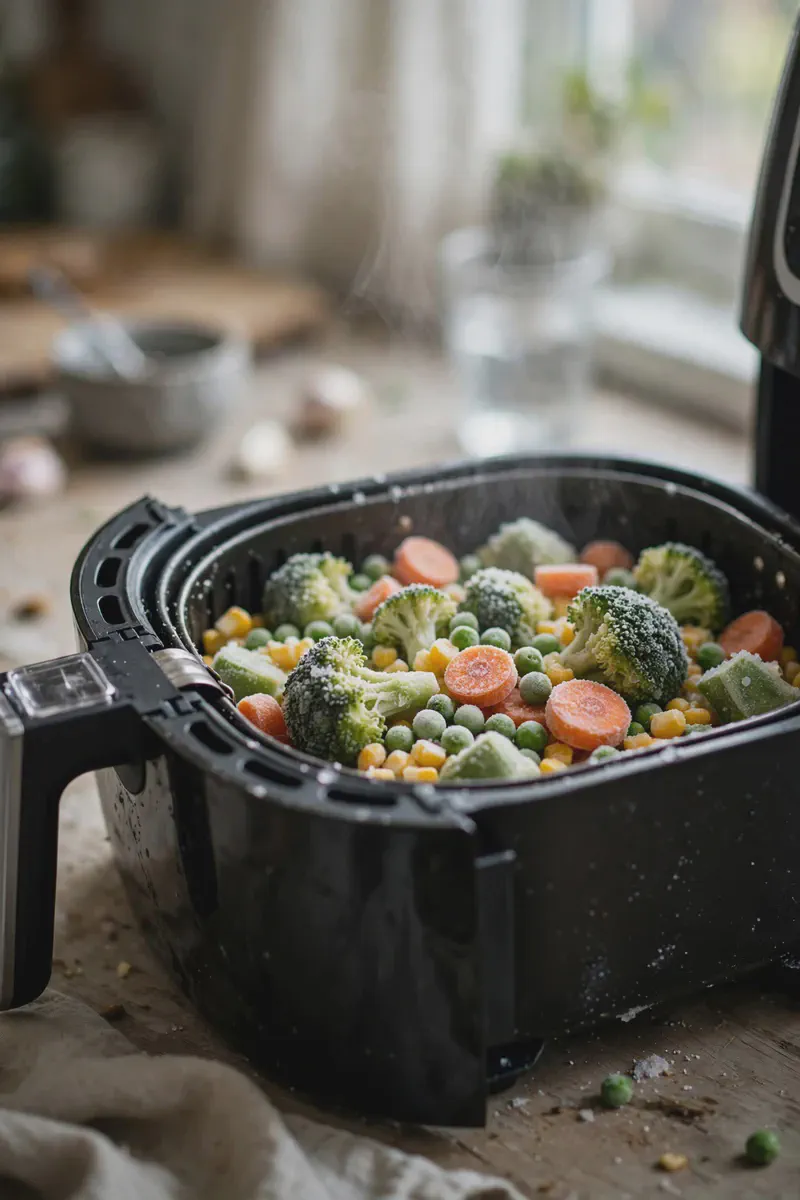
Yes. Put them in straight from frozen, with no thawing at all. Set the air fryer to 400 degrees Fahrenheit, lay the vegetables in a single layer with a little space between pieces, add a light coating of oil, and cook for 8 to 15 minutes depending on the vegetable. Shake the basket once halfway through. Broccoli, cauliflower, carrots, green beans, and Brussels sprouts come out with browned edges and a tender centre. Softer vegetables with a lot of water, such as zucchini, will stay softer, and that is normal.
This is one of the best uses for the basket on a busy night. A bag from the freezer needs no washing, no chopping, and no pot of water to boil. The hot air drives off the surface ice fast, so the vegetables roast instead of steaming in their own liquid, as long as you give them heat and space and leave the thawing step out.
1. Go straight from frozen and skip the thaw
Why it matters: frozen vegetables hold water inside their cells. When they sit on the counter and thaw, that water leaks out and pools around them. They go into the basket wet, they steam before they can brown, and they come out soft and pale. Cooking from frozen lets the hot air turn that surface ice to vapour in the first minutes, so browning can start sooner.
What to do instead: open the bag and tip the vegetables straight into the basket. Do not rinse them and do not leave them out while you prep the rest of dinner. If frost clumps pieces together, break the clumps apart with your hands so each piece sits on its own and the air can reach it.
2. Heat and space do the crisping work
Why it matters: an air fryer cooks by moving hot air around food. A cold basket and a crowded basket both work against that. Food that lands in a cold basket warms up slowly and leaks water as it warms. Food packed in a deep pile traps steam in the middle, so the top browns while the bottom stays soggy.
What to do instead: run the empty basket at 400 degrees Fahrenheit for 3 to 5 minutes before you add the vegetables. Lay them in a single layer with small gaps. If you have a full large bag, cook it in two batches. The second batch cooks a little faster in the hot basket, and both batches will brown better than one crowded pile.
3. Add oil first and seasoning a few minutes in
Why it matters: dry seasoning slides right off a frozen surface and lands in the bottom of the basket. Too much oil pools and makes the vegetables greasy. A light film of oil helps the surface brown and gives seasoning something to hold on to once the outside has dried a bit.
What to do instead: toss the frozen vegetables with one to two teaspoons of oil in a bowl, or spray them lightly with oil once they are in the basket. Cook them plain for the first 3 to 4 minutes, then pause, add salt, garlic powder, or smoked paprika, and toss well. The seasoning sticks to the warm and now dry surface, and it is far less likely to burn than seasoning added at the very start.
4. Shake once and check before the timer ends
Why it matters: the side facing down gets less moving air, so pieces colour unevenly if they sit still the whole time. Small pieces and sweet vegetables such as carrots and corn can also move from golden to dark very fast in the last minutes, because their natural sugars brown quickly at high heat.
What to do instead: shake the basket firmly once halfway through so pieces turn and swap places. Start checking 2 minutes before the time in the table below. Pull the basket when you see browned edges and a centre that is tender when pierced with a fork. Serve right away, because the vegetables soften as they sit in the hot basket.
5. Pick the vegetables that shine in hot air
Why it matters: dense vegetables hold their shape and brown well from frozen. Vegetables with a high water content release a lot of liquid as they cook, so they will soften no matter what you do. Knowing the difference saves you from judging a good batch of peppers by the standard of a batch of broccoli.
What to do instead: reach first for broccoli, cauliflower, green beans, carrots, Brussels sprouts, and peppers with onions. They are the most forgiving and the most likely to crisp at the edges. For zucchini and other soft vegetables, cook a smaller amount in a single layer, pat off any liquid halfway through, and accept a softer result. Frozen peas and corn work best stirred into a cooked dish at the end rather than roasted on their own, where they can dry out.
Quick reference
| Vegetable | Temperature | Time | Notes |
|---|---|---|---|
| Broccoli | 400 degrees Fahrenheit | 10 to 12 minutes | Shake halfway, edges should brown |
| Cauliflower | 400 degrees Fahrenheit | 10 to 12 minutes | Good with garlic powder added partway |
| Green beans | 400 degrees Fahrenheit | 8 to 10 minutes | Cook until just tender with browned spots |
| Carrots | 400 degrees Fahrenheit | 12 to 15 minutes | Sweet, check early in the last minutes |
| Brussels sprouts | 400 degrees Fahrenheit | 12 to 15 minutes | Halved pieces brown best |
| Peppers and onions | 400 degrees Fahrenheit | 8 to 10 minutes | Will stay softer, good for fajitas |
| Mixed vegetables | 390 degrees Fahrenheit | 8 to 10 minutes | Single layer, shake halfway |
| Corn kernels | 400 degrees Fahrenheit | 8 to 10 minutes | Add butter and salt after cooking |
Frozen vegetables belong in the air fryer, and they might be the easiest side dish it makes. No thaw, hot basket, one layer, a little oil, and one good shake. Learn the time for the two or three vegetables you buy most often, write it on the bag if that helps, and you have a side ready while the main dish rests.