The Story
The short answer
Yes, in most air fryers, as long as four rules hold. Keep the foil in the basket where the food sits. Keep food on top of the foil at all times. Leave room around the edges so air can move past the food. Keep the foil flat and clear of the heating element above the basket. Used that way, foil catches drips, holds saucy food together, and makes cleanup simple. Used the wrong way, it blocks the air flow the machine depends on and can lift into the element and scorch.
An air fryer is a small oven with a strong fan. It is not a microwave, so metal foil will not spark in it the way foil sparks in a microwave. That is why foil can work here at all. Still, check the manual for your model before the first use. A few makers allow foil in the basket only, and a few say to avoid it altogether. When the manual and this guide disagree, the manual wins.
Where the foil should go, and where it should never go
Why it matters: air must travel around the food and through the basket for the food to brown. A sheet of foil that covers the whole basket floor stops that travel. The top of the food cooks, the bottom steams in its own juice, and grease pools on the foil instead of draining away.
What to do instead: cut or fold a piece of foil that is a bit smaller than the basket, and smaller still than the food will cover. Press it flat against the basket floor and fold the edges down and flat. Leave a clear gap around all four sides. Never put foil in the empty drawer under the basket to catch drips, since that spot needs to stay open for air and for the drawer to close and heat as it was built to.
Food must hold the foil down at all times
Why it matters: the fan moves air with real force. A loose sheet of foil is light enough to lift, flap, and touch the heating element. Foil that touches the element can scorch, stick, and in the worst case start a fire. The risk is highest when the foil goes in empty or when the food on it is very light.
What to do instead: add the foil and the food together, never during the short warm up with an empty basket. Make sure the food covers most of the sheet and weighs it down. If you cook a small or light portion, fold the edges of the foil under the food so there is nothing loose for the fan to grab.
When foil actually helps
Why it matters: foil earns its place when the food is saucy, sticky, delicate, or made of small pieces that would fall through the basket or glue themselves to it. It will not make food more crisp. Its job is to contain a mess and to lift delicate food out in one piece.
What to do instead: try foil for these jobs first:
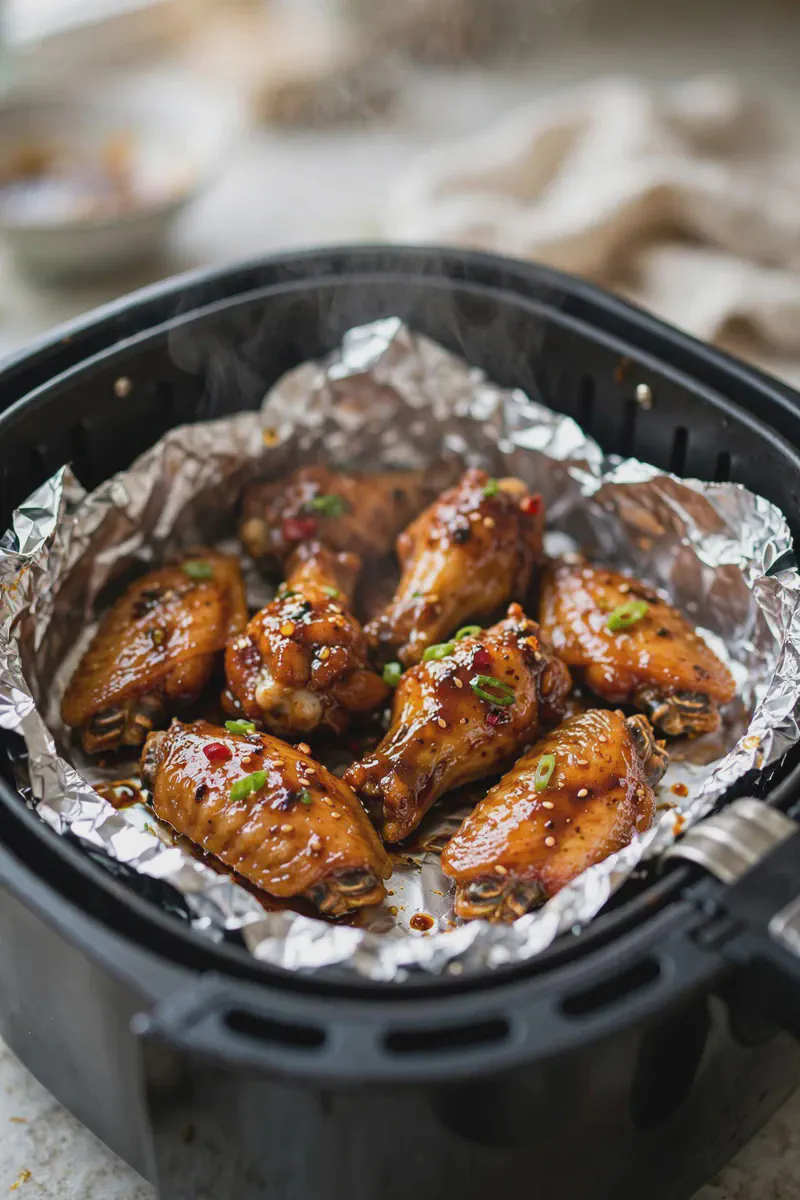
- Wings and thighs with a sticky sauce, where the sauce would burn onto the basket.
- Fish fillets that flake and break when you lift them with tongs. Fold the foil into a shallow tray with low sides and lift the whole tray out.
- Small pieces of vegetable that would slip through the gaps in the basket.
- Cheesy dishes where the cheese stays inside the food, such as stuffed peppers. Foil catches the drips if a pepper tips.
When to skip the foil
Why it matters: some foods cook worse on foil, and one group of foods should not sit on it for long at all. Tomatoes, citrus, vinegar, and other foods with a lot of acid can react with foil during a long cook. The foil can pit and turn dull, and the food can pick up a flat metal taste. Crisp food suffers too, since foil traps steam under fries and breaded pieces and leaves the bottom soft. Very fatty food pools in its own fat on foil, and that pool of hot fat is a common cause of smoke.
What to do instead: cook fries, wedges, and breaded cutlets straight on the basket so air reaches the bottom. Let bacon, sausages, and other fatty food cook on the basket as well, so the fat drains away from the food. For food with a lot of acid, use parchment in the basket instead, with food on top of it and room around the edges, just as you would with foil.
A simple method that works
- Check the manual. One quick look tells you if your maker allows foil in the basket and if any spot is off limits.
- Cut the piece small. Make it smaller than the basket and leave a gap around the edges for air.
- Press it flat. Smooth out wrinkles and fold the edges down so nothing stands up near the element.
- Add food at once. Put the food on the foil right away so the sheet stays down for the whole cook.
- Watch the first cook. Check once partway through. If the foil has lifted or curled, stop the cook, let the basket cool a bit, and press it flat again with more food on top.
Quick reference
| Job | Use foil? | Notes |
|---|---|---|
| Saucy wings and thighs | Yes | Catches drips and saves scrubbing |
| Delicate fish | Yes | Fold a shallow tray and lift it out whole |
| Small vegetable pieces | Yes | Stops pieces falling through the basket |
| Fries and breaded food | No | Cook straight on the basket for a crisp bottom |
| Food with tomato or citrus | No | Acid can react with foil, use parchment instead |
| Very fatty food | No | Let the fat drain away so it does not pool and smoke |
| Empty basket while it warms up | Never | Loose foil can lift into the element |
Start with one saucy cook
If you have never used foil in the basket, try it first on a food that makes a mess, such as wings with sauce. Cut the foil small, press it flat, add the food at once, and leave room around the edges. Cleanup will tell you why people do this. For fries and other food you want crisp on all sides, skip the foil and let the basket do its work. Foil is a tool for mess and for delicate food, not a liner for every cook, and used only where it helps, it helps a lot.