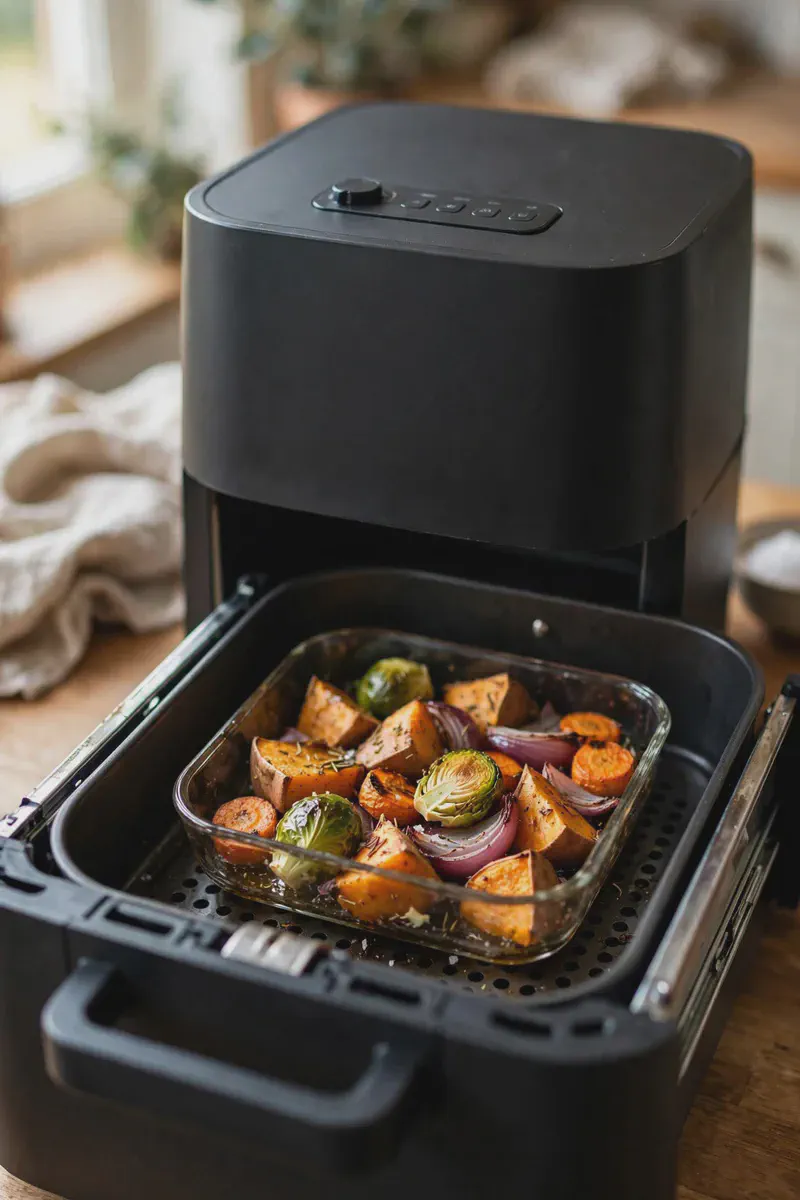
The Story
The short answer
Yes, but only when the dish is made for oven use and you treat it with care. Check the base for an oven safe mark, leave space around the dish for air to move, start with a dish at room temperature, and look for chips or cracks before you cook. Take any plastic lid off first. Ordinary drinking glasses, decorative glass, and damaged dishes do not belong in the basket. When in doubt, use a metal pan or a ceramic ramekin instead.
A glass dish feels like an easy answer in an air fryer. It holds a sauce, it catches drips, and it goes from the basket to the table with no fuss. The catch is that the basket is a harsher place than a big oven. Heat sits close to the food, air moves fast, and a small dish can go from cool to very hot in minutes. That speed is great for crisp food. It asks more of the dish itself.
Start with the mark on the base
Why it matters: not all glass handles heat in the same way. Glass made for baking is tempered to handle high heat. Glass made for drinking or for show is not built for that job, and the brand name alone does not settle the question. Two dishes that look the same on the counter can be made from different glass.
What to do instead: turn the dish over and look for words or a symbol that say it is safe for oven use, and check the highest temperature the maker allows. Stay under that limit. If there is no mark, treat the dish as a no. Use it for serving or for storage and pick a pan you trust for the cook.
Leave room for air to move
Why it matters: an air fryer cooks by moving hot air around the food. A dish that fills the basket blocks that flow. The top browns while the centre stays cool, and food in the dish cooks in patches. A tight fit also makes the dish hard to lift out without a spill or a burn.
What to do instead: choose a dish that sits in the basket with a clear gap on all sides. Keep the food in the dish in a shallow layer where you can. Stir or turn the food once during the cook so the centre heats as well as the edges.
Avoid a sudden change in temperature
Why it matters: glass expands as it heats and shrinks as it cools. A sudden swing puts stress on the dish, and stressed glass can crack. A dish that goes straight from the fridge into a hot basket faces the sharpest swing of all. The same risk waits at the end of the cook, when a hot dish meets a cold counter or cold water.
What to do instead: let a cold dish sit on the counter for a short while before it goes in, and warm the basket first only when the dish can go in at room temperature. Set the hot dish on a dry cloth, a wooden board, or a trivet when it comes out. Let it cool before you wash it, and do not add cold liquid to a hot dish.
Check for chips and cracks first
Why it matters: a small chip or a fine crack is a weak point. Heat near the element adds stress to that weak point, and a dish that held up in a gentle oven can fail in the basket. A break during a cook wastes the food and leaves glass in the machine.
What to do instead: hold clear glass up to the light and run a fingertip around the rim before you fill it. If you find damage, retire that dish from hot cooking. It can still hold fruit or dry goods on the counter, where heat never reaches it.
How to use a glass dish in the basket
Pick the right dish. Choose a small baking dish marked for oven use, with no damage and no plastic parts. Take the lid off unless the maker says the lid is made for hot oven use too.
Give it space. Set the dish in the centre of the basket with a gap around it. Do not wedge it in and do not stack a second dish on top.
Start gentle. Use a moderate setting for the first minutes when the food is thick or dense, such as a pasta bake or a small casserole. Lower heat gives the centre time to warm while the top colours.
Lift it out with care. Glass holds heat well after the cook ends. Use oven mitts or a thick dry cloth on both hands, lift the dish straight out, and set it on a surface that can take the heat.
Let it rest. Give the dish a few minutes to cool in the open air before you serve from it or wash it. A calm cool down is the last step in keeping the dish whole.
Safer swaps when glass feels risky
A metal pan is the toughest choice for most jobs. It handles high heat, it shrugs off sudden changes, and it cleans up fast. A ceramic ramekin works well for baked eggs, small pies, dips, and single portions of dessert, as long as it is also marked for oven use. Silicone moulds suit muffins and egg bites, as long as you stay under the limit the maker sets. Each swap cooks a little differently, so check the food a few minutes early the first time you try one. The same oven safe check applies before you reach for foil or parchment paper in the basket.
Quick reference
| Dish | Use it in the air fryer? | Notes |
|---|---|---|
| Glass baking dish marked oven safe | Yes, with care | Room temperature start, gap on all sides, no damage |
| Glass dish with a plastic lid | Yes, lid off | Cook the dish uncovered unless the lid is rated for oven use |
| Ordinary drinking glass | No | Not built for high heat or fast changes |
| Decorative glass with no oven mark | No | Treat as serving ware only |
| Glass dish with a chip or crack | No | Weak point can fail under heat |
| Cold glass dish straight from the fridge | Not yet | Let it warm on the counter first |
| Metal pan or ceramic ramekin marked oven safe | Yes | Tough swap for bakes, dips, and small portions |
The rule is simple. Glass can work in the air fryer when it was made for the oven, it fits with room to spare, and it never faces a sudden swing from cold to hot or hot to cold. Check the base, check the rim, and give the dish a calm start and a calm finish. Do that and the dish does its job. Skip those checks and a metal pan will save you the worry and the cleanup.