The Story
The short answer
Usually, yes, but the exact behaviour depends on the model. Many basket and drawer air fryers pause when you pull the basket out, while some models require you to press Pause first. Check your manual before relying on automatic pausing. Opening is how you shake fries, turn chicken, and check colour before food goes too far. The cost is heat. Every open moment lets hot air escape, so open with a purpose, keep the check brief, and close the basket as soon as you are done.
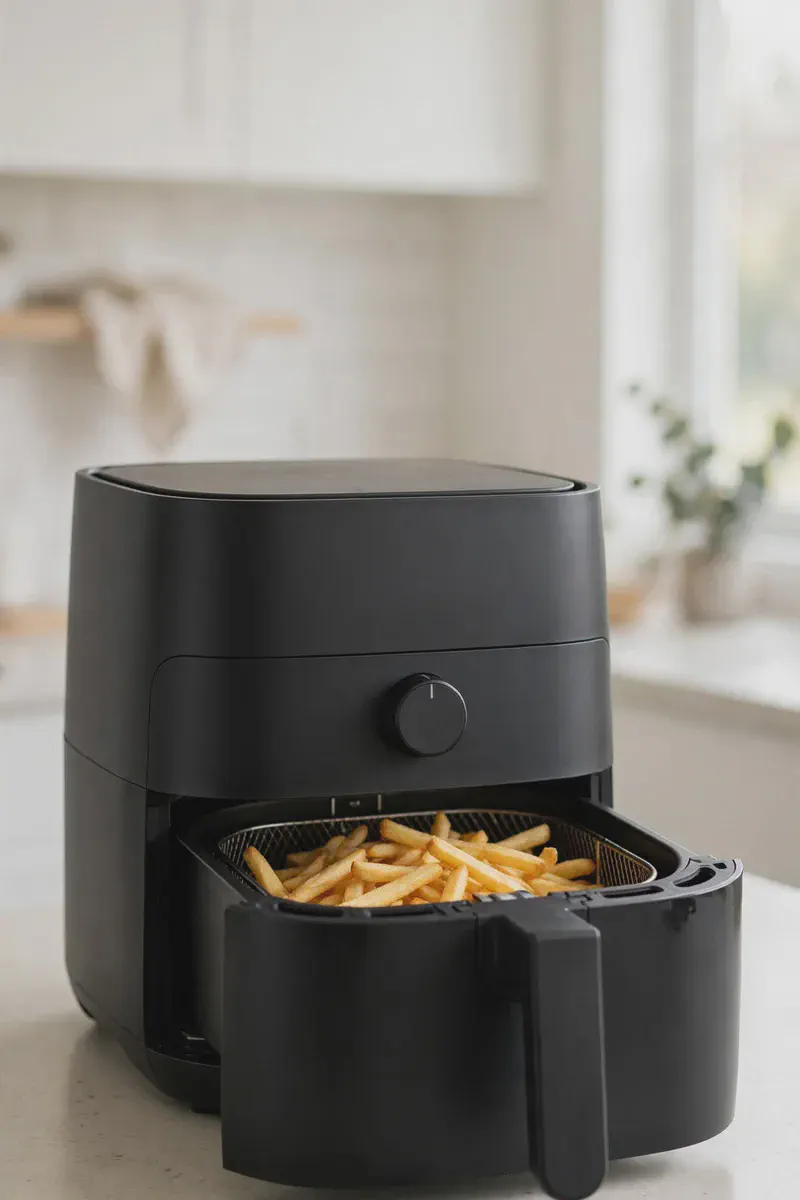
It feels wrong the first time. The machine is roaring, the timer is counting down, and every oven rule you ever learned says to keep the door shut. An air fryer is not an oven in that way. It is a small box with a basket that is meant to come out. Cooks are supposed to look at the food. The trick is knowing when a look helps, when a look costs you, and how to do it without a face full of steam.
1. What happens the moment you open it
Why it matters: many basket models pause when you pull the basket out, but controls differ. Some stop the fan, heat, and timer automatically; others expect you to press Pause. Do not assume the behaviour from one air fryer applies to another.
What to do instead: read the guide for your model, then test the control with an empty basket before cooking. If the fan stops and the timer holds still, the unit is pausing on its own. If the fan keeps running or the timer continues, use the Pause control before opening it. Models with a door can behave differently from basket models, so follow their instructions too.
2. When opening helps the food
Why it matters: an air fryer cooks the surfaces it can reach. The side of a fry that sits against another fry stays pale, and the underside of a chicken thigh colours more slowly than the top. Food also cooks at uneven speeds in the same basket. Small pieces finish early, delicate pieces can scorch, and cheese that goes in at the start can slide or burn before the food under it is done.
What to do instead: plan one good check about halfway through the cook. Shake the basket for fries and chopped vegetables, like these air fryer mini potatoes and carrots. Turn large pieces with tongs so the pale side faces up. Pull out any small pieces that are already done and let the rest finish. Add cheese or a glaze near the end, when the food is almost ready for it. One planned check does more good than the food loses from that brief drop in heat.
3. When opening hurts the food
Why it matters: the basket is small, so it loses heat fast when it sits open on the counter. A quick shake costs almost nothing. A long look while you hunt for tongs, answer a message, and admire your work can cool the basket enough that breading softens, batter stays pale, and the cook needs extra minutes that dry the food out. Opening again and again makes timing drift, and recipes stop matching your results.
What to do instead: give food that is still rising a quiet start. Cakes, muffins, and other bakes need steady heat at the start, so wait until they have set before you look. For all other food, decide what the check is for before you pull the basket. If you cannot name the job, leave it shut. Curiosity is a poor reason to cool down dinner.
4. How to open it in a safe way
Why it matters: the basket and the food inside are hot, and the first rush out of the basket is steam. Steam rises straight up, right where a face tends to lean in for a look. Fat on food like wings and sausage can also spit a little when the hot air first hits room air.
What to do instead: pull the basket out by the handle and keep your face back. Set it on a heat-safe surface, use tongs instead of fingers, and follow your model’s pause instructions. Do the shake or turn, push the basket back in until it sits fully home, and confirm the cook has resumed before you walk away. For poultry, use a food thermometer rather than colour alone; USDA FSIS recommends 165°F for all poultry.
5. How often should you check
Why it matters: most food needs one check and many foods need none at all until the end. Thick pieces that cook for a long time barely notice the timer. Thin and sugary foods can go from golden to dark in a short stretch near the end, so they earn a second look. Foods you cook often become easy to judge. You learn which ones want a shake and which ones want to be left alone.
What to do instead: start with one check at the halfway point, plus one look near the end for food that browns fast. If a recipe names a moment to shake or turn, trust that moment first. Keep a small note on the recipes you repeat, with the time of the check that worked. After two or three cooks, the timing feels natural and you stop guessing.
Quick reference
| Situation | Open it | What to do |
|---|---|---|
| Fries or chopped vegetables | Yes, once | Shake once halfway and close it at once |
| Chicken pieces or chops | Yes, once | Turn each piece and check the thickest part near the end; air fryer chicken tenders are a simple example |
| Cake or muffins still rising | Wait | Look only after the top has set |
| Cheese or glaze to add | Yes, near the end | Add it late so it melts without scorching |
| Food that just went in | Wait | Give the surface time to set and colour |
| A look with no job to do | Wait | Save the heat and check at the halfway point |
Yes, open the air fryer. That is what the basket handle is for. Just treat each opening like it costs a little heat, because it does. Open once with a job in mind, shake or turn or check, and get the basket home again. Do that and checking stops being a risk and becomes the reason your food comes out even, crisp, and cooked the way you meant it.