The Story
The short answer
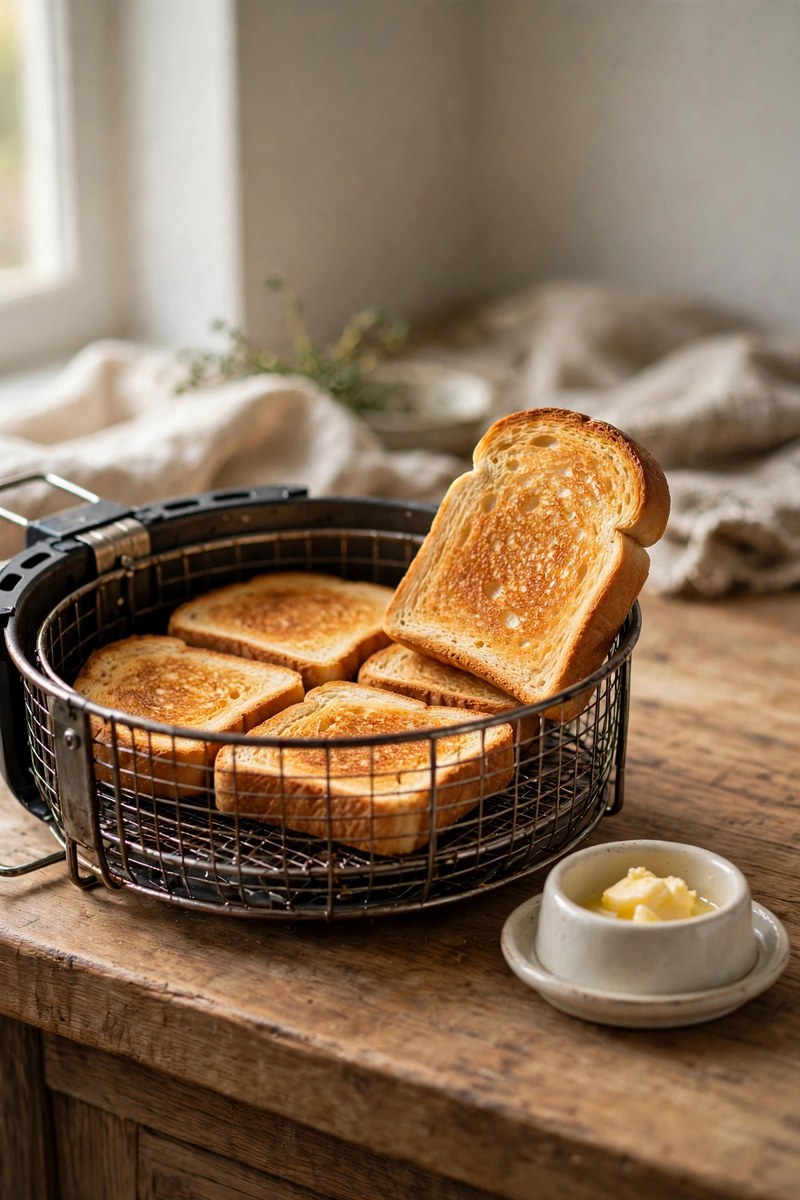
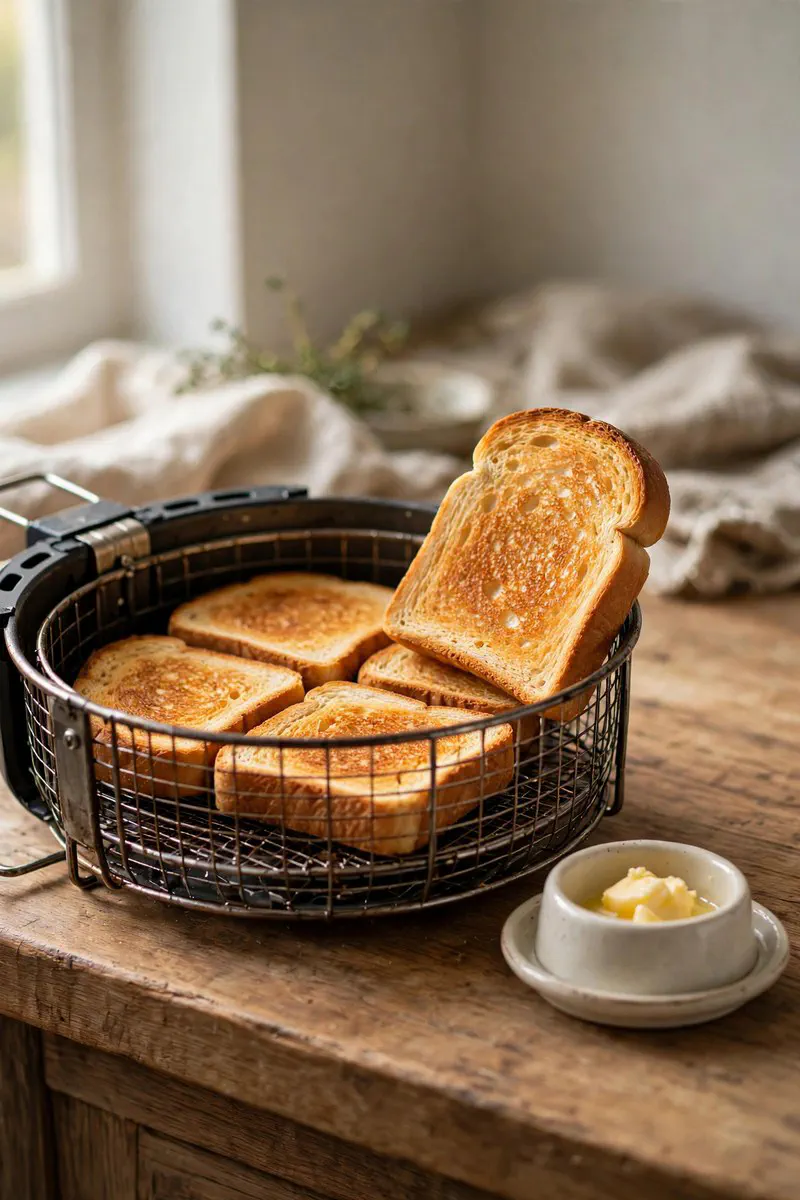
Yes. Lay the bread flat in the basket in a single layer, cook at 380°F (193°C) for 3 to 4 minutes for standard sandwich bread, and flip the slices halfway so both faces colour. Check a minute early the first time you try it in your machine, because toast moves from pale gold to dark brown fast near the end. Thick slices and frozen slices need more time, and breads with a lot of sugar in the dough need a lower temperature instead. No oil and no spray are needed.
The question usually shows up for a practical reason. A toaster broke. Counter space is tight. A bakery slice is too wide or too thick for a toaster slot. Or breakfast needs toast alongside something else the basket already cooks well, such as the eggs covered in the guide to cooking eggs in an air fryer. The basket handles all of those cases, as long as you treat the timing as a range to watch rather than a number to trust blindly.
Start with plain bread and add toppings after
Toast the bread on its own first. Butter, jam, and spreads all behave better when they go on after the slice comes out crisp, because none of them sits in hot moving air long enough to pool, slide, or scorch.
Butter is the one topping people most often put on early, and it changes the result in a specific way. Buttered bread browns in patches where the fat soaks in, and the colour ends up less even than plain toast. A heavy coat can also smoke if the temperature climbs toward 400°F (204°C). None of that makes buttered toast wrong. It makes it a different toast, richer and a bit uneven. If you want that version, use a thin and even coat, stay at 380°F (193°C), and accept the patchy colour as part of the deal. If you want an even face and a clean crisp bite, toast plain and butter the moment the slice lands on the plate, while the heat melts the butter into the surface.
Sweet toppings belong after cooking for a simpler reason. Sugar browns and then burns quickly at basket temperatures, and a topping that was pleasant on cold bread can turn bitter on a slice that sat under the element with sugar on top.
The slice decides the clock
Forget the idea of one correct toast setting. Thickness and moisture matter more than the number on the dial, and two slices from different loaves can finish minutes apart at the same temperature.
| Bread | Temperature | Time | What to watch |
|---|---|---|---|
| White or wheat sandwich bread | 380°F (193°C) | 3 to 4 minutes | Flip halfway and check at 3 minutes |
| Sourdough or bakery loaf slices | 380°F (193°C) | 4 to 5 minutes | Dense crumb colours more slowly |
| Thick slices, about 1 inch | 380°F (193°C) | 5 to 6 minutes | Flip at 3 minutes for even faces |
| Brioche or challah | 350°F (177°C) | 3 to 4 minutes | Sugar in the dough browns fast, so watch the last minute |
| Frozen sliced bread | 380°F (193°C) | 5 to 6 minutes | No thawing needed, flip halfway |
Those times are estimates. Basket size, wattage, and how dark you like toast all move them, and a second batch in an already hot basket can finish about 30 seconds sooner than the first. Cook slices of a similar thickness together when you can. A batch that mixes a thin sandwich slice with a thick bakery slice forces a choice about which one to pull first, and the thin slice usually pays for the delay.
Colour is the real test here. Bread has no centre temperature to measure and no doneness reading to chase. Pull the basket and look. Pale and soft means another 30 to 60 seconds. Deep brown at the edges means the slice is already past the point most people want, and the next batch needs a shorter run or a slightly lower temperature.
A light slice does not always sit still
Moving air is the whole method, and a thin slice of bread weighs very little. In some machines a light slice shifts, curls at the corners, or lifts as the fan runs. A slice that lands against the element shield can scorch in one spot and can smoke, so this is worth preventing rather than cleaning up after.
A small metal rack set over the slices holds them flat in many basket models, as long as the rack fits with clearance and your manual allows accessories of that kind. Flipping halfway also helps, because a slice that has started to crisp and stiffen sits flatter than a soft fresh one. Keep slices in a single layer with a little space around each one, and never run the machine with loose bread that has nothing holding it in a machine known to blow light food around.
If a slice does stick or scorch, turn the machine off before you reach in. Pull the basket out with a mitt, set it on a stable surface, and lift the bread out with tongs. Let the element area cool before you wipe anything near it.
Where the basket beats a toaster, and where it loses
A toaster still wins for one or two plain slices on a busy morning. It is faster, it needs no flipping, and it browns both faces at once by design. If the toaster works and the bread fits, use it and save the basket for something else.
The basket wins on size and on frozen bread. Slices too thick or too wide for a slot fit flat in a basket with room to spare. Frozen slices go in as they are and come out toasted without a thawing step or a soggy middle, which a microwave cannot manage and a toaster often handles unevenly. The basket also suits a breakfast where the toast is only one part of the plate, next to food such as the bacon in the guide to cooking bacon in an air fryer.
What the basket will not do is speed. Expect 3 to 6 minutes depending on the slice, plus the attention a flip requires. That trade is worth it when the toaster cannot take the bread at all. It is harder to justify when a working toaster sits right beside the machine, waiting with two open slots.