The Story
The short answer
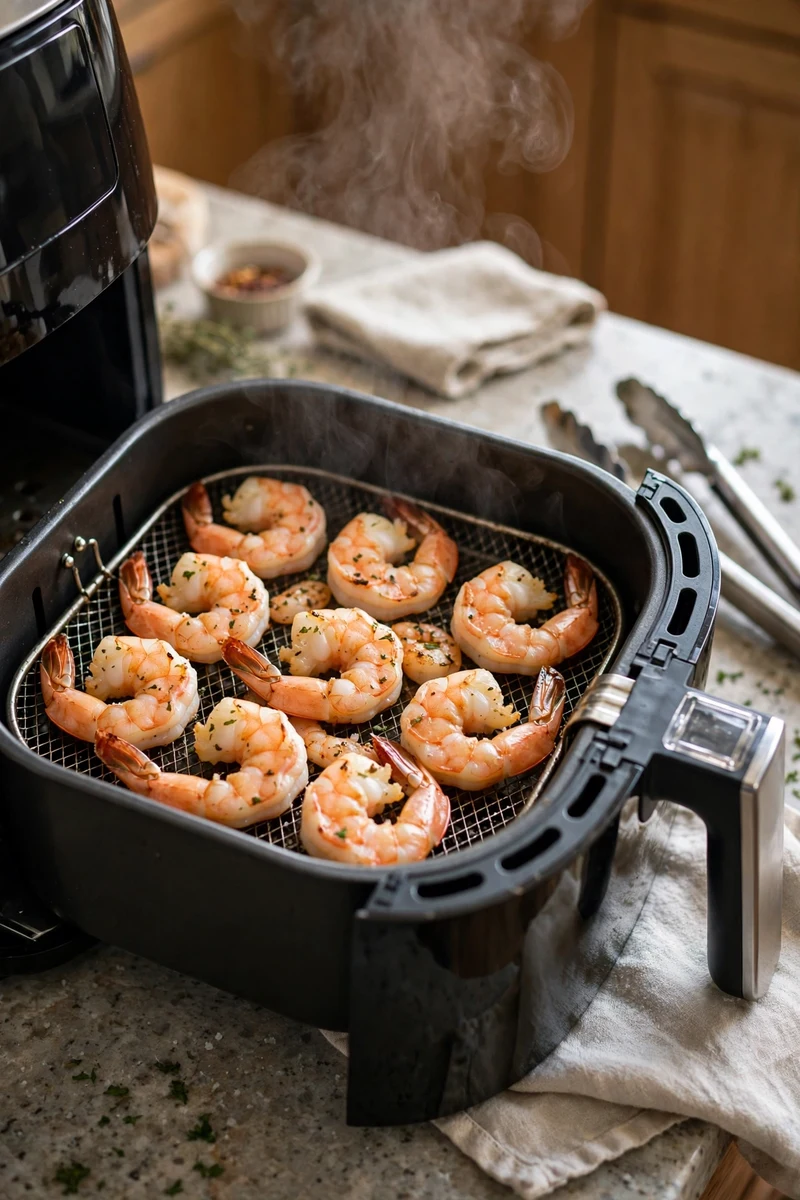
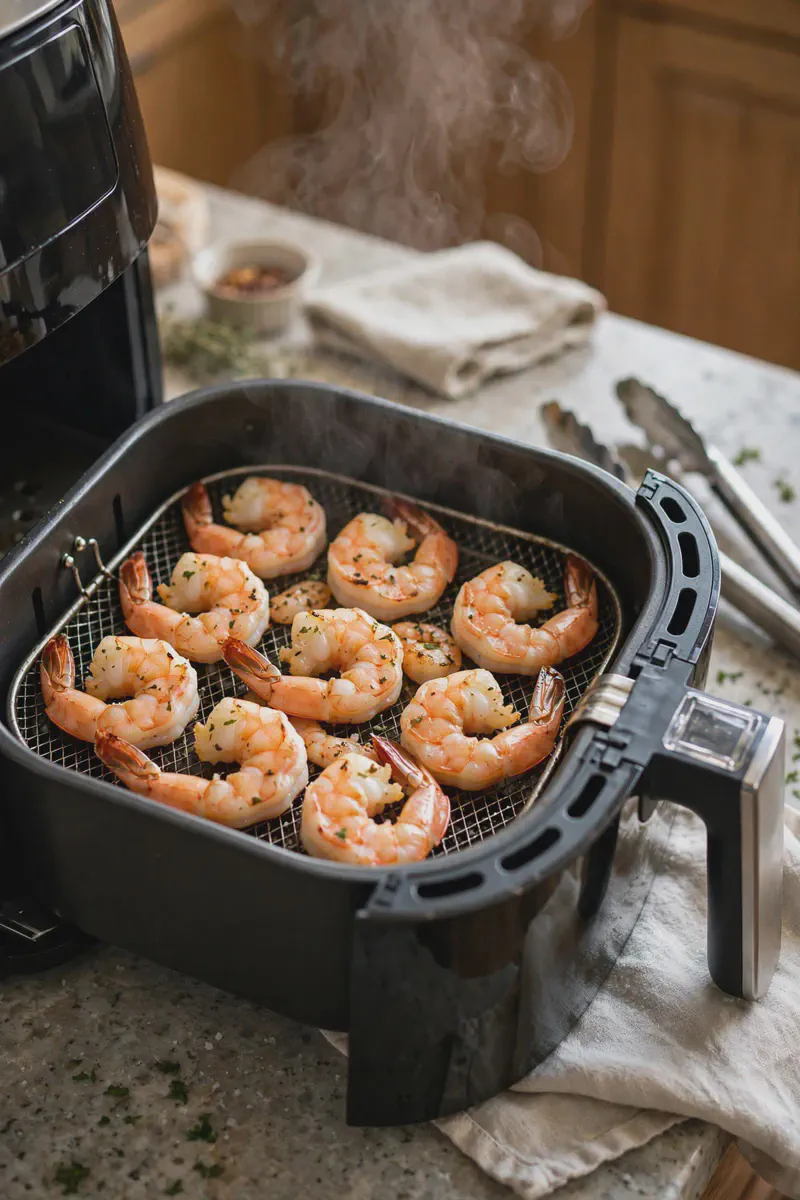
Yes. Peel the shrimp, pat them dry, toss them with a little oil and your seasoning, and cook in one layer at 400°F (204°C). Small shrimp need 5 to 6 minutes. Medium shrimp need 6 to 7 minutes. Large shrimp need 7 to 9 minutes. Jumbo shrimp need 8 to 10 minutes. Turn or shake once partway through. They are done when the flesh is pink and opaque all the way through, curled into a loose C shape, and the thickest piece reads 145°F (63°C).
Shrimp cooks faster than almost any other protein you can put in the basket, and that speed is both the appeal and the risk. A pan on the stove asks you to watch closely and turn each piece by hand. The basket does the turning work with a single shake and surrounds the shrimp with heat on all sides. The price of that convenience is a narrow window. About ninety seconds can separate shrimp that is tender from shrimp that has gone firm and rubbery, so the clock and the cues below matter more here than with chicken or potatoes.
The number on the bag is the size guide
Shrimp is sold by count, and that count is simply how many shrimp make one pound. A bag marked 41 to 50 holds smaller shrimp than a bag marked 21 to 25, because it takes more of them to reach the same weight. The count tells you the thickness of each piece, and thickness is what sets the time in the basket.
If the bag gives a name instead of a count, the names roughly follow the same order. Small, medium, large, and jumbo move from thin to thick in that order. When a bag shows a range that straddles two rows in the table below, use the longer time and start checking early, since the largest pieces in the bag decide when the batch is safe to pull.
| Count per pound | Heat | Time |
|---|---|---|
| 51 to 60, small | 400°F (204°C) | 5 to 6 minutes |
| 41 to 50, medium | 400°F (204°C) | 6 to 7 minutes |
| 31 to 40, large | 400°F (204°C) | 7 to 9 minutes |
| 21 to 25, jumbo | 400°F (204°C) | 8 to 10 minutes |
Treat these times as estimates. Basket models run hotter or cooler at the same setting, a crowded basket slows the cook, and shrimp that went in still cold from a marinade need the upper end of the range. Start checking at the early end every time.
Dry shrimp browns, wet shrimp steams
Shrimp comes out of the bag wet, and surface water has to boil away before browning can start. In a cook that lasts only six or seven minutes, two minutes spent steaming is a large share of the whole job. Pat each batch dry with paper towel or a clean cloth before seasoning. It takes under a minute and it is the step that decides whether the edges colour at all.
Toss the dry shrimp in a bowl with a small amount of oil, about 1 teaspoon for a pound, plus salt and whatever dry seasoning you want. Oil on the shrimp rather than oil sprayed on the basket keeps the coating where the food is and avoids a film building up on the basket floor. Wet sauces and sugary glazes belong at the end. Brush them on in the last minute or toss the cooked shrimp through them in a bowl, because sugar scorches fast at this heat and a wet coat at the start only delays browning.
Lay the shrimp in one layer with a small gap around each piece. Shrimp that touch will still cook, but the touching sides stay pale and soft. A pound is about the comfortable limit for most standard baskets. A larger amount does better in two batches, and the second batch cooks a little faster in a machine that is already hot, so check it a minute early. A short preheat of about 3 minutes helps here for the same reason it helps other seafood in the guide to salmon in an air fryer. The first pieces to land should meet a hot surface, not a cold one.
Read the curl, then confirm the temperature
As shrimp cooks, the flesh firms and the piece curls. A raw shrimp is fairly straight and grey and translucent. A cooked shrimp is pink and opaque and curled into a loose C shape. A shrimp cooked too long pulls itself into a tight O shape, with the ends nearly touching, and that tight curl is a reliable sign the texture has already gone firm.
The curl is a guide, not a guarantee. Colour and shape can look right while the thickest part of a jumbo shrimp still lags, so probe that piece when you want certainty. Push the tip of a thermometer into the thickest part of the largest shrimp, clear of the tail. At 145°F (63°C) with flesh that is opaque throughout, the shrimp is done. Pull the basket at that point rather than adding another minute for luck. Shrimp carries on cooking in its own heat for a short while after it leaves the basket, and that extra minute is where a good batch often turns.
Serve shrimp soon after it cooks. It cools quickly, and the texture is at its best while it is still warm. That timing suits dishes built around a quick finish, like tossing the hot shrimp over noodles in the style of shrimp lo mein or spooning sauce over a batch straight from the basket.
Frozen shrimp needs a short thaw inside the basket
You can cook shrimp from frozen, but seasoning will not cling to a frozen surface and the liquid the shrimp sheds as it thaws will flood the basket floor. A two stage approach works better. Put the frozen shrimp in the basket in one layer at 400°F (204°C) for 3 minutes. Pull the basket, tip the shrimp into a bowl, pour off the liquid that collected, pat the shrimp dry, and toss them with oil and seasoning. Return them to the basket and cook for 5 to 7 minutes more, depending on size, until they reach the same pink and opaque finish and the same 145°F (63°C) reading.
Breaded frozen shrimp is a simpler case. Cook it straight from frozen at 400°F (204°C) for 8 to 10 minutes, turning once partway through, until the coating is crisp and golden and the shrimp inside is hot and opaque. Give breaded pieces a light coat of oil if the coating looks dry and pale at the halfway mark. Crowding hurts breaded shrimp more than plain shrimp, since the coating needs moving air on every side to stay crisp, which is also why frozen shrimp in a stir fry style sauce still works best when the sauce goes on after the basket.
Leftovers keep in the fridge for 3 to 4 days in a sealed container, and they should reach the fridge within 2 hours of cooking. Reheat them gently, because a second hard cook is what makes leftover shrimp tough. Put cold shrimp in the basket in one layer at 350°F (177°C) for 2 to 3 minutes, just until warm throughout, and stop there even if the edges have not coloured again.
Size the batch by the count on the bag, dry the shrimp well, and watch for the loose curl. Do those three things and the basket gives you shrimp that is tender and properly cooked in less time than it takes to boil water for pasta.