The Story
The short answer
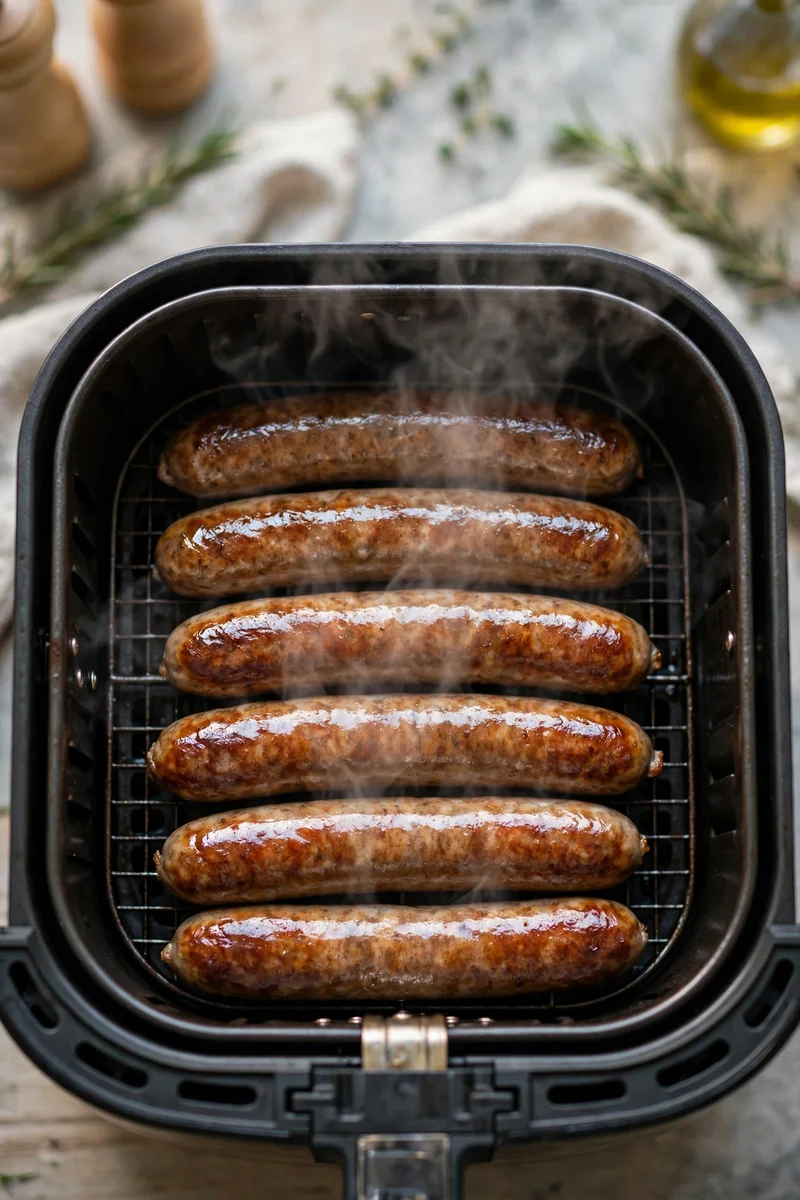
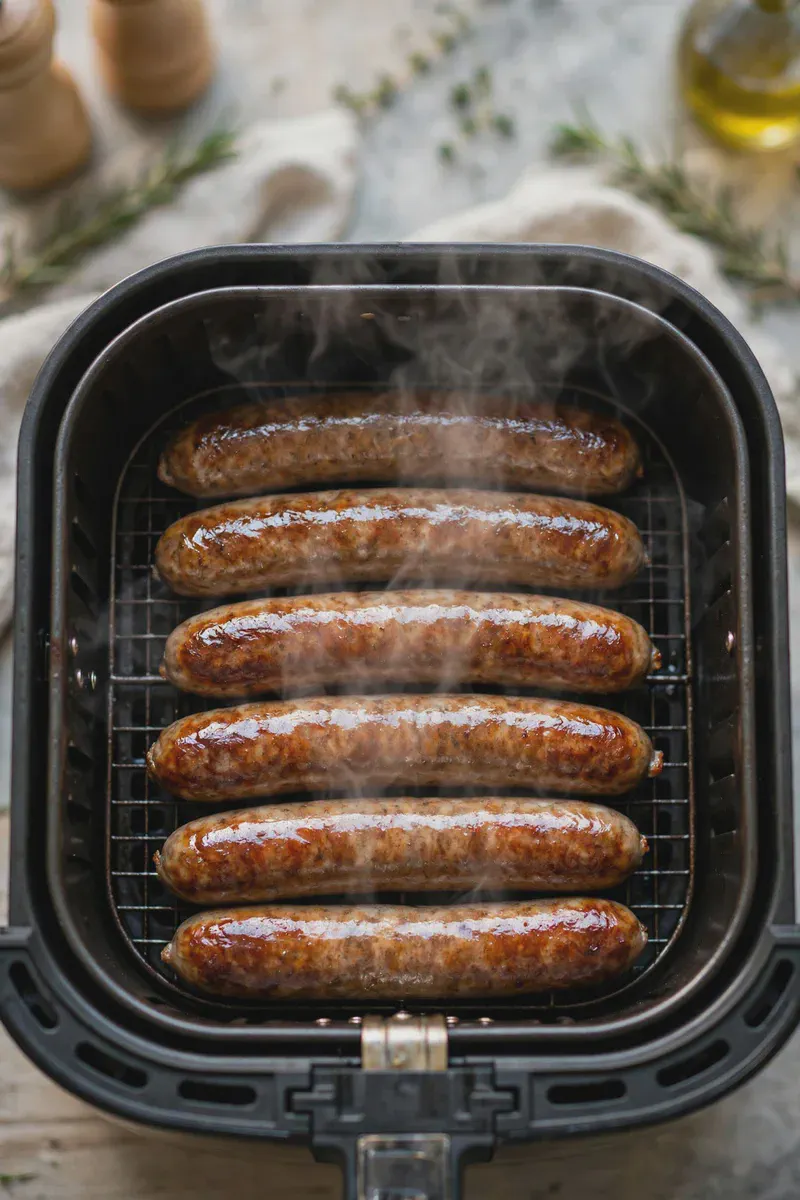
Yes. Put fresh links in the basket in one layer with a small gap around each one and cook at 380°F (193°C). Thin breakfast links need 9 to 11 minutes. Standard fresh links such as Italian sausage and bratwurst need 12 to 15 minutes. Thick links need 15 to 18 minutes. Turn each link once partway through. Pork and beef sausage is done when the centre of the thickest link reads 160°F (71°C). Chicken and turkey sausage needs 165°F (74°C).
A skillet cooks sausage from the bottom up, so the side in the pan colours while the top waits, and the fat that renders out spatters the stove the whole time. The basket surrounds each link with moving air and lets the rendered fat fall away through the floor, so the casing browns on all sides and the counter stays cleaner. The trade is attention to thickness and to fat. Links vary more in width than most foods people put in a basket, and sausage gives up more fat than almost any of them, so those two facts shape everything below.
Fresh sausage and precooked sausage want different things
A fresh link is raw ground meat inside a casing, and the job is to cook the centre all the way through while the casing browns. That takes the full times in the table below, and the thermometer reading is what decides the finish.
A precooked link, such as smoked sausage and kielbasa, was already cooked before it was packed. The job there is only to heat the centre through and colour the outside. Give a precooked link the time a fresh link gets and it will still be safe to eat, but the casing turns tough and the inside dries, because the meat is effectively cooking twice. Treat the two kinds as separate foods that happen to share a shape, check which kind is in the package before the basket heats, and use the row in the table that matches it.
Leave the casing intact
It is tempting to prick links before cooking so they do not burst. Resist it. The casing is what holds the juices and the melted fat inside the link while the centre cooks, and every hole you poke gives that moisture a way out. A pricked link finishes drier than an intact one, and the fat that escapes through the holes lands in the basket anyway.
Links cooked at 380°F (193°C) rather than at a higher setting rarely split in the first place, because the gentler heat lets the inside expand gradually instead of forcing steam against the casing all at once. If a link does split a little, the cook is not ruined. The split spot loses some juice and cooks a touch drier than the rest, but the link is still fine to serve once it reaches its temperature. No oil is needed on fresh links either. Fat renders out of the meat and coats the casing as it cooks, much as it does with bacon in an air fryer, and oil added at the start mostly joins the pool under the basket.
Times go by thickness
The name on the package tells you the flavour. The width of the link tells you the minutes. A breakfast link can be half as thick as a bratwurst, and heat has half as far to travel to reach its centre, so a single time for sausage as a category would mislead in both directions.
| Sausage in the basket | Heat | Time |
|---|---|---|
| Breakfast links, thin | 380°F (193°C) | 9 to 11 minutes |
| Fresh Italian links and bratwurst, about 1 inch thick | 380°F (193°C) | 12 to 15 minutes |
| Fresh links, thicker than 1 inch | 380°F (193°C) | 15 to 18 minutes |
| Precooked smoked sausage and kielbasa | 380°F (193°C) | 8 to 11 minutes |
Start checking a couple of minutes before the early end of the range for your link. Machines run hotter or cooler than the number on the dial suggests, links that go in cold from the fridge need the upper end, and a full basket slows the cook compared with a small batch. Probe the centre of the thickest link, pushing the tip into the middle of the meat and keeping it clear of the basket floor. Colour can look complete while the centre of a thick link still lags, so the reading outranks the browning every time.
Turn the links once at the halfway mark with tongs. The side that sat against the basket floor has been shielded from the moving air, and turning brings that pale band up into the heat so the casing colours evenly. Work with tongs over a stable surface and keep a mitt on the hand that steadies the basket, since the links and the basket are both hot enough to burn and a link that rolls off tongs can splash hot fat.
Fat will find the basket floor
Sausage renders a lot of fat, and that fat has to go somewhere. In the basket it drips through the floor and pools in the drawer below, away from the food, which is part of why the casings brown instead of frying in their own grease. The pool becomes a problem only when it is ignored. A deep pool under a hot element can start to smoke, and the guide to why an air fryer smokes traces most of that smoke back to old fat left sitting in the drawer.
Three habits keep it under control. Cook in one layer so fat drips clear instead of pooling around links that sit in it. Pour the fat off into a heat safe container between batches rather than letting a second batch add to the first pool, and let that fat cool before it goes in the garbage rather than down the sink. Wash the basket and the drawer while they are still warm, when the fat lifts off with a sponge instead of needing a soak. Links cooked alongside food in the same size range, like the approach used for hot dogs in an air fryer, follow the same rule about space, since crowded food traps fat and steam against the casing and the touching sides stay pale.
Frozen links need a gentler start
Fresh links can go in frozen, and the method changes in two places. Lower the heat to 360°F (182°C) so the outside does not finish long before the centre thaws, and give the links 15 to 20 minutes depending on thickness, turning them once partway through. The lower heat buys the centre time to catch up.
Links that went into the freezer in a clump need separating once they soften. Cook the clump for about 4 minutes, pull the basket, and ease the links apart with tongs or two forks on a stable surface, keeping fingers clear of the hot basket walls. Once each link sits on its own with a gap around it, the rest of the cook behaves like the frozen timing above. Links left fused together cook as one thick piece with a cold middle, which is the one outcome the thermometer will catch only if you probe the centre of the clump rather than an outer link. Precooked links from frozen need less, about 11 to 14 minutes at 360°F (182°C), since they only need to heat through.
Pull the finished links out with tongs onto a plate and give them about 3 minutes before cutting or serving. The juices settle in that short rest, and a link cut the second it leaves the basket loses more of them onto the plate. Check the thickest link, manage the fat instead of ignoring it, and the basket turns out sausage with a browned casing and a centre that is cooked through and still juicy.