The Story
The short answer
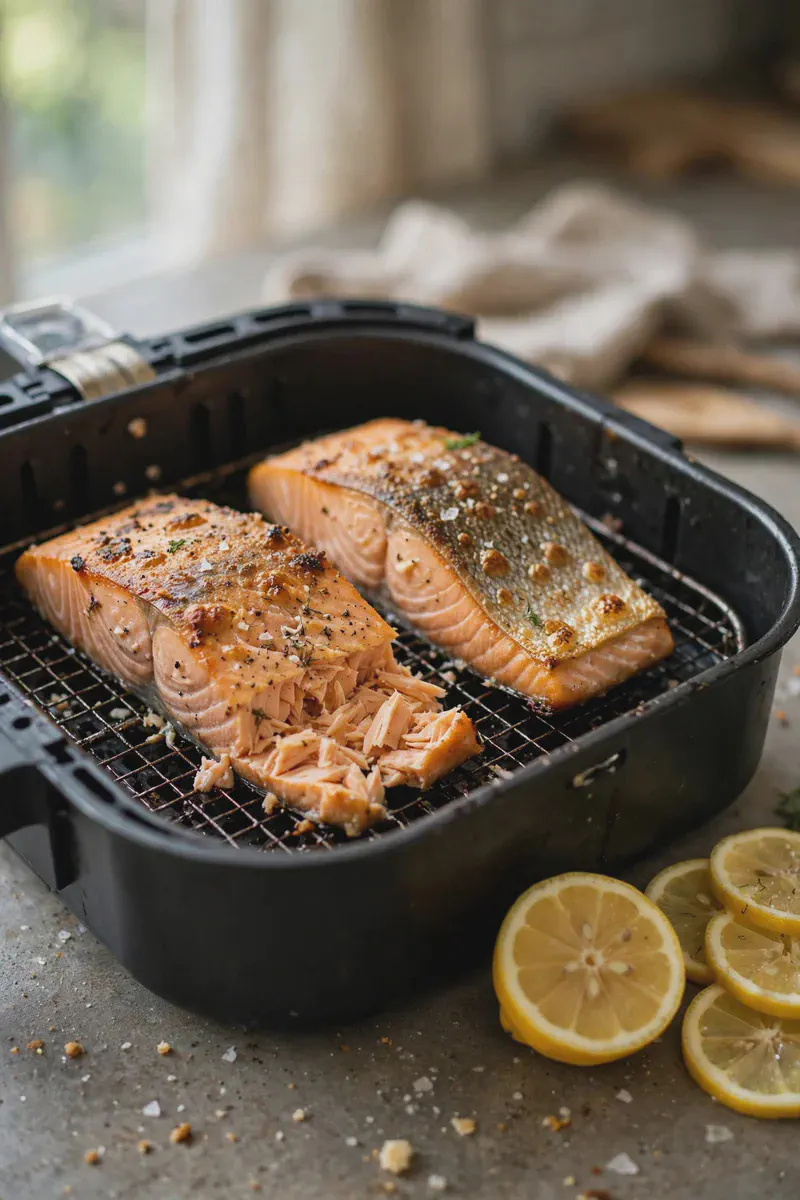
Yes. Salmon cooks beautifully in an air fryer. Heat the empty basket at 400 degrees Fahrenheit, pat the fillets dry, season them well, and place them in a single layer with the skin side down. A fillet about one inch thick needs 7 to 10 minutes. It is done when the flesh flakes with gentle pressure from a fork and a thermometer in the thickest part reads 145 degrees Fahrenheit. The skin turns crisp, the centre stays moist, and the whole cook takes less time than heating a full oven.
Salmon makes people nervous for good reason. It costs more than chicken, it goes from tender to dry in a very short window, and nobody wants fish that tastes strong or feels tough. The air fryer suits salmon better than most people expect. The basket is small, the hot air moves fast, and the fish cooks in minutes at close range. That quick cook is exactly what salmon wants. You get colour on top, crisp skin underneath if you keep the skin on, and a centre that stays soft and rich.
This guide covers fresh fillets, frozen fillets, and the small mistakes that dry salmon out. Start with the steps below and trust the thermometer more than the clock.
1. Choose fillets of even thickness
Why it matters: a thin tail piece and a thick centre piece cannot finish at the same moment. The thin piece dries out while the thick piece is still firm in the middle. Pieces of very uneven size turn one simple cook into guesswork, and salmon punishes guesswork faster than most fish.
What to do instead: pick fillets that look close in thickness, ideally about one inch thick, and cook fillets of a similar size in the same batch. If one piece is much thinner than the rest, pull it out a few minutes early and let the thicker pieces finish. Centre cut fillets are the easiest choice because their thickness stays even from end to end.
2. Pat the surface dry and season just before cooking
Why it matters: surface water has to boil away before the top of the fish can take on any colour, so wet salmon steams before it browns. Salt left sitting on raw fish for a long time also draws moisture to the surface, which works against you in the basket.
What to do instead: pat every fillet dry with a clean towel or paper towel, brush on a thin film of oil, then season right before the fish goes in. Salt and black pepper are enough on good salmon. Garlic powder, smoked paprika, and a little brown sugar also work well. Save lemon juice and fresh herbs for after the cook, when the acid and the green flavour stay bright instead of turning dull in the heat.
3. Heat the basket and lay the fish skin side down
Why it matters: salmon that lands in a cold basket warms slowly and starts to leak juice before the surface sets. The skin can also stick and tear when you try to lift the fish out. A hot basket gives you a cleaner release and better colour from the first minute.
What to do instead: run the empty basket at 400 degrees Fahrenheit for 3 to 5 minutes. Place each fillet with the skin side down and leave a small gap between pieces so air can move around them. Do not turn the fillets during the cook. The skin protects the flesh from the direct heat below, and leaving the fish alone lets the top set without breaking apart.
4. Give the basket room and keep the oil light
Why it matters: salmon packed tight in the basket steams in its own moisture and cooks unevenly. A heavy pour of oil pools under the fish, makes the skin soft instead of crisp, and can smoke at high heat. Salmon is already a rich fish, so it needs very little help.
What to do instead: cook in a single layer and work in two batches if you are feeding a crowd. The second batch cooks a little faster in a hot basket, so the wait is short. Brush oil on the fish itself rather than pouring it into the basket, and use just enough to help the seasoning stick and the surface brown.
5. Cook to temperature and watch the last two minutes
Why it matters: salmon moves from moist to dry very fast at the end of the cook. One extra minute can be the whole difference. Colour alone can mislead you, because a fillet can look golden on top while the centre is still cool, or look pale while the centre is already done.
What to do instead: check the fish at the early end of the time range in the table below. Press the thickest part gently with a fork. Done salmon flakes in clean layers and looks opaque with a slight sheen in the centre. For certainty, use a thermometer and pull the fish at 145 degrees Fahrenheit in the thickest part, which is the temperature food safety guides advise for fish. Take the basket out as soon as the fish reaches that point, because the heat of the fillet will carry it a touch further as it sits.
6. Frozen salmon works, with a small change in method
Why it matters: a frozen fillet goes in hard and icy, so seasoning slides off the surface and the outside can finish before the centre warms through. Treating frozen fish exactly like fresh fish gives you bland edges and a cold middle.
What to do instead: place the frozen fillets in the hot basket with the skin side down and cook them at 400 degrees Fahrenheit. After about 5 minutes, when the surface has thawed, pull the basket out, brush on oil and seasoning, and return the fish to finish. Frozen fillets about one inch thick need 12 to 15 minutes in total. Check the thickest part with a thermometer before you serve, and add time in one minute steps if the centre still reads low.
Quick reference
| Fillet | Temperature | Total time | Turn | Notes |
|---|---|---|---|---|
| Fresh, about half an inch thick | 400 degrees Fahrenheit | 5 to 7 minutes | None | Check early at 5 minutes |
| Fresh, about one inch thick | 400 degrees Fahrenheit | 7 to 10 minutes | None | Skin side down |
| Fresh, about one and a half inches thick | 400 degrees Fahrenheit | 10 to 12 minutes | None | Check the centre with a thermometer |
| Frozen, about one inch thick | 400 degrees Fahrenheit | 12 to 15 minutes | None | Season after the first 5 minutes |
Salmon in the air fryer is fast, clean, and kind to a busy evening. Dry surface, hot basket, skin side down, and a thermometer check near the end. Get those four things right and the fish comes out with crisp skin and a moist centre every time. Cook one fillet first while you learn how your own machine runs, write down the time that worked for the thickness you buy most often, and dinner gets easier from there.