The Story
The short answer
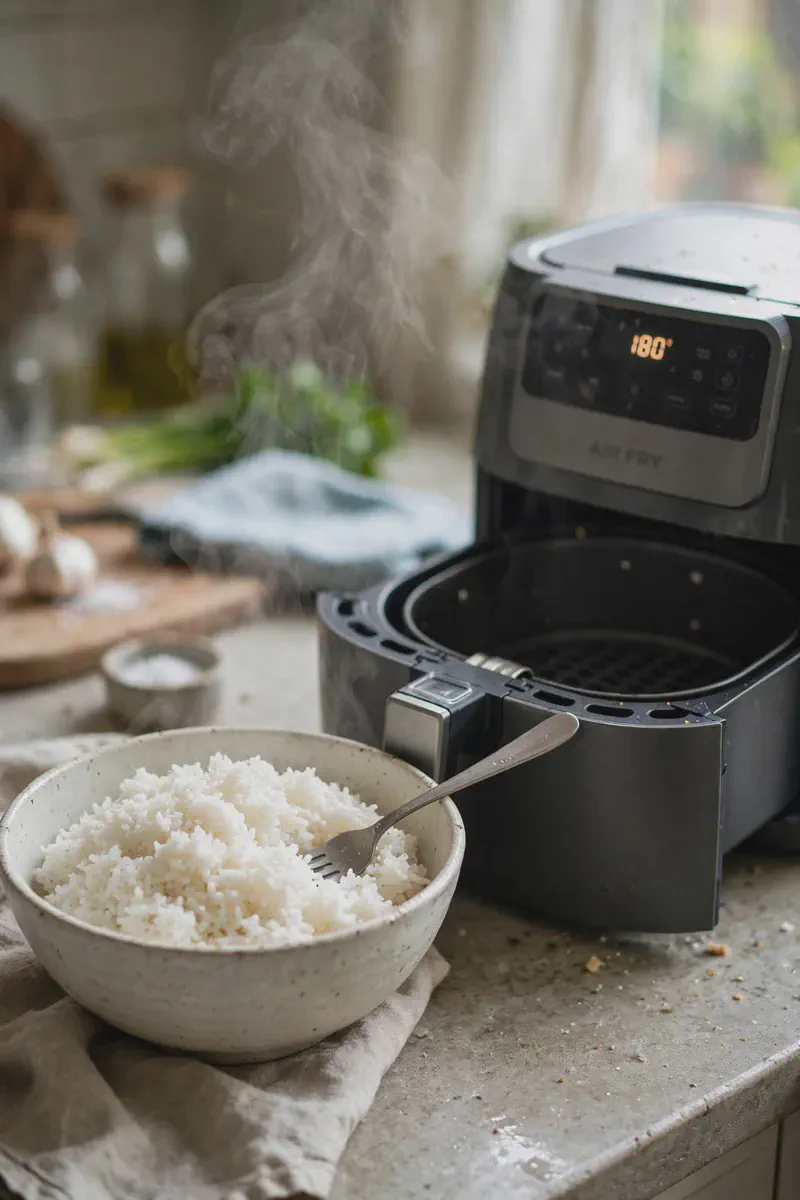
Yes, but never loose in the basket. Rice needs water and trapped steam to cook, and the basket alone gives it neither. Put rinsed rice in a deep dish that is safe for oven use, add hot water, cover the dish tightly with foil, and cook at 350 degrees Fahrenheit for 25 to 30 minutes for white rice. Let it rest covered for 10 minutes, then fluff with a fork. Done this way it comes out tender and separate. Done loose in the basket it falls through the grate, blows around, and scorches.
This question comes up when the stovetop is full, the rice cooker is still in the cupboard, or you just want one less pot to watch. The air fryer can do the job for a small batch. It is not the fastest tool for rice and it is not the best tool for a big batch, but for one or two cups of cooked rice it works well once you respect the one rule that matters. Rice cooks in steam, so your whole job is to keep steam in the dish while hot air moves around the outside of it. Rice as a main dish is a different job, and Butter Chicken Rice shows that side well.
1. Never put loose rice in the basket
Why it matters: dry grains are small and light. They slip straight through the holes in the basket and land in the drawer below, where they burn. The fan can also lift loose grains toward the heating element. You end up with scorched rice in places it should never be and no dinner to show for it.
What to do instead: always cook rice in a dish. Choose a deep cake pan, a ceramic dish, or a metal pan that fits inside the basket with space around all sides. The dish holds the rice and the water together, and it keeps every grain where it belongs for the full cook.
2. Leave room around the dish for air to move
Why it matters: an air fryer cooks by moving hot air around food at speed. A dish that touches the walls of the basket blocks that flow. The outside of the dish stays cooler, the rice cooks unevenly, and the centre can stay firm while the edges soften.
What to do instead: pick a dish that leaves at least a small gap on every side when it sits in the basket. Set the dish in the centre. Use oven mitts or a folded towel to lift it out at the end, because the dish and the steam inside it will both be very hot.
3. Rinse the rice and start with hot water
Why it matters: the white powder on dry rice is loose starch. If it stays, the grains stick together and the result turns gummy. Cold water also slows the whole cook down, because the air fryer must heat the water before the rice can absorb it and soften.
What to do instead: rinse one cup of long grain white rice in a fine strainer under cold water until the water runs mostly clear, then drain it well. Tip the rice into your dish and add one and a quarter cups of hot water from the kettle, plus a pinch of salt and a small knob of butter or a teaspoon of oil if you like. Hot water gives the cook a head start and helps the grains cook evenly. For a coloured basmati side, try Sweet Yellow Basmati Rice.
4. Cover tightly so the steam stays in
Why it matters: this is the step that decides the whole dish. Steam is what softens rice. If the cover is loose, the fan pulls the steam away as fast as it forms, the top layer dries out, and you get a mix of soft rice at the bottom and crunchy rice on top.
What to do instead: cover the dish with foil and crimp the edges down firmly all the way around so no steam can escape. If your dish has a lid that is safe for oven use, you can use that instead, as long as it sits tight. Do not peek during the cook. Every peek lets out the steam you worked to trap.
5. Rest the rice before you fluff it
Why it matters: rice finishes cooking after the heat stops. Grains that look a little firm at the end of the cook often soften in the rest, as the steam left in the dish spreads evenly through them. If you stir too soon, you break the grains and push that steam out.
What to do instead: take the covered dish out and let it sit on the counter for 10 minutes with the cover still on. Then remove the foil away from your face, because a cloud of steam will rise at once. Fluff gently with a fork, lifting and turning the grains rather than stirring them in circles.
6. Know when to choose another tool
Why it matters: honest advice saves more dinners than loyalty to one gadget. The air fryer takes longer than the stovetop for rice and it only suits a small batch. A large amount of rice in a deep dish cooks unevenly, and brown rice needs so much extra time that the top can dry even under foil.
What to do instead: use the air fryer for rice when the stovetop is busy, when you want a small batch with very little watching, or when you are reheating leftover rice in a covered dish with a spoon or two of water. Use a pot or a rice cooker for a family size batch, for brown rice, and on any night when speed matters most. Each tool has its place, and rice is happiest in the one that gives it plenty of steam.
Quick reference
| Rice, one cup dry | Water to add | Temperature | Time | Rest |
|---|---|---|---|---|
| Long grain white | One and a quarter cups | 350 degrees Fahrenheit | 25 to 30 minutes | 10 minutes covered |
| Jasmine | One and a quarter cups | 350 degrees Fahrenheit | 25 to 28 minutes | 10 minutes covered |
| Basmati | One and a half cups | 350 degrees Fahrenheit | 28 to 32 minutes | 10 minutes covered |
| Brown | Two cups | 350 degrees Fahrenheit | 40 to 45 minutes | 15 minutes covered |
| Leftover cooked rice | One to two spoons of water | 320 degrees Fahrenheit | 6 to 8 minutes | Fluff and serve at once |
Rice in the air fryer is a useful trick, not a magic trick. Dish, hot water, tight cover, full rest. Get those four things right and a small batch comes out tender every time. Get the cover wrong and no timer will save it. Try it once with a small batch on a calm night, note the time that worked in your machine, and write that time on a note inside the cupboard door. The next busy night will thank you. A savoury flavoured rice to try next is Onion Soup Mix Rice.
A last word on leftovers. Cool cooked rice promptly, put it in the fridge in a covered container, and use it within three to four days. Reheat it until it is steaming hot all the way through before you serve it.