The Story
The short answer
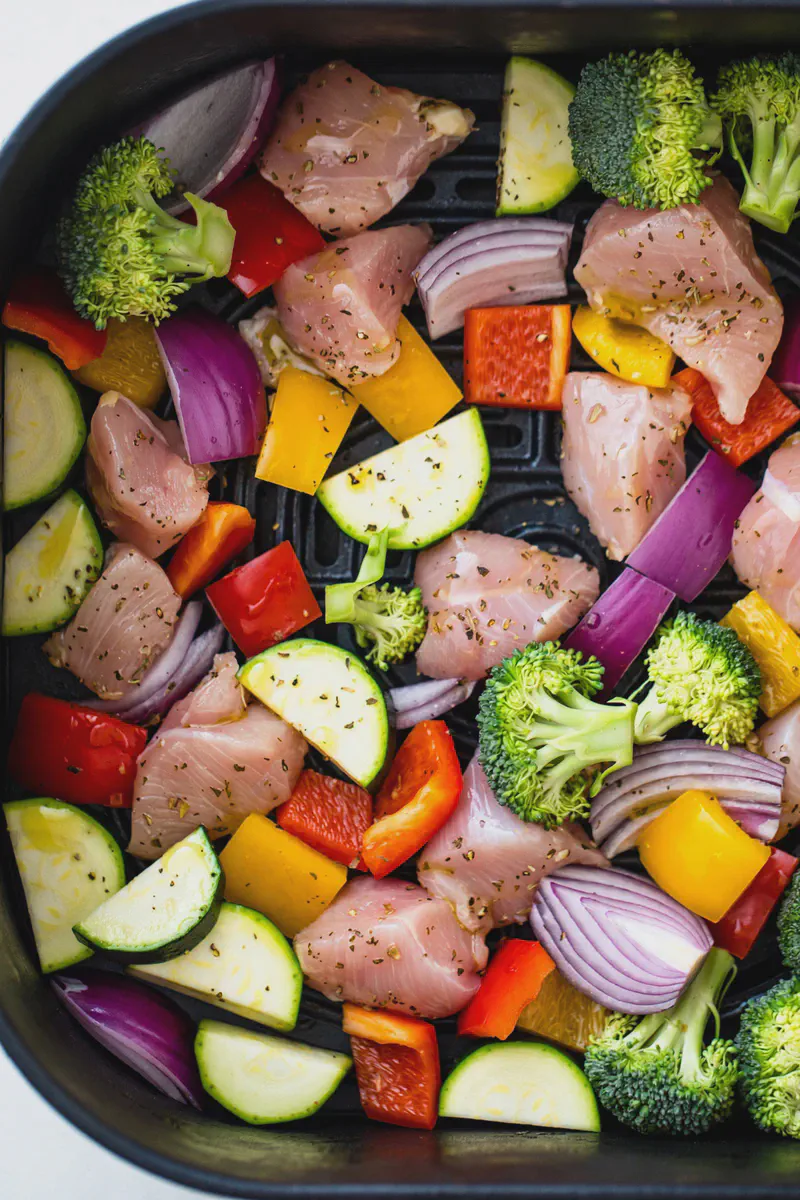
Yes. Raw meat and vegetables can cook together in one air fryer basket, and it is one of the easiest ways to get a full dinner out of one machine. The catch is timing. Dense vegetables need a head start, meat needs to reach a safe temperature, and tender vegetables need to go in near the end so they do not turn soft while the meat finishes. Start the slow foods first, add the rest in stages, and check the meat with a thermometer before you serve. Do that and the shared basket is safe, simple, and very tasty.
One basket dinners are the dream on a busy night. Chicken and broccoli in, dinner out, very little washing up. The trouble starts when everything goes in at the same moment. The broccoli turns dark and limp while the chicken is still pale in the centre, or the potato chunks stay firm long after the meat is done. None of that means the idea is wrong. It means the foods in the basket run on different clocks, and the cook has to respect each clock. Work through the points below and a mixed basket stops being a gamble.
1. Give dense vegetables a head start
Why it matters: potatoes, sweet potatoes, carrots, and squash are dense, and dense food takes the longest for heat to reach the centre. Chicken pieces, pork chops, and most other meats cook faster than a thick chunk of potato. If they all start together, you have to choose between meat that dries out while it waits and vegetables that stay hard in the middle.
What to do instead: put the dense vegetables in first, tossed with a little oil and seasoning, and give them about ten minutes on their own at 400°F. Then add the meat and let everything finish together. The vegetables get the time they need, the meat still cooks in its normal window, and both land on the plate hot at the same moment.
2. Add tender vegetables near the end
Why it matters: broccoli, green beans, peppers, zucchini, and asparagus cook fast in hot moving air. Eight to twelve minutes is plenty for most of them. Leave them in for a full meat cook and they lose their colour, their bite, and a good deal of their flavour. They also give off water as they soften, and that extra water can slow the browning of the meat beside them.
What to do instead: hold the tender vegetables back and add them for the last part of the cook. Broccoli and green beans want about eight minutes. Asparagus and zucchini want about five to seven minutes. Shrimp belong in this group too, even though they are not a vegetable. They cook in five to seven minutes, so they should always be the last thing into the basket, never the first.
3. Cut each food for its own clock
Why it matters: size is a timing tool. A thick chicken breast and a thin chicken strip cannot finish together, and a large potato chunk and a small one cannot either. Mixed sizes in a mixed basket make the guessing worse, because now the meat, the dense vegetables, and the tender vegetables are all drifting apart at once.
What to do instead: cut with the finish line in mind. Potato chunks should be small and even, about the size of a large grape, so the head start can do its work. Chicken is easiest in even pieces or in thighs of a similar size. If a chicken breast is very thick, slice it in half across its width to make two thinner pieces. Even sizes will not fix a bad plan, but they make a good plan land on time.
4. Keep raw meat juices where they belong
Why it matters: raw meat carries juices, and those juices should only touch food that will cook fully after the contact. Vegetables in the same basket are fine on that point, because they stay in the heat until the meat is done and they cook through alongside it. The risk sits outside the basket. Juice on a cutting board, on tongs, or on the plate that held the raw meat can reach cooked food that will not be heated again.
What to do instead: use one board and one set of tongs for raw meat, and a clean set for serving. Wash your hands after you handle raw meat and before you touch anything else. Put the cooked dinner on a clean plate, never back on the plate that carried the raw meat to the machine. Add fresh herbs, lemon wedges, or a salad after the cooking is done, with clean hands and clean tools.
5. Leave room for the air to move
Why it matters: a mixed basket fills up fast, and a packed basket steams. Meat and vegetables both give off moisture as they cook, and that moisture needs a way out. When pieces sit piled on top of each other, the surfaces stay damp, browning stalls, and the foods in the middle cook more slowly than the foods at the edges. Slow and uneven is the last thing you want when raw meat is part of the meal.
What to do instead: cook in one layer with a little space between the pieces, even if that means a smaller dinner in the basket. If you are feeding more people, run two rounds. The second round cooks faster in a hot basket, and the first round can rest on a warm plate. Two good rounds beat one crowded round every time.
6. Trust a thermometer, not the look of the food
Why it matters: vegetables can look done long before the meat beside them is safe, and meat can look brown and finished while the centre still lags behind. Colour is a clue about the surface. It tells you very little about the thickest part of a chicken thigh or a pork chop, and that thickest part is the part that decides whether dinner is ready.
What to do instead: check the thickest piece of meat with a food thermometer, away from any bone. Chicken is done at 165°F. Ground meat is done at 160°F. Whole cuts of pork and beef are done at 145°F, followed by a rest of a few minutes before you slice them. Shrimp are done when they turn pink and firm, at about 145°F. When the number is right, serve with confidence. When it is not, give the meat a few more minutes and pull the tender vegetables out first if they are already done.
A simple plan for a chicken and vegetable basket
Heat the basket. Run the empty basket at 400°F for three to five minutes while you cut and season the food.
Start the potatoes. Cook small potato chunks with a little oil and salt for about ten minutes, until the edges begin to soften.
Add the chicken. Add seasoned chicken pieces in one layer and cook for about ten minutes. The potatoes keep cooking beside the chicken and pick up flavour from it.
Add the tender vegetables. Add broccoli florets or green beans for the last eight minutes and shake the basket once so everything settles into the hot air.
Check, then rest. Confirm the chicken reads 165°F at the thickest point, let the basket sit for two minutes, and serve on a clean plate. Two recipes that run on this same plan are air fryer chicken fajitas and honey lime chili chicken and veggies.
Quick reference
| Meal in one basket | Goes in first | Goes in later | Check at the end |
|---|---|---|---|
| Chicken pieces and broccoli | Chicken pieces | Broccoli for the last 8 minutes | Chicken at 165°F |
| Potatoes and raw sausage links | Potatoes for 10 minutes | Sausage links after the potato head start | Sausage at 160°F |
| Steak pieces and asparagus | Steak pieces | Asparagus for the last 5 minutes | Steak at 145°F, then rest |
| Pork chops and green beans | Pork chops | Green beans after the first 4 minutes | Pork at 145°F, then rest |
| Zucchini and shrimp | Zucchini for 5 minutes | Shrimp for the last 5 to 7 minutes | Shrimp pink and firm, at 145°F |
Yes, meat and vegetables belong in the same basket. They just should not all arrive at the same time. Give the dense foods a head start, hold the tender foods back, keep raw juices off the tools you serve with, and let a thermometer make the final call. One basket, one dinner, and a sink with far less in it. That is the whole trick, and it works on the busiest night of the week.