The Story
The short answer
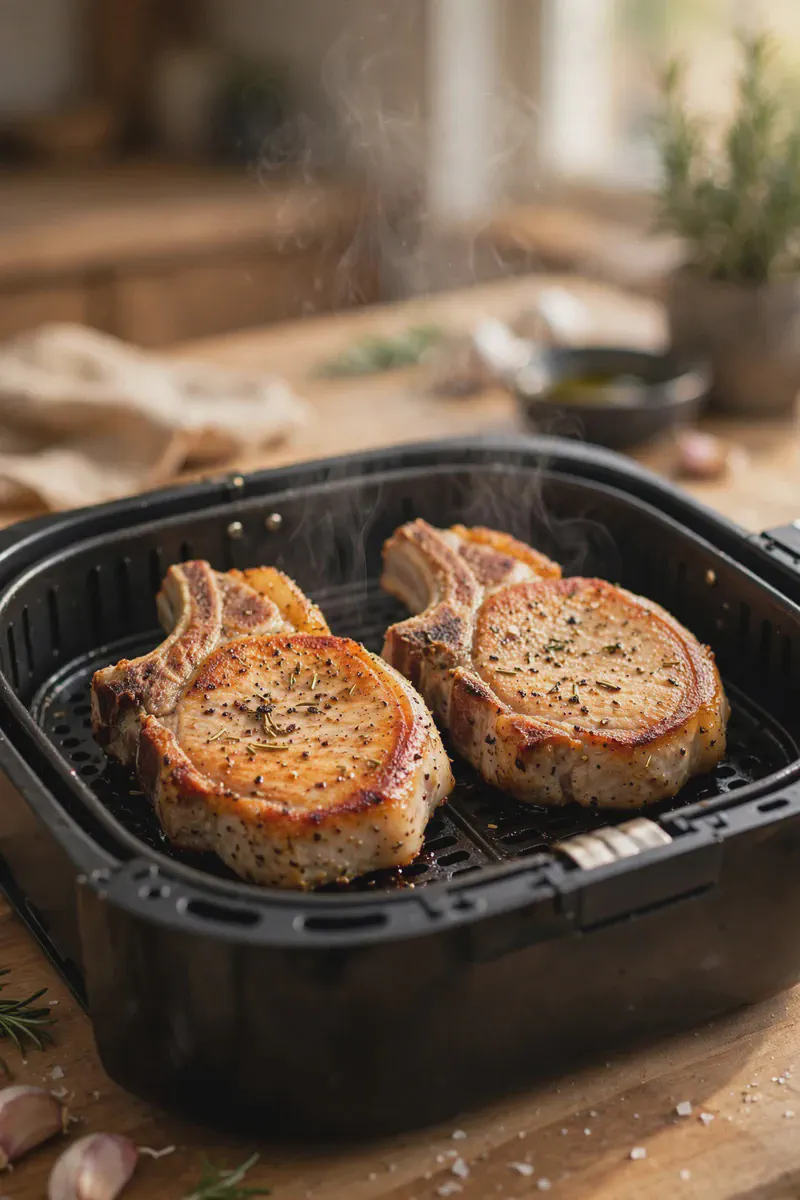
Yes. Pork chops cook very well in an air fryer. Heat the empty basket at 400 degrees Fahrenheit, pat the chops dry, season them well, and place them in a single layer. A chop about one inch thick with the bone in needs 12 to 16 minutes, turned once halfway. It is done when a thermometer in the thickest part reads 145 degrees Fahrenheit. Let the chops rest for at least 3 minutes before you serve them. The outside turns golden and crisp at the edges, the centre stays juicy, and dinner is on the table faster than a full oven could manage.
Pork chops have a tough reputation, and most of it comes from dry meat. A chop cooked a few minutes too long turns firm and bland, and a chop cooked at a timid heat never gets any colour. The air fryer solves both problems at once. The basket is small, the hot air moves fast, and thick chops cook through in minutes while the surface browns. You get the kind of crust a skillet gives you, with far less splatter and no pan to scrub after. For a saucy pork night, my Sweet Sour Pork goes a very different way.
This guide covers fresh chops with the bone in, chops without the bone, frozen chops, and the small mistakes that dry pork out. Start with the steps below and trust the thermometer more than the clock.
1. Choose chops of even thickness
Why it matters: thickness decides everything with pork chops. A thin chop and a thick chop cannot finish at the same moment. The thin chop dries out while the thick chop is still pale in the middle, and very thin chops race past done before the outside has time to brown at all.
What to do instead: pick chops that look close in thickness, ideally about one inch thick, and cook chops of a similar size in the same batch. Chops with the bone in hold their juice a little better and forgive an extra minute. Chops without the bone cook a minute or two faster, so check them early. If one chop is much thinner than the rest, pull it out a few minutes early and let the thicker chops finish.
2. Pat the surface dry and season just before cooking
Why it matters: surface water has to boil away before the meat can take on any colour, so wet pork steams before it browns. Salt left sitting on raw pork for a long time also draws moisture to the surface, which works against you in the basket.
What to do instead: pat every chop dry with a clean towel or paper towel, brush on a thin film of oil, then season right before the chops go in. Salt and black pepper are enough on a good chop. Garlic powder, smoked paprika, and a small pinch of brown sugar also work well and help the crust colour. Save fresh herbs and any sweet glaze for after the cook, when they can melt over the hot meat without burning in the basket. That garlic and herb mix also suits Oven Roasted Pork Tenderloin with Garlic Herb Sauce.
3. Heat the basket and turn the chops once halfway
Why it matters: pork that lands in a cold basket warms slowly and starts to leak juice before the surface sets. The side of the chop that sits against the basket also browns less than the side that faces the heat, so a chop left alone cooks unevenly from top to bottom.
What to do instead: run the empty basket at 400 degrees Fahrenheit for 3 to 5 minutes. Place each chop in a single layer with a small gap between pieces so air can move around them. Turn each chop once, about halfway through the cook, so both sides get the same colour and the same crisp edges. Use tongs and work quickly so the basket loses as little heat as possible.
4. Give the basket room and keep the oil light
Why it matters: chops packed tight in the basket steam in their own moisture and cook unevenly. A heavy pour of oil pools under the meat, softens the crust you worked for, and can smoke at high heat. Pork needs very little oil because the hot air does the crisping work.
What to do instead: cook in a single layer and work in two batches if you are feeding a crowd. The second batch cooks a little faster in a hot basket, so the wait is short. Brush oil on the chops themselves rather than pouring it into the basket, about a teaspoon of oil for a batch of chops, and use just enough to help the seasoning stick and the surface brown.
5. Cook to temperature and rest the chops
Why it matters: pork chops move from juicy to dry very fast at the end of the cook. Colour alone can fool you, because a chop can look deep golden on the outside while the centre is already past the mark. Cooking far beyond the safe point is the main reason home pork chops earned their dry reputation.
What to do instead: check the thickest chop at the early end of the time range in the table below. Push the thermometer into the thickest part of the meat, away from the bone, because meat near the bone reads cooler than the rest. Pull the chops at 145 degrees Fahrenheit, which is the temperature food safety guides advise for pork chops, and let them rest for at least 3 minutes. A faint blush of pink in the centre at that temperature is normal and it is exactly where the juice lives. The temperature rises a little more while the chops rest, and the juices settle back into the meat instead of running onto the plate. Steak in an air fryer rests on the same thermometer rule.
6. Frozen chops work, with a small change in method
Why it matters: a frozen chop goes in hard and icy, so seasoning slides off the surface and the outside can finish before the centre warms through. Treating a frozen chop exactly like a fresh chop gives you pale edges and a cold middle.
What to do instead: place the frozen chops in the hot basket in a single layer and cook them at 380 degrees Fahrenheit. After about 8 minutes, when the surface has thawed, pull the basket out, brush on oil and seasoning, turn the chops, and return them to finish. Frozen chops about one inch thick without the bone need 18 to 22 minutes in total. If chops are frozen together in a block, cook them for the first few minutes, then pull them apart with tongs once the ice lets go. Check the thickest part with a thermometer before you serve, and add time in steps of 2 minutes if the centre still reads low.
Quick reference
| Chop | Temperature | Total time | Turning | Notes |
|---|---|---|---|---|
| Without bone, about half an inch thick | 400 degrees Fahrenheit | 7 to 10 minutes | Once halfway | Check early, thin chops dry fast |
| Without bone, about one inch thick | 400 degrees Fahrenheit | 10 to 14 minutes | Once halfway | Pull at 145 degrees Fahrenheit |
| With bone, about one inch thick | 400 degrees Fahrenheit | 12 to 16 minutes | Once halfway | Check away from the bone |
| With bone, about one and a half inches thick | 380 degrees Fahrenheit | 18 to 22 minutes | Once halfway | Lower heat protects the centre |
| Frozen, without bone, about one inch thick | 380 degrees Fahrenheit | 18 to 22 minutes | Once, after seasoning | Season after the first 8 minutes |
Pork chops in the air fryer are fast, clean, and kind to a busy night. Thick chops, a dry surface, a hot basket, one turn halfway, and a thermometer check near the end. Do those five things well and the chops come out golden with a juicy centre every time. Cook one batch first while you learn how your own machine runs, write down the time that worked for the thickness you buy most often, and dinner gets easier from there.