The Story
The short answer
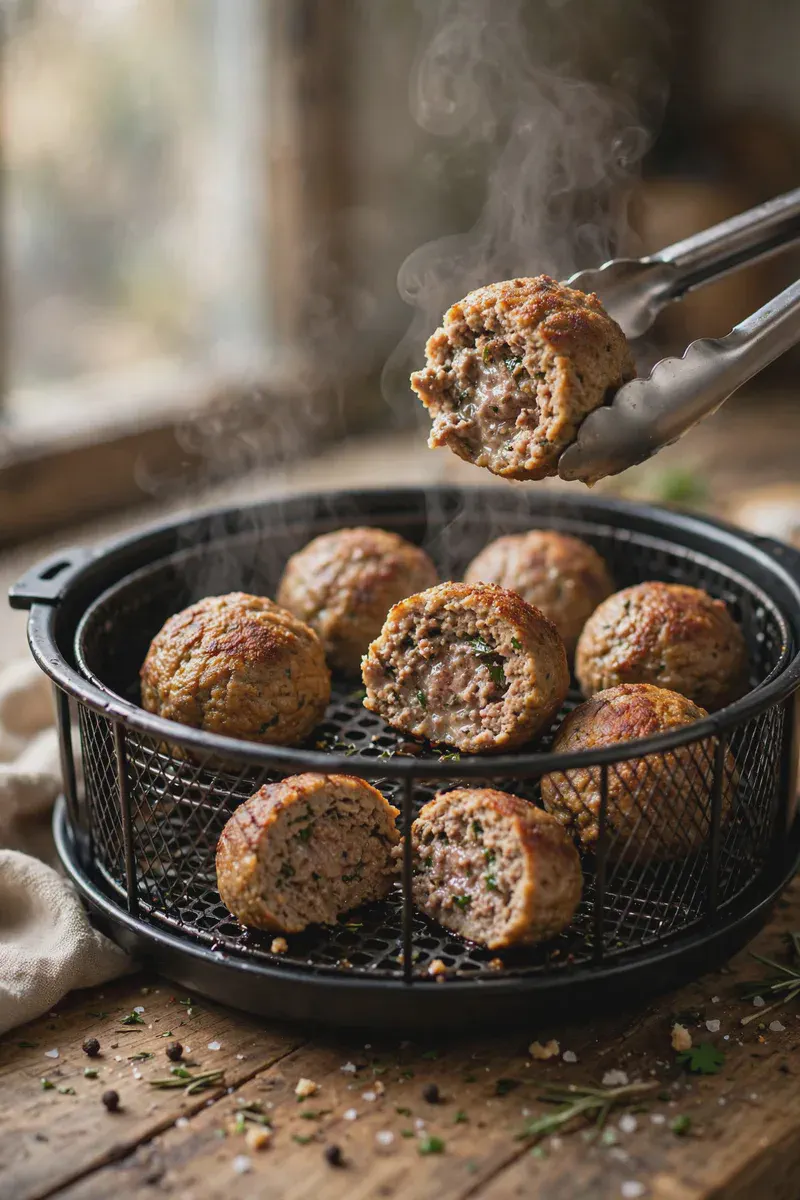
Yes. Roll the meatballs to a size you can repeat, set them in the basket with space around each one, and cook at 375°F (191°C). Small balls about 1 inch across need 8 to 10 minutes. Balls about 1.5 inches across need 10 to 13 minutes. Big balls about 2 inches across need 13 to 16 minutes. Beef and pork are done when the centre reads 160°F (71°C). Chicken and turkey need 165°F (74°C). Shake the basket once partway through so another side of each ball gets the heat.
A skillet asks meatballs to sit in their own fat, and it browns the side that touches the pan while the rest waits for a turn. The basket surrounds each ball with moving heat, so the outside colours on every side while the fat renders and drips down through the holes and away from the meat. There is no pan of hot fat spattering the stove, and no oven heating the whole kitchen for a food that cooks in about twelve minutes. What the basket asks in return is honesty about size, because with round food the diameter writes the schedule.
Diameter decides the minutes
Heat reaches the centre of a meatball by travelling inward from the surface, and a ball that is twice as wide gives that heat much farther to go. That is why a single time for meatballs means very little until the size is named. Roll the batch to one size as closely as you can, using a scoop or a spoon and then your hands, so the whole basket finishes together. A mixed batch forces a choice between small balls cooked too long and large balls pulled too soon.
| Meatball size | Heat | Time |
|---|---|---|
| About 1 inch across | 375°F (191°C) | 8 to 10 minutes |
| About 1.5 inches across | 375°F (191°C) | 10 to 13 minutes |
| About 2 inches across | 375°F (191°C) | 13 to 16 minutes |
Treat the times as estimates and start checking a couple of minutes before the early end. The mix matters as well as the width. Balls made with lean poultry dry out faster than balls made with beef that carries more fat, so poultry batches deserve the earlier check even at the same size. Machines also vary in how hot they run at a given setting, and a full basket cooks a touch slower than a small one.
The thermometer ends the guessing
Colour is a poor witness with ground meat. A meatball can look deeply browned while the centre still lags behind, and a pale ball can be cooked through. Probe the centre of the largest ball in the basket, pushing the tip into the middle of the meat. Beef and pork are done at 160°F (71°C). Ground chicken and ground turkey are done at 165°F (74°C). A mix that includes poultry follows the poultry number, because the strictest meat in the ball sets the target.
Pull the basket when the reading lands on the target rather than past it. Ground meat dries quickly once it passes its number, and the slide from juicy to firm and crumbly can happen in about two extra minutes at this heat. Let the finished balls sit for about 3 minutes before serving. The juices settle during the rest, and a ball cut open right away loses more of them onto the plate.
Room to brown, and one good shake
Browning needs dry surfaces and moving air, and both vanish when balls sit pressed against each other. Leave a gap around every ball, roughly the width of a finger, and cook a second batch when the batch is large. Crowded balls steam where they touch, and the touching spots stay grey while the exposed spots colour.
At the halfway mark, shake the basket with a firm short motion, or turn the balls with tongs if they feel delicate. Round food mostly rolls rather than flips, and that roll is the point. The side that sat on the basket floor has been shielded from the air, and rolling brings it up into the heat. Balls that stick as you shake them need another minute before you force them. Protein bonds to hot metal early in a cook and lets go as the surface browns and firms, which is also the core of why food sticks to an air fryer basket.
Frozen balls run on a longer clock
Balls bought frozen come in two kinds, and the two kinds do not share a time. Raw frozen meatballs cook at 375°F (191°C) for about 14 to 18 minutes depending on size, shaken once partway through, and they finish on the same thermometer numbers as fresh ones. Balls that were cooked before freezing only need to heat through and brown, and they take about 9 to 12 minutes at the same heat, until the centre is hot throughout.
Skip the thaw. Frozen balls hold their shape in the basket and cook evenly from frozen as long as each one sits with a gap around it. Balls fused together in a clump need to be pulled apart before cooking, since a clump cooks like one oversized ball with a cold middle. Use two forks or a knife on a stable board to separate them, and keep your fingers clear while you work.
Sauce belongs at the end
A sugary sauce painted on at the start gets ten minutes to scorch against the heat before the centre of the ball is done, and sauce pooled in the basket burns onto the floor. Cook the balls plain, warm the sauce in a pan on the stove, and tumble the hot balls through the sauce in a bowl once they are cooked. The sauce clings to the browned surface, tastes fresh rather than burnt, and the basket stays much easier to clean.
Leftovers keep in the fridge for 3 to 4 days in a sealed container, and they should reach the fridge within 2 hours of cooking. The basket is a kind route back for them as well, and reheating leftovers in an air fryer covers times for food like this. Fatty batches leave a pool of rendered fat under the basket, so pour it off into a container once it cools a little rather than sending it down the sink, and wash the basket while it is still warm. The full routine lives in how to clean an air fryer.
Size them evenly, trust the probe over the colour, and the basket turns out meatballs with a browned outside and a centre that is still juicy. Most of the cook is the machine working while you warm the sauce, and dinner lands about fifteen minutes after the balls do.