The Story
The short answer
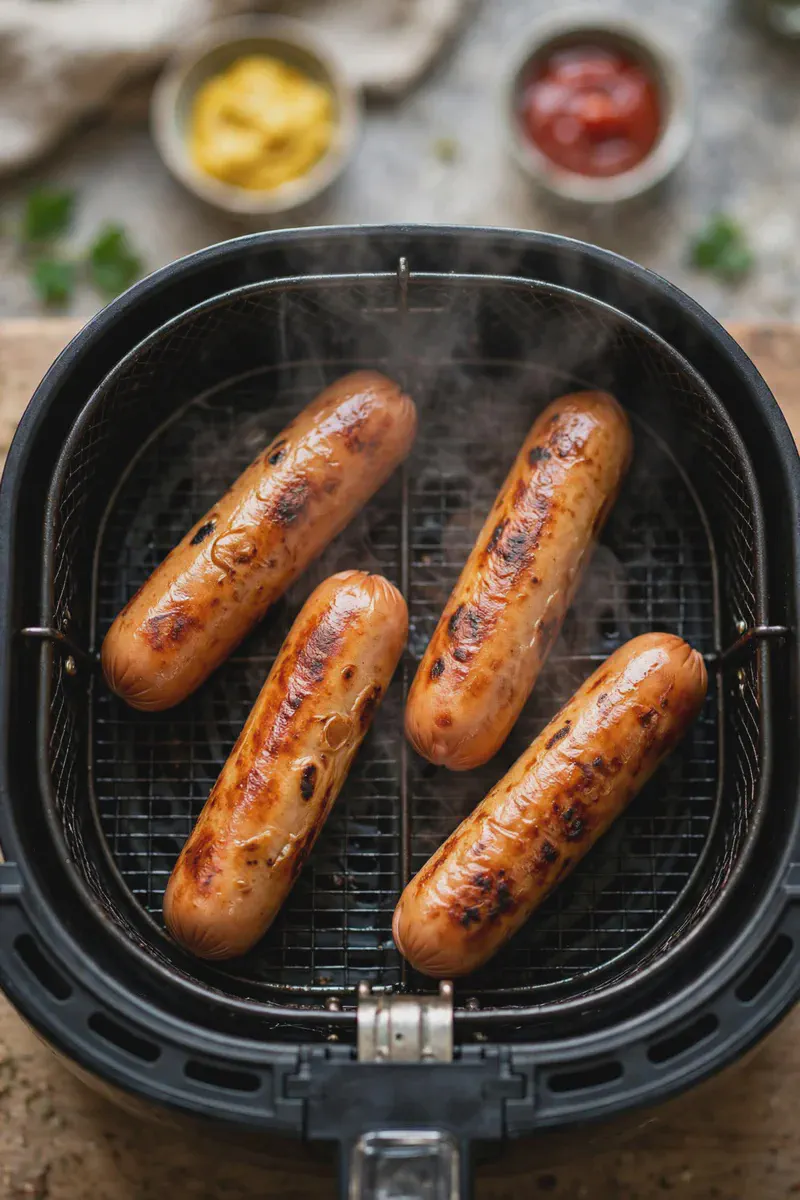
Yes. Lay the hot dogs in the basket in one layer and cook at 390°F (199°C) for 5 to 7 minutes, rolling them over at the halfway mark. They are ready when the casing looks taut with light blistering and the centre is steaming hot all the way through. A thermometer pushed in through the end of a dog should read at least 140°F (60°C). Frozen dogs need gentler heat and more time, 380°F (193°C) for 9 to 11 minutes.
Hot dogs sit in an odd spot in the kitchen. The package version is already cooked, so the work is not really cooking at all. The work is heating the centre through while giving the outside the browned, snappy finish a grill gives it. A microwave manages the heating and none of the finish. The casing stays soft, the dog can turn rubbery in spots, and the centre heats unevenly. The basket does both jobs at once, in about the time the microwave takes to disappoint you.
The job is browning, not cooking
Because the meat is precooked, nothing inside the dog needs to reach a raw meat target. What needs to happen is simpler. The centre has to get properly hot, and the surface has to dry out enough to brown. A thin film of fat sits under and on the casing, and hot moving air renders that fat while it dries the surface, so the casing tightens, blisters in places, and picks up colour. That tightening is where the snap comes from.
No oil is needed, and oil actually gets in the way here. The casing carries enough fat for its own browning, and a coat of extra oil leaves the surface greasy instead of crisp. One small step does matter, though. Dogs come out of the package wet with package liquid, and that water has to boil off before any browning starts. Patting each dog dry with paper towel costs ten seconds and buys you a surface that starts browning right away instead of steaming for the first two minutes.
Keep raw sausage links out of this timing entirely. Bratwurst, Italian sausage, and breakfast links start raw, and they play by different rules: pork and beef sausage needs to reach 160°F (71°C) in the centre, poultry sausage needs 165°F (74°C), and both need a longer cook than anything on this page. A hot dog that reads 140°F (60°C) and steams is done. A raw sausage at that same reading is not.
Fridge dogs cook fast, frozen dogs need a slower start
From the fridge, the method is short. Pat the dogs dry, lay them in the basket with a bit of space between each one, and cook at 390°F (199°C). Roll every dog over at the halfway mark with tongs. Round food in a basket browns where it faces the heat, and a dog that never moves keeps a pale stripe along the side that sat down.
Frozen dogs ask for one change. Drop the heat to 380°F (193°C) and give them 9 to 11 minutes, rolling them twice along the way. At full heat the casing browns and blisters while the centre is still cold, because the outside of a frozen dog thaws and cooks long before heat reaches the middle. Slightly gentler heat narrows that gap. If the dogs froze together in a clump, cook the clump for 2 to 3 minutes, pull the basket, separate the dogs with tongs, and finish them in a single layer.
How long each kind takes
Treat these times as estimates and start checking at the early end. Dog size moves the time more than anything else, and machines vary in how hot they actually run at a given setting. Colour and a steaming centre settle it.
| Type of dog | Heat | Time |
|---|---|---|
| Regular beef or pork dogs, from the fridge | 390°F (199°C) | 5 to 7 minutes |
| Turkey or chicken dogs, from the fridge | 390°F (199°C) | 5 to 6 minutes |
| Jumbo dogs, from the fridge | 390°F (199°C) | 7 to 9 minutes |
| Regular dogs, from frozen | 380°F (193°C) | 9 to 11 minutes |
Turkey and chicken dogs sit at the short end on purpose. They carry less fat than beef or pork dogs, so they dry out sooner, and the last minute of the range is where they go from juicy to firm and a bit tired. Pull them as soon as the centre steams.
Buns belong at the end
A cold bun undoes good work. Once the dogs come out, put each one in a bun, set the filled buns back in the basket, and give them 1 to 2 minutes at 390°F (199°C). The bun warms through, the cut edges toast lightly, and the dog stays hot inside it. Watch this step closely, because bun surfaces brown fast and the line between toasted and scorched is about half a minute.
Cheese can ride along for that final minute. Lay a slice over the dog once it sits in the bun, and the heat of the dog melts it while the bun shelters the slice from the fan, which can lift loose cheese in an open basket. Mustard, onions, relish, and everything cold or wet goes on after the basket, at the table, so the bun you just toasted stays that way.
When the casing splits or the dogs dry out
A split casing means steam built up inside faster than the casing could stretch. It still tastes fine, but the fix for the next batch is lower heat, not less time alone. Drop to 370°F (188°C), add about a minute, and the dog heats more evenly with less pressure on the casing. Rolling the dogs a little earlier helps too, since no single side takes the full blast for as long.
Dry dogs almost always come down to one of two things. Lean dogs cooked to the far end of their range give up moisture they do not have to spare, so check them early. And dogs lose ground fast once they are cooked. The casing toughens as they sit in open air, and a dog that waits ten minutes for its bun is a lesser dog. Time the buns and toppings first, cook the dogs last, and serve them straight from the basket.
A basket of dogs also leaves the rest of an easy dinner within reach. The guide to frozen burgers in an air fryer covers the other half of that meal, and frozen french fries in an air fryer handles the side, with fries best run first since they want the longer cook.