The Story
The short answer
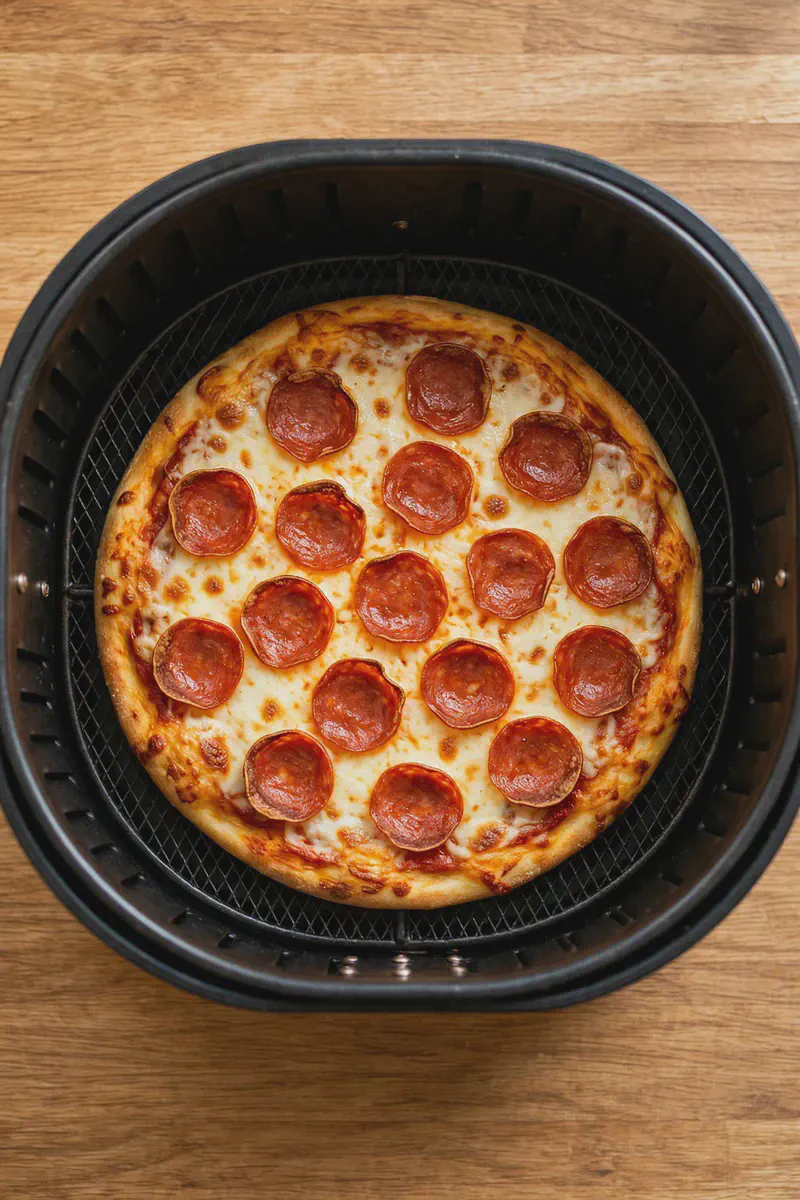
Yes, if the pizza fits flat. Cook it straight from frozen at 375°F (191°C) for 8 to 10 minutes for a regular personal pizza. Preheat the machine for 3 minutes first so the bottom starts crisping on contact. The pizza is ready when the cheese bubbles across the centre, the crust edge is golden, and the middle is hot all the way through. Thicker crusts want lower heat and more time, which the table below sorts out.
A frozen pizza in an oven is mostly a waiting exercise. The oven takes its time heating, then the pizza takes its time baking, and the bottom still often comes out softer than the box photo promised. The basket skips most of that waiting and puts hot moving air close to every surface at once. What changes is scale. The oven takes the large pizza from the freezer aisle without a thought. The basket takes only what fits inside it, and that single fact decides whether this method works for the pizza in your freezer.
Size comes before settings
Measure the inside of the basket, then measure the pizza. The pizza has to lie flat on the basket floor with a little room around the edge for air to get underneath, and the top of it has to sit clear of the heating element above. Most basket models take a personal pizza in the 6 to 9 inch range. Oven style models with a tray take a larger one, sometimes up to 10 or 11 inches.
A pizza that only fits when you bend it does not fit. Frozen dough pushed up at the sides cracks as it thaws, cheese slides toward the low spots, and the raised edges sit close enough to the element to scorch while the centre lags behind. A pizza that touches the basket walls all the way around has the same problem in a quieter form, because the air that should pass under the crust has nowhere to go. If the pizza in the freezer is a large one and the basket is a small one, the oven is not a defeat here. It is the right tool for that size, and the air fryer keeps its win for the smaller pies and for single servings.
Why the heat stays lower than the box says
The box directions were written for a big oven, where the pizza sits far from the heat source and the air moves slowly. Oven temperatures for frozen pizza often land at 400°F (204°C) or higher for that reason. In a basket, the element sits a few inches above the cheese and the fan pushes that heat straight down onto it. At oven temperatures the cheese can brown and toughen before the frozen centre of the crust has even thawed.
Dropping to 375°F (191°C) for a regular crust, and lower still for a thick one, gives heat time to travel down through the dough while the top melts at a pace that matches. The preheat matters for the same reason. A cold basket floor gives the underside a slow and damp start. Three minutes of empty running means the crust lands on hot metal and starts to set and crisp right away instead of steaming against a cold surface while the cheese races ahead above it.
Times for the crust in front of you
Treat these times as estimates and start checking at the early end. Thickness moves the time most, a heavy load of toppings slows the centre down, and machines vary in how hot they run at a given setting. The cheese and the crust settle the question in the end.
| Type of pizza | Heat | Time |
|---|---|---|
| Personal pizza, thin crust | 380°F (193°C) | 6 to 8 minutes |
| Personal pizza, regular crust | 375°F (191°C) | 8 to 10 minutes |
| Personal pizza, rising crust | 360°F (182°C) | 11 to 14 minutes |
| French bread or bagel pizza | 370°F (188°C) | 5 to 7 minutes |
Judge the finish in three places. The cheese should bubble in the centre and not only around the edges. The crust edge should be golden and feel firm when you slide a spatula under it and lift. The underside should be browned in spots and stiff enough that a slice does not flop when you lift it out. Use oven mitts, set the basket on a stable surface that can take the heat, and lift the pizza out with a wide spatula rather than tipping the basket over a plate, since a hot pizza slides fast and cheese side down is a miserable landing. If the centre still looks pale and soft while the top is done, the next section has the fix.
Light toppings can move in the fan
The fan that crisps the crust can also lift loose toppings. Toppings placed at the factory usually stay put, because they were pressed into the sauce and froze in place. Trouble starts with what gets added at home. Loose shredded cheese, spinach leaves, fresh herbs, and thin slices placed on top of a frozen pizza can lift, drift into a corner, or stick to the element, where they burn and smoke.
Press anything you add firmly into the frozen cheese before the basket goes in, so it is anchored when the fan starts. Give the pizza 2 minutes of cooking before you add anything very light, since cheese that has started to melt holds toppings far better than a frozen surface does. Save fresh basil and other delicate herbs for after cooking entirely. Wet vegetables such as mushrooms and peppers are better added in a thin layer or left off, because the water they release lands in the dough and works against a crisp bottom.
A pale bottom and a dark top both have a fix
A dark top with a soft centre means the heat is too high for the thickness of the pizza. Drop the setting by 25°F (14°C), add a few minutes, and the centre gets time to bake before the cheese colours further. A pizza sitting very close to the element browns fast for the same reason, so in tray models use a lower rack position when the machine offers one.
A pale and soft bottom usually means air could not move under the crust. Cook the pizza straight on the basket floor rather than on a solid tray, and if you want something under it to catch cheese drips, use a sheet of perforated parchment cut smaller than the pizza, following the same cautions as parchment paper in an air fryer. Cheese that escapes into the basket should be cleaned out once the machine cools, before it burns onto the floor and flavours the next cook, and how to clean an air fryer covers that job while the residue is still easy to move.
None of this asks much once the size question is answered honestly. A personal pizza that fits flat cooks in about half the oven time, with a firmer bottom than the oven usually manages at that size. It also pairs neatly with frozen french fries in an air fryer on the same night, with the fries cooked first because they want the longer run at higher heat.