The Story
The short answer
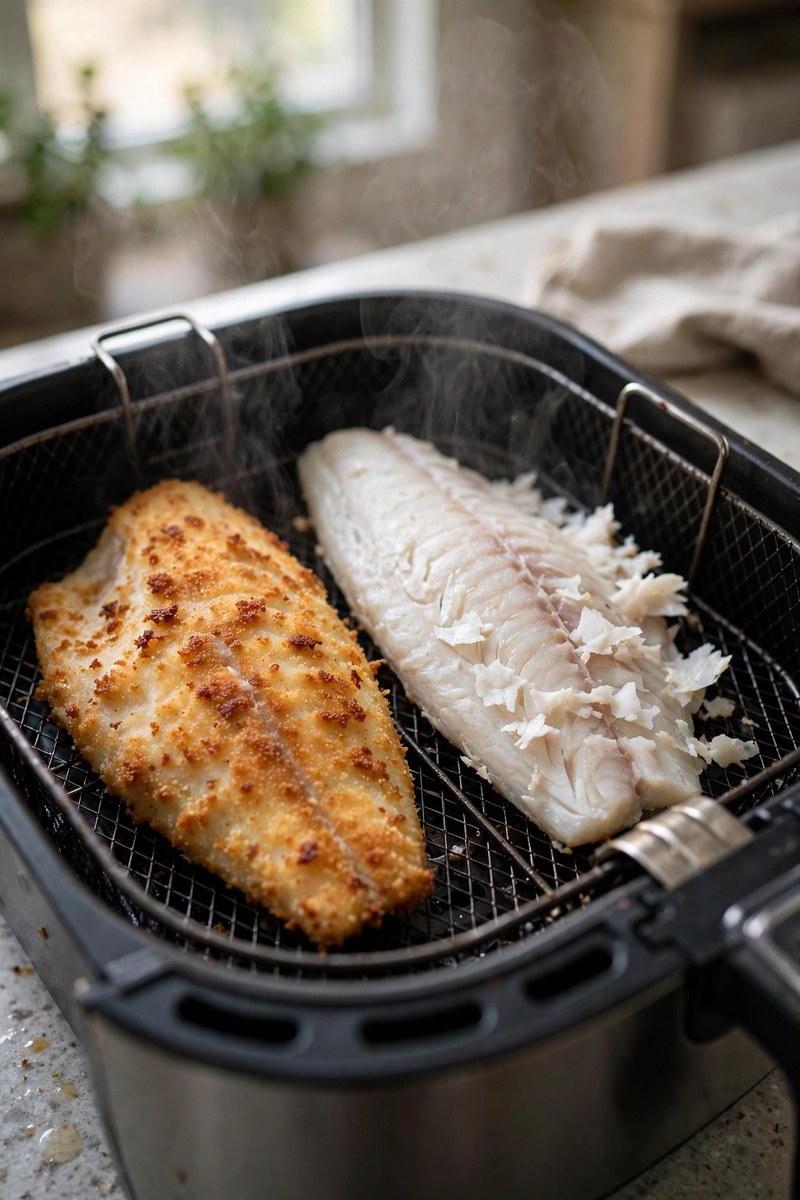
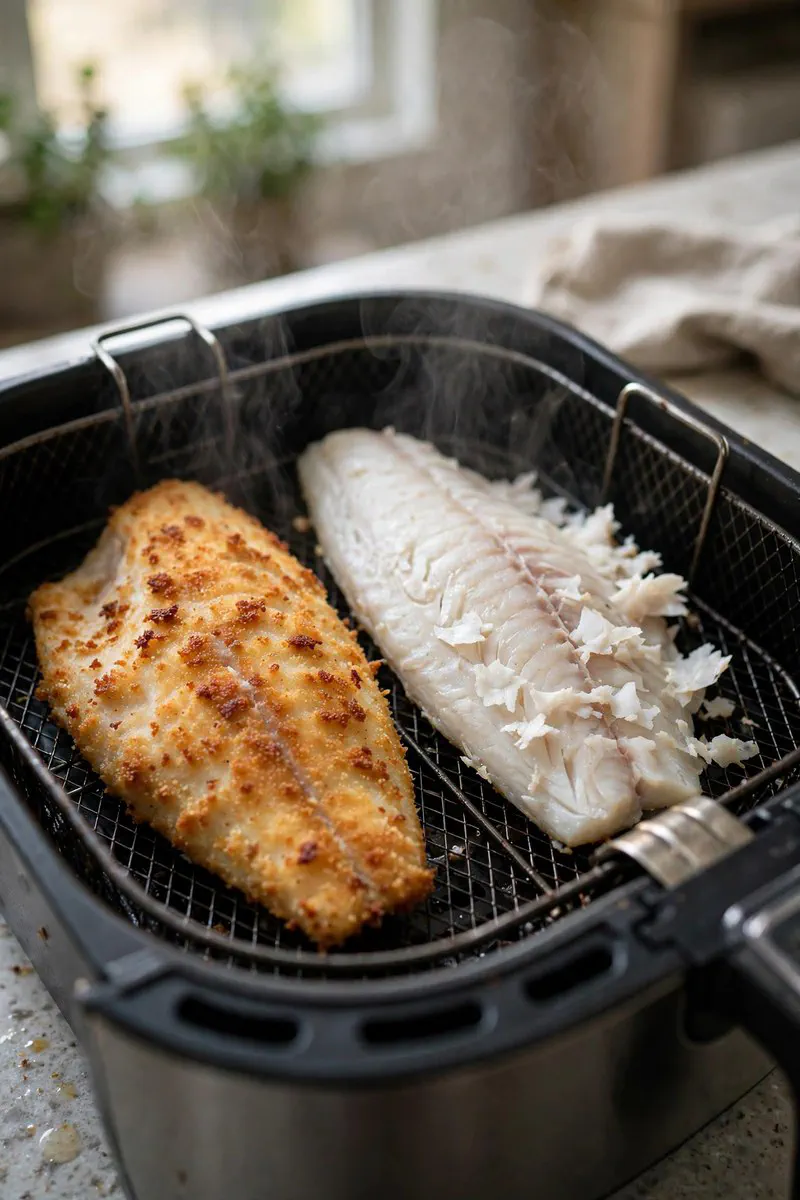
Yes. Put frozen fillets in the basket in one layer with space between them and cook at 400°F (204°C). Thin plain fillets of about half an inch need 8 to 10 minutes. Plain fillets of about 1 inch need 11 to 14 minutes. Breaded fillets need 10 to 16 minutes, turned once partway through. Fish sticks need 8 to 10 minutes. The fish is done when the thickest part reads 145°F (63°C) and the flesh turns opaque and flakes when you press it gently with a fork. No thawing is needed.
Frozen fish solves a specific problem. Dinner is close, the fillets are still solid, and soaking them in water or waiting on the fridge costs time you do not have. The basket handles the thaw and the cook in one run, because the hot air first melts the frost on the surface and then cooks the flesh underneath it.
The catch is that the surface and the centre move at different speeds. A coating can look deep gold while the middle is still cool, and a thin plain fillet can dry out while a thick one beside it is still catching up. The moves below are all about keeping those two clocks closer together.
Breaded fish and plain fish start differently
A breaded fillet arrives ready for heat. The coating is already seasoned and it protects the flesh while it crisps, so breaded fish goes straight from the freezer into a hot basket with nothing added. Extra oil sprayed on a dry coating can turn it pasty in spots, and seasoning sprinkled on frozen breading mostly falls off. If the box gives basket directions, start with those and treat them as a window to check in, since machines vary.
Plain fish needs a different opening. Salt and spices will not stick to a frosty surface, and oil brushed onto ice just pools. Cook plain fillets for about 5 minutes first, until the surface thaws and looks wet, then pull the basket out and season at that point. Pat the surface lightly with a paper towel, brush on about 1 teaspoon of oil per fillet, and add salt and spices such as homemade blackened seasoning, which suits cod and tilapia well. The seasoning lands on fish instead of ice, and it stays put for the rest of the cook.
Salmon portions follow the plain route, with the skin facing down when skin is present. Frozen salmon of about 1 inch needs 12 to 15 minutes in total. The guide to cooking salmon in an air fryer covers fresh portions in more detail.
Thickness sets the table, not the name on the bag
Cod, haddock, pollock and tilapia all cook well from frozen, but the species name tells you less than a ruler does. Heat has to travel from both faces to the centre, so a fillet twice as thick needs much more than a few extra seconds. Measure the thickest point before cooking, while the fish is still frozen, and pick the row that matches it.
| Kind of fish | Thickness | Heat | Time |
|---|---|---|---|
| Fish sticks | About half an inch | 400°F (204°C) | 8 to 10 minutes |
| Plain tilapia or sole | About half an inch | 400°F (204°C) | 8 to 10 minutes |
| Plain cod or haddock | About 1 inch | 400°F (204°C) | 11 to 14 minutes |
| Breaded cod or pollock | About three quarters of an inch to 1 inch | 400°F (204°C) | 12 to 16 minutes |
| Plain salmon portion | About 1 inch | 400°F (204°C) | 12 to 15 minutes |
Read the table as a place to start checking, not as a promise. A fillet with a thick middle and thin edges will have edges that finish early, which is normal for fish. A crowded basket adds minutes, because pieces that touch shield each other and trap steam. When fillets in one batch differ a lot in thickness, pull the thin ones when they read done and give the thick ones the extra minutes they need.
Turn breaded fish once, and be patient with plain fish
Breaded fillets benefit from one turn. Cook them until the coating has set and looks dry on top, usually around the 6 to 8 minute mark, then turn each piece once with a thin spatula slid fully under the coating. Turning too early tears a coating that is still soft, and turning more than once gives it more chances to break. After the turn, the second side crisps faster than the first did, so start checking a couple of minutes before the table time ends.
Plain fish asks for the opposite patience. A thawing fillet can stick lightly to the basket in the first minutes and then release as its surface dries and firms. Trying to turn it while it still clings can tear the flesh. If a plain fillet resists the spatula, give it 2 more minutes and try again. Many plain fillets do not need a turn at all when the basket lets air pass underneath them, and leaving them alone keeps the surface intact.
Work with a mitt on when you pull the basket out to turn or check fish, set the basket on a stable surface, and use two hands for a full load. Fish breaks easily, and a steady basket matters more than speed here.
Colour can finish before the centre does
Breading browns early. That is the whole trap with frozen breaded fish, because a dark coating invites you to call it done while the flesh inside is still translucent and cool. Colour is a cue to start checking, never the check itself.
Push a thin thermometer into the thickest part of the largest fillet, clear of the basket and centred in the flesh. At 145°F (63°C) the fish is cooked through. The flesh should also look opaque all the way to the middle and separate into flakes under gentle pressure from a fork. If the centre reads low, return the fish for 2 minutes and check again. Small additions protect a thin fillet from drying, and even a thick fillet gains little from a long extra round once it nears the target.
Pull fish as soon as it reads done. Fish carries very little fat in most white fillets, and the flesh goes from moist to dry in a short window past 145°F (63°C). Rest the fillets for about 2 minutes on a warm plate. The flakes set slightly, the juices settle back into the flesh, and the coating stays crisp if the pieces sit in one layer instead of a stacked pile.
Serve plain fillets with lemon and a sauce that brings the fat the fish lacks. Breaded fillets need less help, though a dip on the side keeps the coating dry until each bite. Either way, the method stays the same the next time a bag of fillets is all that stands between you and dinner. Start them frozen, season plain fish once its surface thaws, and let the centre reading call the finish.