The Story
The short answer
Yes. Frozen chicken breasts and boneless thighs go straight into the pot with liquid, no thawing first. Standard pieces cook at high pressure for 12 minutes, and smaller or thinner pieces take 10 minutes. Bone in thighs need longer, about 15 minutes at high pressure. The timer is only the middle of the job, though. A pot that starts with frozen chicken typically needs about 10 to 15 minutes to build pressure before the countdown begins, and a fuller or colder pot takes longer. The recipes on this site all finish with a natural release of 8 to 10 minutes. Plan on about 30 minutes from lid on to lid off, and confirm the thickest piece reads 165°F (74°C) before serving.
A frozen breast and a thawed breast cook by the same method in the pot. The difference is where the minutes sit. The frozen one spends the first stretch of the cycle thawing in the steam and hot liquid while the pressure builds, so the extra time lands at the front of the process instead of inside the countdown. That is why the recipes below add nothing exotic. They just count the build time honestly and keep the finish the same.
Three clocks, not one
Most frozen chicken questions fail because they treat the pressure cooking time as the whole story. There are three stretches to plan for, and only one of them appears on the display as a countdown.
| Batch, from the recipes on this site | At high pressure | Natural release |
|---|---|---|
| 4 frozen breasts, cooked plain for shredding | 12 minutes | 10 minutes |
| 1½ pounds of breasts or boneless thighs in chimichurri | 12 minutes, or 10 for smaller pieces | 8 to 10 minutes |
| 1½ pounds of breasts or boneless thighs in soy ginger sauce | 12 minutes, or 10 for smaller and thinner pieces | 8 to 10 minutes |
None of the figures in the table includes the wait at the start. A pot that starts from frozen typically needs about 10 to 15 minutes to build pressure for batches like these, and a fuller or colder pot takes longer. The thigh timings in the table are for boneless thighs, and bone in thighs need about 15 minutes at high pressure. Read every figure in the table as an estimate for planning. Piece thickness, pot size, and how full the pot is all nudge the finish, and the temperature check at the end is what settles it.
Separate pieces, in one layer
All three recipes start with the same two instructions, and they are the whole difference between chicken that cooks evenly and chicken that does not.
Separate any pieces that froze together. A solid block is the main way this method goes wrong: the outside pieces cook while the middle of the block is still thawing, so one serving is done and the next is not. If the pieces are stuck, run the sealed package under cold water for about 30 seconds and they will come apart.
Then lay the pieces in one layer, without overlap. A piece tucked under another is shielded from the steam and the hot liquid, and it lags behind the rest of the batch. One layer, a little space between pieces, and the whole batch finishes together.
Liquid first, sauce on top, no stirring
A pressure cooker cannot build pressure without thin liquid, and frozen chicken is no exception. The plain shredded chicken cooks in 1 cup of chicken broth or water. The sauced recipes still add broth alongside the sauce: 1 cup with the chimichurri, and ½ cup with the soy ginger sauce. The sauce alone is not what brings the pot to pressure.
Both sauced recipes pour the sauce over the chicken and say the same thing: do not stir. The sauce settles around the pieces, thins as the chicken gives off liquid during cooking, and flavours the meat from the outside in while it thaws and cooks. Dry seasoning works the same way. The shredded chicken takes its seasoning sprinkled over the frozen pieces before the lid goes on, and the flavour spreads through the batch when the meat is shredded and stirred back into the cooking liquid.
Expect the sauce in the pot at the end to be thinner than the sauce you poured in. Both recipes plan for that. The chimichurri liquid simmers on Sauté for 3 to 5 minutes to reduce, and the soy ginger sauce thickens with a cornstarch slurry, 1 tablespoon of cornstarch stirred into 2 tablespoons of water, for 2 to 3 minutes. The chicken comes out first, rests, and goes back into the finished sauce.
Let the pressure fall on its own
Every recipe here holds a natural release of 8 to 10 minutes after the countdown ends, and the plain shredded chicken recipe is blunt about why: skipping it costs tenderness. During those minutes the chicken sits in the hot cooking liquid while the pressure drops, finishing gently instead of being jolted by a sudden vent. Only after the natural release do you turn the valve to venting, let the last of the steam out, and open the lid once the pin has dropped.
Count the release as cooking time when you plan dinner. It is in the 30 minute totals the recipes carry, and leaving it out of your plan is how a 12 minute cook turns into a surprise.
The thermometer makes the final call
Colour does not settle doneness, and in a dark sauce it misleads outright. Use a thermometer in the thickest part of the largest piece, with the probe clear of bone. The chicken is done at 165°F (74°C). If the centre reads low, seal the pot again, give the chicken a few more minutes at high pressure, and check again. A short second cycle is a normal part of cooking from frozen, not a failure of the method.
Once the chicken passes the check, the soy ginger recipe rests it for 5 minutes before slicing, which keeps the juices in the meat instead of on the cutting board. Shredded chicken gets stirred back into its cooking liquid for the same reason.
The three recipes that cook this way
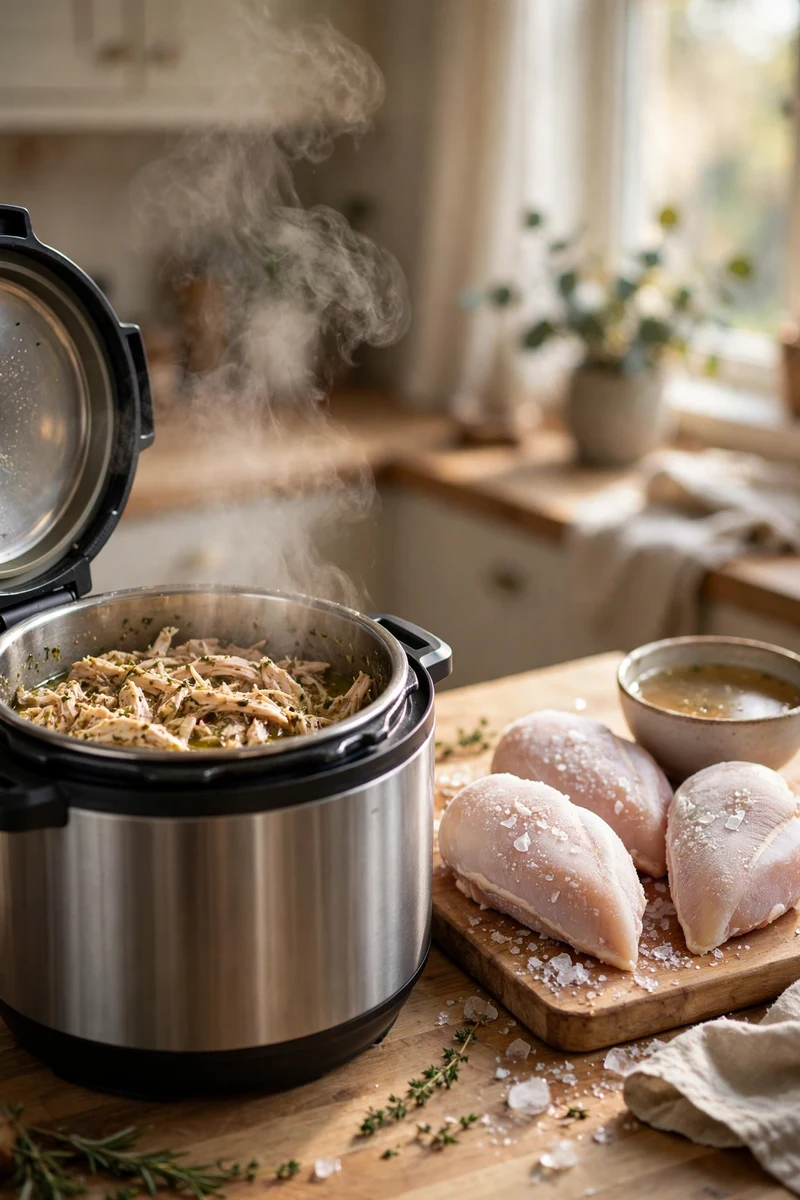
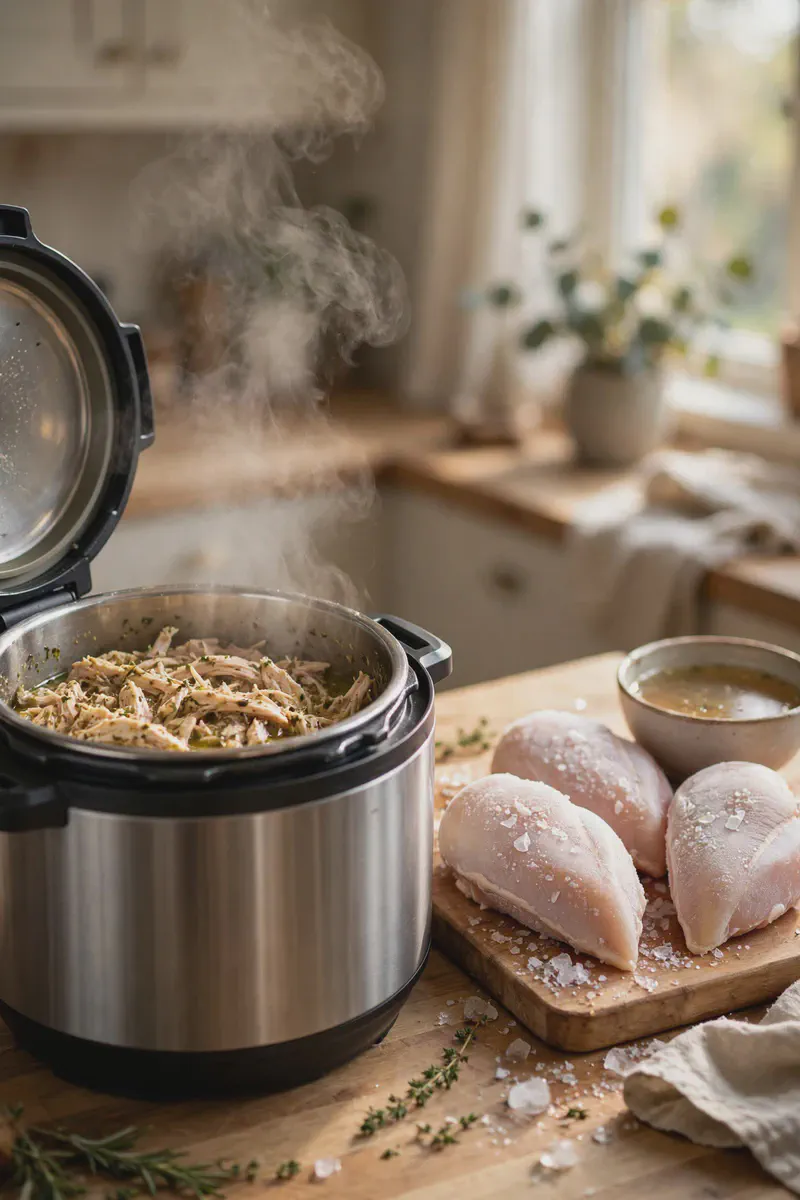
The plainest version is Instant Pot Frozen Shredded Chicken, built for meal prep: four frozen breasts, a cup of broth, seasoning on top, and meat that shreds straight into its cooking liquid for tacos, salads, and sandwiches.
Instant Pot Frozen Chimichurri Chicken runs the same timing with a cup of chimichurri and a cup of broth over 1½ pounds of chicken, then reduces the liquid at the end so the herby sauce coats the shredded meat.
Instant Pot Frozen Spicy Soy Ginger Chicken mixes its sauce in a bowl first, soy sauce, honey, rice vinegar, sesame oil, garlic, ginger, and sriracha, then pours it over the frozen chicken with ½ cup of broth and finishes with the cornstarch slurry for a glossy glaze.
All three sit in the frozen section of the Instant Pot chicken recipes collection, alongside the thawed chicken recipes that use the same pot.