The Story
The short answer
Yes. Eggs in the shell cook beautifully with no water and no pot to watch. Set the air fryer to 275 degrees Fahrenheit, lay cold eggs in a single layer, and cook for 9 to 10 minutes for a soft yolk, 11 to 13 minutes for a jammy yolk, or 14 to 15 minutes for a firm yolk. Move the eggs straight into a bowl of cold water with ice for at least 5 minutes when the timer ends. That cold bath stops the cooking and makes the shells far easier to peel.
It sounds like a trick, and the first time I tried it I stood by the counter waiting for something to go wrong. Nothing did. The eggs came out with set whites, yolks exactly where I wanted them, and shells that slipped off in big clean pieces. Now it is the way I cook eggs for salads, snacks, and ramen bowls, because the basket does the work while I get on with the rest of the meal. Eggs also fill my Fiesta Breakfast Wraps.
1. Eggs in the shell need no water at all
Why it matters: most of us learned to cook eggs in a pot, so skipping the water feels wrong. In truth the shell holds the egg in shape while hot air moves around it, and the heat reaches the yolk gently and evenly. There is no rolling boil to crack shells against each other, and no pot to scrub when you are done.
What to do instead: lay cold eggs straight from the fridge in a single layer in the basket, with a little space between each one. Set the temperature to 275 degrees Fahrenheit and start the cook from cold rather than heating the basket first. A cold start gives the eggs a gentler rise in temperature, which helps the whites set tender instead of rubbery.
2. The yolk you want decides the time
Why it matters: a minute in the basket changes an egg a lot. Pull it early and the yolk runs over toast. Leave it a few minutes longer and the same egg slices cleanly for a salad. Neither result is wrong, but mixing them up at breakfast is a sad start to the day, and the yolk keeps cooking from its own heat after the timer ends.
What to do instead: pick your result before you start, and set the timer for that row in the table below. For a soft yolk with a just set white, aim for 9 to 10 minutes. For a jammy yolk that is thick and glossy in the middle, aim for 11 to 13 minutes. For a firm yolk that is set all the way through, aim for 14 to 15 minutes. Large eggs are the size these times assume, so smaller eggs may finish a minute sooner.
3. The cold bath is part of the recipe
Why it matters: an egg holds a lot of heat inside its shell, and that heat keeps pushing the yolk toward firm while the egg sits on the counter. Skip the cold bath and your jammy egg quietly becomes a firm egg while you make toast. Warm eggs are also harder to peel, because the white clings to the shell and tears away in chunks.
What to do instead: fill a bowl with cold water and ice while the eggs cook, so it is ready the moment the timer ends. Use a spoon to move the eggs into the bowl and leave them for at least 5 minutes. Peel under a gentle stream of water or in the bowl itself, starting at the wide end, where a small pocket of air helps the shell lift away.
4. Cracked eggs need a small dish
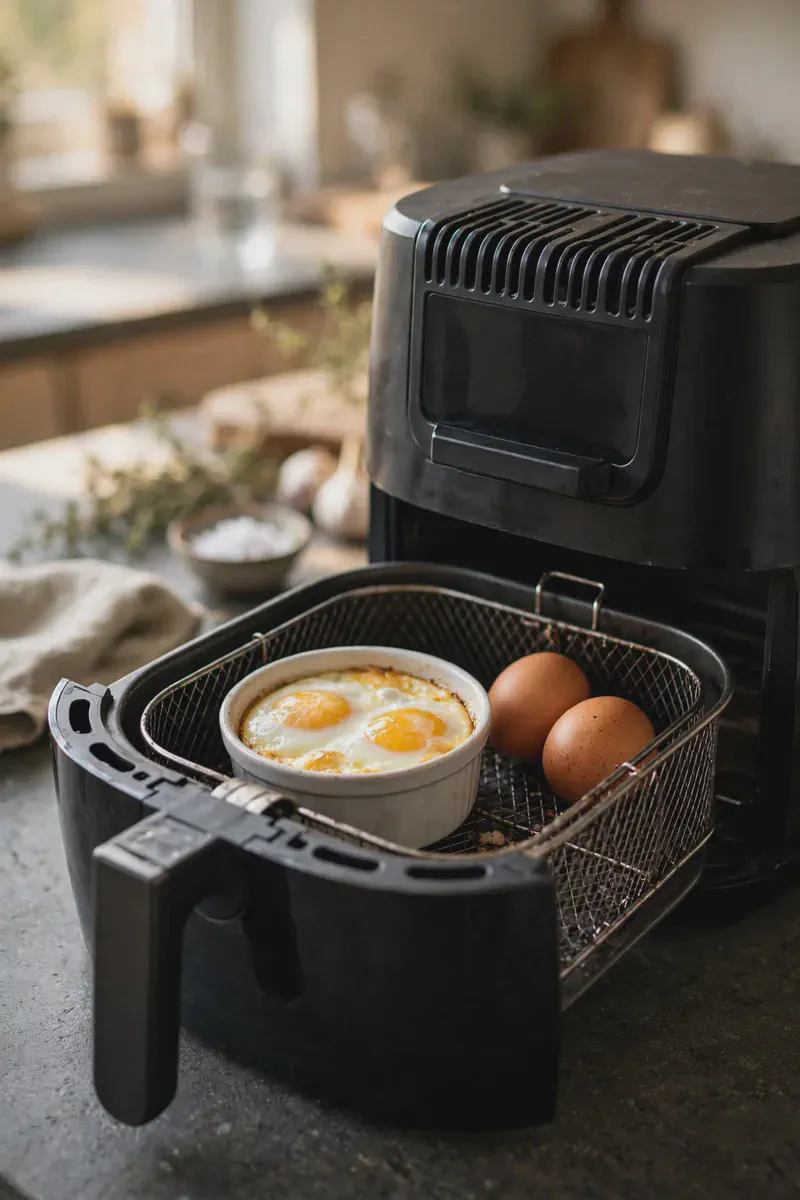
Why it matters: an egg with no shell has nothing to hold its shape, and the fan will push a loose egg around the basket while the edges cook faster than the middle. Cooked straight on the grate, it spreads, drips, and sets in a shape nobody planned. A dish turns the same egg into a calm and tidy breakfast. For a bolder cracked egg, try the Spicy Market Style Egg Pancake.
What to do instead: grease a small ramekin or any small dish that is safe for oven heat and fits in your basket with room for air to move. Crack one egg into the dish, set the air fryer to 330 degrees Fahrenheit, and cook for about 4 to 6 minutes for a soft yolk or 6 to 8 minutes for a firm one. Scrambled eggs work this way too. Whisk them in the dish first, and stir once partway through so they set evenly. Those scrambled eggs are lovely in Ricotta Eggs on Toast.
5. Test one egg before you cook a dozen
Why it matters: every model runs a little hotter or cooler than the next, and egg size, shell thickness, and the temperature of your fridge all shift the result. A full dozen cooked on a guess can leave you with a tray of yolks at the wrong stage, and eggs are too good to waste on a lesson you could learn with one.
What to do instead: cook a single test egg at the time for the yolk you want, cool it in the cold bath, and cut it open. If the yolk is softer than you hoped, add a minute for the full batch. If it is firmer than you hoped, take a minute away. Write the time that worked on the egg carton or a note by the machine, and every batch after that one is easy.
Quick reference
| Style | Temperature | Time | The yolk |
|---|---|---|---|
| Soft | 275 degrees Fahrenheit | 9 to 10 minutes | Runny, with a just set white |
| Jammy | 275 degrees Fahrenheit | 11 to 13 minutes | Thick and glossy in the middle |
| Firm | 275 degrees Fahrenheit | 14 to 15 minutes | Set all the way through |
| Cracked, in a dish | 330 degrees Fahrenheit | 4 to 8 minutes | Soft at 4 to 6, firm at 6 to 8 |
Yes, eggs belong in the air fryer, and for eggs in the shell it might be the simplest method of all. No pot, no boil to watch, and no guesswork once you know the time your own machine needs. Run one test egg, note the minutes, and you have breakfast, snacks, and salad toppings handled with almost no washing up.