The Story
The short answer
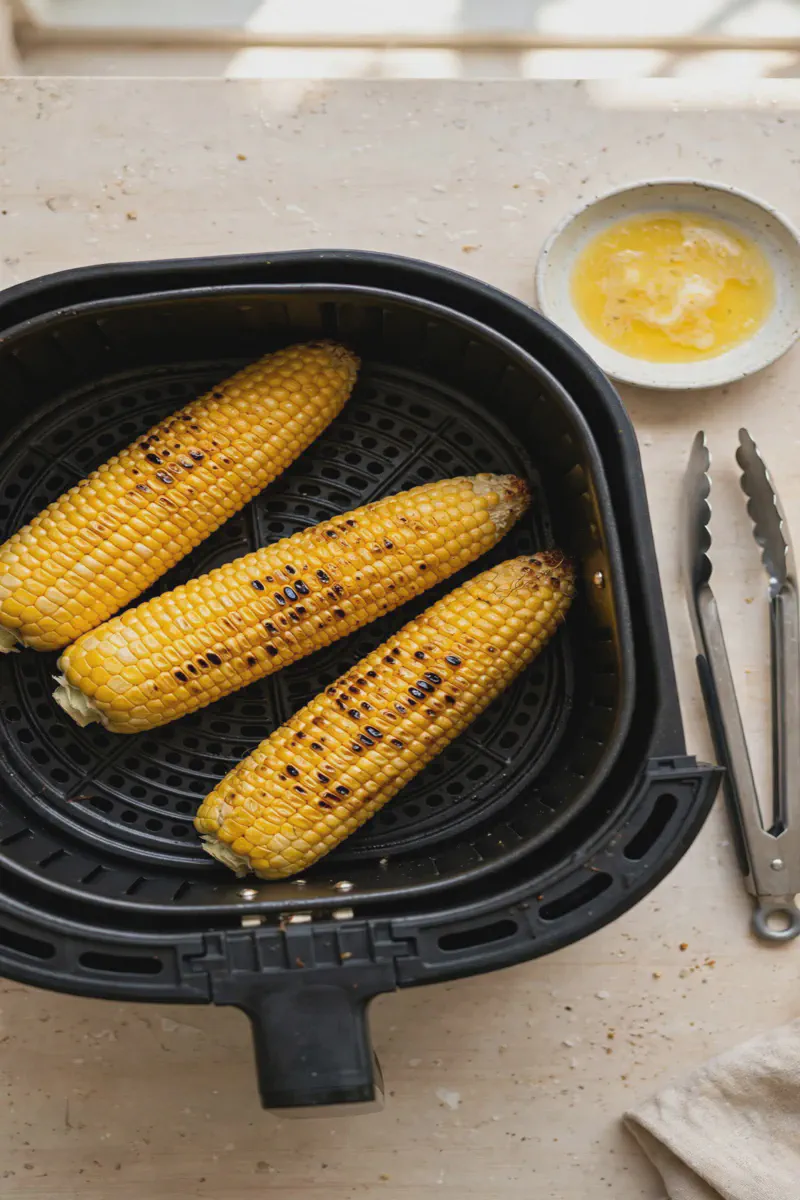
Yes. Husk the corn, brush it with a light coat of oil, and cook it at 400°F (204°C) for 10 to 13 minutes, turning each ear once at the halfway mark. The kernels come out tender and plump, with light browning in spots and a sweetness that reads stronger than boiled corn gives you. Frozen ears cook from frozen at 390°F (199°C) for 14 to 18 minutes. Size and crowding move the time more than anything else, and both get a section below.
Corn is where the basket quietly beats the big pot of water. Boiling asks you to fill a pot, wait for a rolling boil, and then watch the corn give some of its flavour up to the water. The basket skips the wait and cooks the corn in its own moisture, so what you taste at the end is mostly the corn itself. The catch is space. A pot takes six ears without complaint. A basket takes what fits in one layer, and pretending otherwise is how people end up with pale corn.
Count the ears your basket can actually hold
Lay the ears in the cold basket before you season anything. Each ear needs to sit flat on the basket floor with a gap of air around it, and the tops of the kernels need to stay clear of the heating element above. Most basket models hold two to four full ears at once. Oven style models with a wide tray hold more.
An ear that only fits corner to corner does not fit. It cooks pressed against the basket wall, the end near the wall steams against the metal, and the raised middle sits close enough to the element to scorch in a stripe while the rest lags behind. Ears stacked on top of each other fail in a plainer way. The lower ear is shielded from the moving air and steams in the drip of the upper one, so you get two different finishes in one batch.
The fix for a short basket is a shorter ear. Set a husked ear on a stable board, hold it steady with a towel in one hand, and cut it in half across the middle with a large heavy knife, pressing straight down and keeping your fingers well clear of the blade. Raw corn is dense and the knife can skate on the curved surface, so start the cut with a firm press rather than a sawing motion. Halved ears fit baskets that full ears never will, and they cook a few minutes faster as well.
Boiling cooks corn. This browns it a little
The difference between the pot and the basket is water. Boiling surrounds the corn with water, and some of the sugars in the kernels drift out into that water as they cook. Dry moving heat works the other way. Surface moisture leaves the kernels in the first minutes, the sugars stay where they are, and the spots that face the heat longest take on a light golden colour. The result sits between boiled corn and grilled corn. It is not charred, and it should not be. It is tender corn with a few browned kernels that add a roasted note boiled corn never has.
The oil coat earns its place here. A thin brush of oil over the husked ears helps the surface brown evenly and keeps the outer kernels from drying and wrinkling during the cook. It takes very little. Corn carries plenty of its own moisture, and ears swimming in oil drip into the basket and smoke. Salt can go on before cooking if you like, but it draws moisture to the surface as the corn sits, so ears salted well ahead of time brown a bit less than ears salted at the table.
Minutes by the ear in front of you
Treat these times as estimates and start checking at the early end. Ear thickness moves the time most, a crowded basket slows everything down, and machines vary in how hot they run at a given setting. A done ear has plump kernels that give a little when you press one with a fingertip, bright colour, and steam rising when you nick a kernel with the tip of a knife.
| Corn in the basket | Heat | Time |
|---|---|---|
| Fresh ears, cut in half | 400°F (204°C) | 8 to 11 minutes |
| Fresh whole ears, medium size | 400°F (204°C) | 10 to 13 minutes |
| Fresh whole ears, thick | 400°F (204°C) | 13 to 15 minutes |
| Frozen whole ears, from frozen | 390°F (199°C) | 14 to 18 minutes |
Turn every ear once at the halfway mark with tongs. Round food browns where it faces the heat, and an ear that never moves keeps a pale band along the side that sat down. Thick ears benefit from a second turn near the end, a quarter turn each time, so three sides see the heat instead of two. When the timer ends, lift the ears out with tongs onto a plate set on a stable surface, and use oven mitts if you need to steady the hot basket. The ears stay hot enough to burn fingers for several minutes after they come out.
Butter waits until the corn comes out
Butter before cooking sounds efficient and mostly wastes the butter. At 400°F (204°C) the milk solids in butter brown fast and can turn bitter and speckled on the kernels, and much of the butter melts and runs off the curved ear into the basket before the corn is even done. Oil handles the cooking. Butter handles the eating.
Brush melted butter over the hot ears the moment they leave the basket and it melts down between the kernels instead of pooling in the drip tray. Salt at the same moment, while the butter gives it something to cling to. From there the seasoning can stay plain or borrow the direction of street corn enchiladas, with lime, crumbled cheese, and a dusting of chili over the buttered ears. Delicate fresh herbs go on at the table too, since the fan and the heat together wilt and scatter them during a cook.
Frozen ears, pale kernels, and shrivelled kernels
Frozen corn on the cob goes in straight from the freezer, the same rule that governs frozen vegetables in an air fryer. Give frozen ears a touch less heat and more time, 390°F (199°C) for 14 to 18 minutes, and turn them twice. Frozen ears release water as they thaw in the basket, and slightly gentler heat lets the centre catch up before the outer kernels colour too far. Skip the oil until the surface has dried partway through the cook, then brush it on when you make the second turn, since oil brushed onto frost mostly slides off.
Pale corn with no browning at all usually traces back to crowding or to wet ears. Ears that go in damp from rinsing, or ears packed tight against each other, steam for the first half of the cook and run out of time before browning starts. Pat husked ears dry, leave the gaps, and cook a second batch rather than a stacked one.
Shrivelled, wrinkled kernels mean the corn stayed in too long. Corn gives up moisture for as long as it sits in hot moving air, and past the tender point the kernels start to dry, wrinkle, and chew tough. Pull the next batch two minutes earlier and check by pressing a kernel rather than by colour alone, since browning keeps deepening after the kernels are already done.
None of this needs a pot on the stove or a grill lit outside. Two to four ears at a time, ten minutes or so, and the corn comes out tasting more like itself than the boiled version does. For a bigger group, cook in batches and hold the finished ears wrapped in a clean towel while the next round runs. They stay hot, and the last batch still gets its browning.