The Story
The short answer
Yes. Trim the stem ends, cut each sprout in half through the stem, toss the halves with oil and salt, and cook at 375°F (191°C) in one layer. Medium sprouts cut in half take 15 to 18 minutes. Put the flat faces down for the first half of the cook, then shake the basket and finish until the cut faces look deep golden and a knife slides into the thickest centre with only slight resistance. Small sprouts finish a few minutes sooner. Large sprouts do better cut into quarters.
Sprouts ask for a different approach than most vegetables in the basket. A sprout is not a loose pile of leaves. It is a tight ball of leaves wrapped around a dense core, and that core is the slowest part to cook. The outside can look ready while the middle still tastes raw and sharp. Almost every choice in this cook comes back to that one fact. You are giving heat a shorter path to the centre while the outer leaves brown, and those two jobs pull in opposite directions if you rush them.
Halving does more than make the pieces smaller
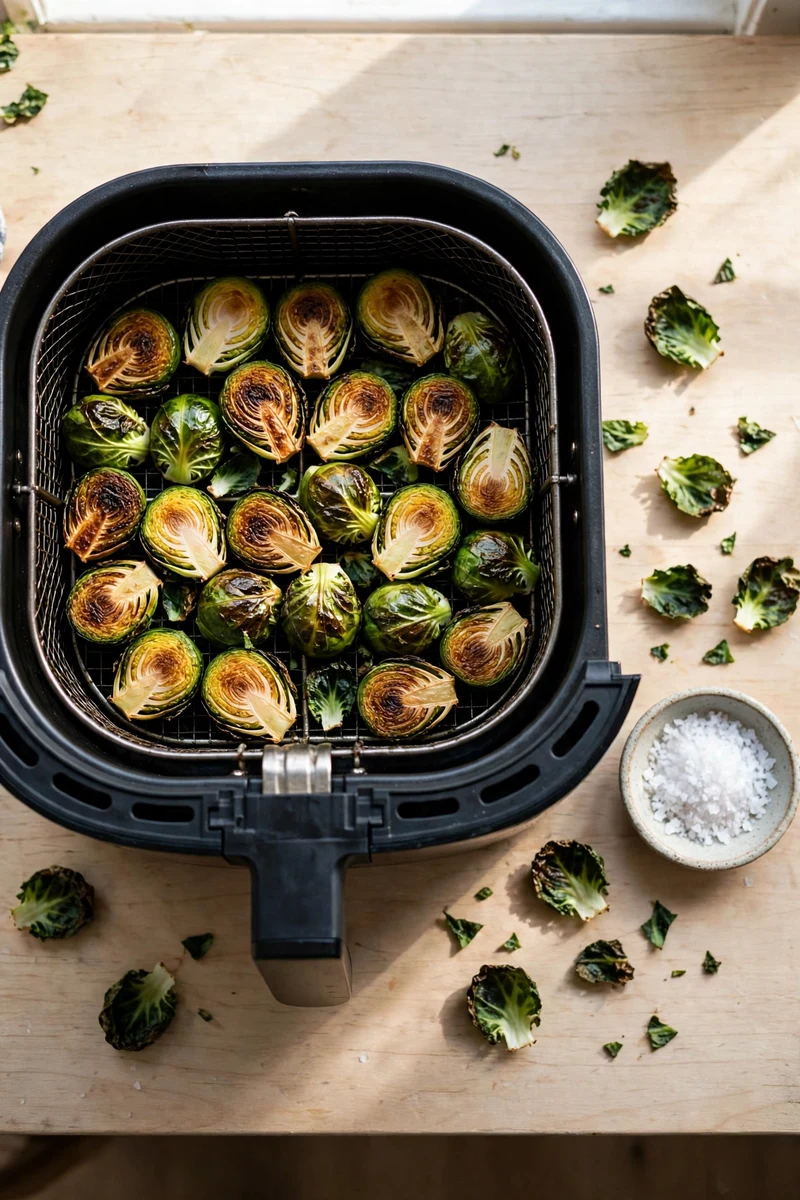
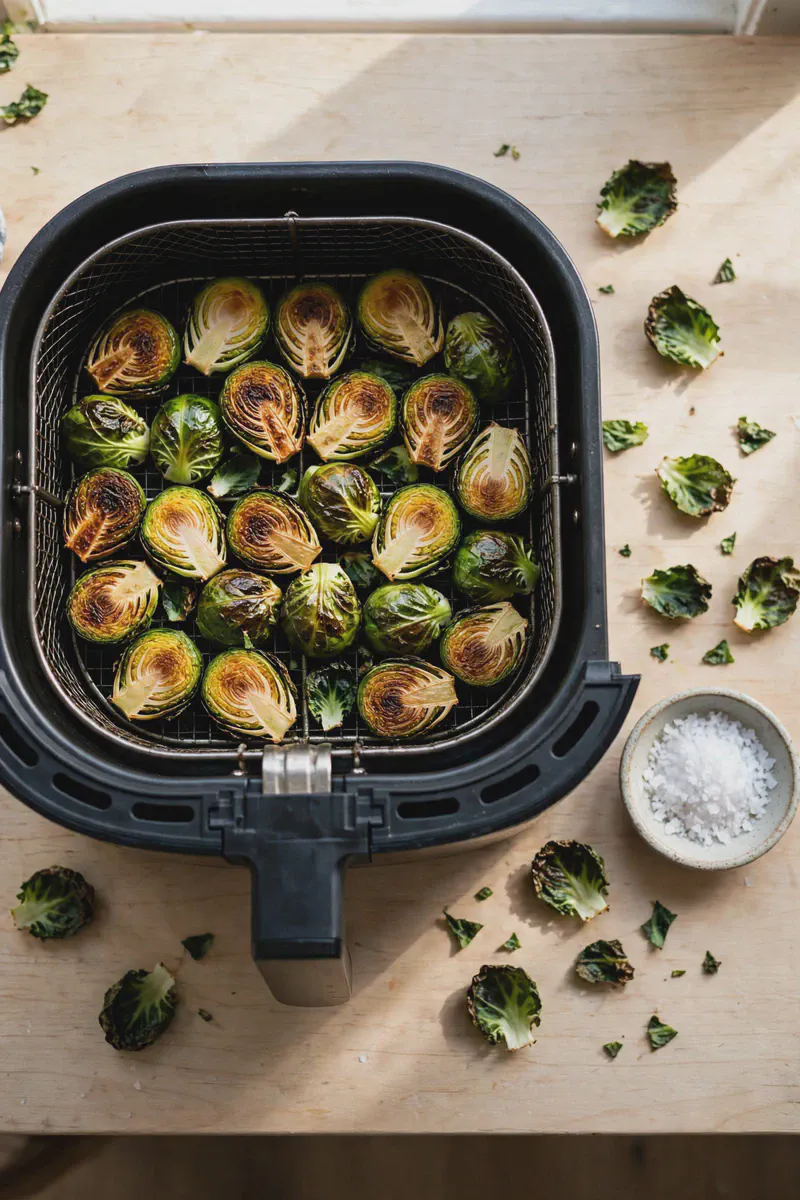
Cutting a sprout in half through the stem does two things at once. It opens the dense core to the hot air, so the centre softens in the time the outside needs to brown. It also creates a flat face, and a flat face browns in a way a round surface never quite matches. The sugars in that exposed face sit in steady contact with the heat and turn golden and sweet tasting, which is a large part of why roasted sprouts taste so different from boiled ones.
Keep a small piece of stem on each half. The stem acts like a hinge and holds the leaves together during cooking. A half cut so the stem falls away sheds its leaves in the basket, and those loose leaves cook on their own clock. Trim only the dry brown end of the stem before you halve the sprouts. Taking too much stem off has the same effect as cutting the hinge away.
Size still decides whether halving is enough. Sprouts about 1 inch across cook evenly as halves. Sprouts closer to 2 inches across have a core so thick that even a half can stay firm in the middle while its leaves darken, so cut those into quarters instead. Each quarter keeps a bit of stem, exposes more flat surface, and brings the thickest point much closer to the heat.
| Sprout size and cut | Time at 375°F (191°C) | What to check |
|---|---|---|
| Small, about 1 inch, halved | 12 to 14 minutes | Check at 12 minutes, because the leaves colour fast |
| Medium, about 1.5 inches, halved | 15 to 18 minutes | Shake at 8 minutes and test the thickest centre |
| Large, about 2 inches, quartered | 15 to 18 minutes | Turn the pieces so a fresh face gets the heat |
Those times assume a single layer and sprouts that start at fridge temperature. A crowded basket adds minutes, and a small batch in a hot basket can finish early. Treat the clock as a guide for when to start testing, and let the centres make the final call.
Why this vegetable cooks at 375°F and not 400°F
Most recent guides on this site cook at 400°F (204°C), and sprouts are the case for going lower. At 400°F the thin outer leaves scorch before heat reaches the core, and scorched leaves taste bitter in a way no seasoning covers well. At 375°F (191°C) the centres get the minutes they need while the cut faces still brown properly. The trade is a few extra minutes for a centre that is actually tender.
Placement helps the lower heat do its work. Set the halves in the basket with the flat faces down to start. Those faces get the longest contact with the hottest air in the basket and colour deeply during the first half of the cook. Shake the basket at about 8 minutes to move the pieces around and expose new surface, then let them finish without fussing. Shaking every few minutes breaks up that first browning and gives you paler faces for no gain, so one good shake is enough for most batches.
Oil still matters at the lower temperature. Toss 1 pound of sprouts with about 1 tablespoon of oil and salt in a bowl before they go in, so every face and leaf gets a light coat. Dry the sprouts after washing them first. Water trapped between the leaves has to steam off before browning starts, and sprouts hold more water in their layers than a smooth vegetable does. That trapped moisture is the same problem covered in the guide to why air fryer food turns out soggy, and it shows up here as soft leaves with pale faces.
Keep the loose leaves, but watch them
Halving always knocks a few outer leaves loose, and more fall free during the shake. Do not throw them away. Toss them in with the halves. In the hot air they turn into crisp chips with browned edges, and they add a contrast the tender halves do not have on their own.
Loose leaves also finish first, by a wide margin. A single leaf has almost no mass, so it can go from crisp to burnt while the halves still need minutes. Look for the leaves when you shake the basket. If they already look dark and crisp at that point, lift them out with tongs and set them aside, then scatter them back over the finished sprouts at serving. If they still look pale and flexible, leave them in and check again near the end.
Frozen sprouts need two stages
Frozen sprouts go in whole and full of ice, and oiling them at the start wastes the oil. It slides off the frozen surface and pools under the basket while the ice melts, and the sprouts steam in that melt water. Cook them plain at 375°F (191°C) for about 8 minutes first, until the frost is gone and the sprouts have softened enough to cut safely. Take them out, halve the large ones, toss everything with oil and salt, and return them to the basket for 10 to 12 more minutes, for a total of about 18 to 20 minutes.
Expect a softer result than fresh sprouts give you. Frozen sprouts were blanched before freezing and hold more water through the cook, so the centres turn tender but the faces rarely brown as deeply. The pattern is the same one described in the guide to putting frozen vegetables in an air fryer, and the frozen version still works well when fresh sprouts are not in the house.
Telling when the centres are ready
Colour alone misleads with this vegetable. The outer leaves can look dark and done while the core of the largest sprout in the basket is still firm and sharp tasting. Test the centres directly. Push the tip of a small knife into the thickest part of the largest half, right through the stem end. It should slide in with slight resistance and come out without raw crunch. Test more than one sprout if the batch mixes sizes, because the smallest halves finish well ahead of the largest ones.
Bitterness is usually a timing signal, not a sprout problem. A centre that tastes sharp and raw was undercooked, no matter how browned the leaves look. Give the batch 2 to 3 more minutes and test again. A batch that tastes bitter all through, centres included, stayed in too long and scorched, and that bitterness will not cook out. For the next batch, drop the temperature by 25°F and keep the time the same, so the centres finish before the leaves pass golden.
Serve sprouts soon after they come out. The crisp leaves soften as the sprouts sit in their own steam, and a covered bowl speeds that up. Spread them on a warm plate in one layer instead, and they hold their texture while the rest of dinner lands. The timing pairs well with the fillets in the guide to cooking salmon in an air fryer. Run the sprouts first and hold them on the plate while the salmon cooks, or run the salmon first and let it rest while the sprouts finish, and both reach the table hot.