The Story
The short answer
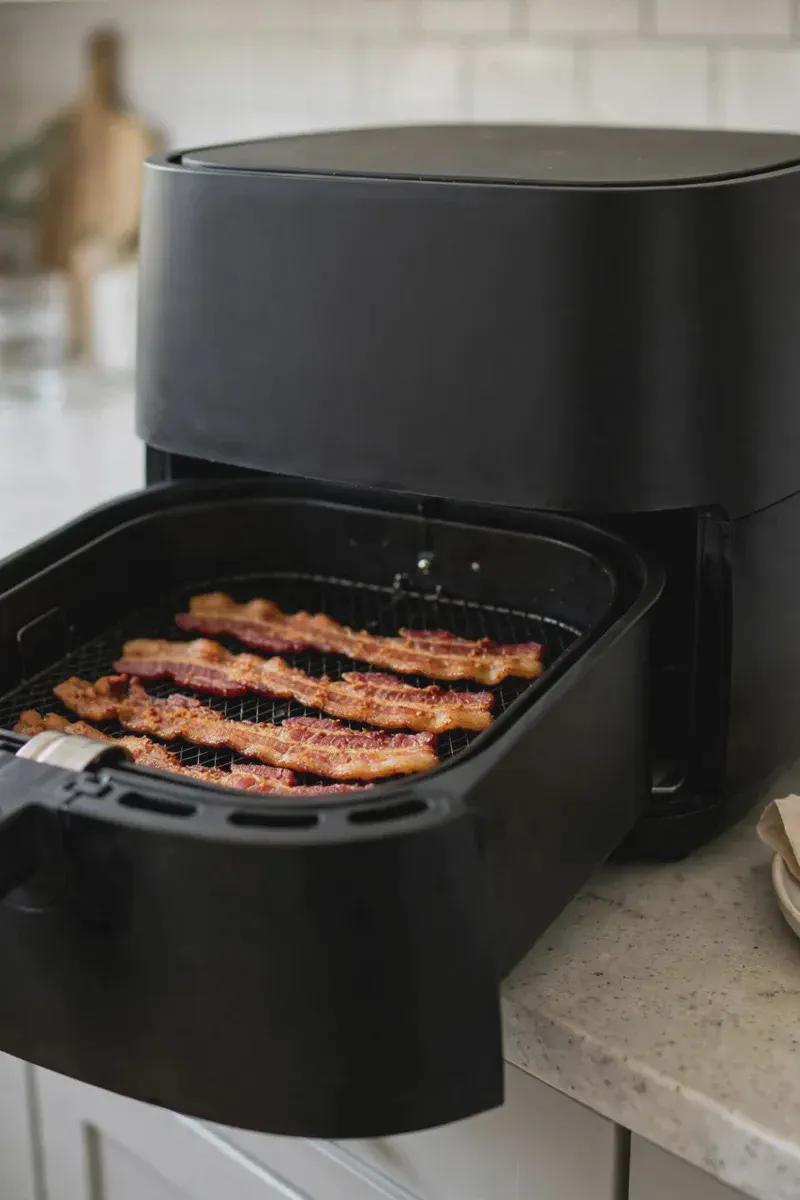
Yes, and for a small batch it is one of the best ways to cook it. Lay the strips in a single layer, set the air fryer to 350 degrees Fahrenheit, and cook regular strips for about 7 to 9 minutes or thick cut strips for about 9 to 12 minutes. You need no oil at all. Work in small batches, pour off the grease between batches so it does not smoke, and start checking early, because bacon goes from crisp to dark in about a minute.
Bacon on the stove tastes great and paints the whole cooktop with grease. Bacon in the oven is calm and easy, but it feels like a lot of fuss for four strips. The basket sits in the middle. The strips cook in their own fat, the fat drains away below them, and most of the splatter stays inside the machine. You just have to respect two things: space and grease.
1. Start with a cold basket
Why it matters: bacon that lands in a cold basket warms up gently, so the fat has time to render out before the lean part firms up. The strips stay flatter, cook more evenly, and give off less smoke than bacon that hits full heat at once. A hot start can curl the strips fast and darken the edges before the fat in the middle has melted.
What to do instead: lay the cold strips in the basket, then set the temperature to 350 degrees Fahrenheit and start the cook. Skip the preheat for this one food. It is the rare case where the slower start gives you the better result.
2. Give the strips room in a single layer
Why it matters: the air fryer cooks with moving hot air, and air cannot reach a strip that is buried under two others. Stacked strips steam where they touch, so you end up with crisp ends, soft middles, and pieces that stick together as the fat sets. A crowded basket also holds more grease in the drawer, which brings smoke sooner.
What to do instead: cook in a single layer, even if that means two batches. A slight overlap at the edges is fine, because the strips shrink as they cook and soon pull apart on their own. If your basket is round or small, cut the strips in half before cooking so they lie flat. Four to six strips at a time is a good working batch for most baskets.
3. Stay ahead of the grease
Why it matters: all that good rendered fat has to go somewhere, and in an air fryer it drips through the basket into the drawer below. As it pools and reheats, it can start to smoke, and a full drawer of hot grease is unpleasant to handle. The longer a batch cooks at a high temperature, the more likely the fat is to scorch and flavour the bacon with it.
What to do instead: keep the temperature at 350 degrees Fahrenheit rather than pushing it higher for speed. Pause once partway through a large batch, lift the basket out, and pour the grease into a container that can take heat. Let that grease cool until it turns solid, then scrape it into the garbage, never down the sink. Wipe the drawer with a paper towel between batches if you are cooking several rounds.
4. Check early and pull the strips a touch early
Why it matters: bacon changes fast at the end of the cook. A strip can look a little soft in the basket and still firm up on the plate as it cools and the fat sets. If you wait until it looks fully crisp in the basket, it may eat dark and brittle by the time it reaches the table. Thin strips are the least forgiving, and every model runs a little hotter or cooler than the next.
What to do instead: start checking regular strips at 6 minutes and thick cut strips at 8 minutes. Add a minute at a time until the colour looks right to you. Lift the strips out with tongs and lay them on a plate covered with paper towel. Give them a full minute to rest before you judge the texture, because that minute is where the crisp finish arrives.
5. Know when the oven is still the better tool
Why it matters: the basket shines for breakfast for one or two people. It is the wrong tool when you need bacon for a crowd, because the single layer rule means batch after batch, and the first batch is cold and limp by the time the last batch finishes. Chasing a big pile through a small basket wastes the one thing the air fryer is meant to save, which is time.
What to do instead: use the air fryer for small amounts, sandwiches, salads, and any night when you want a few strips as a topping. Use a large tray in the oven when you are feeding a table or cooking a full pack at once. Both methods render the fat well. The honest choice is the one that fits the amount on your counter.
Quick reference
| Cut | Temperature | Time | First check |
|---|---|---|---|
| Regular strips | 350 degrees Fahrenheit | 7 to 9 minutes | 6 minutes |
| Thick cut strips | 350 degrees Fahrenheit | 9 to 12 minutes | 8 minutes |
| Turkey bacon | 350 degrees Fahrenheit | 6 to 8 minutes | 5 minutes |
| Strips cut in half | 350 degrees Fahrenheit | 6 to 8 minutes | 5 minutes |
Yes, bacon belongs in the air fryer, as long as the batch is small and the grease stays managed. Start cold, keep the strips in one layer, pour off the fat, and pull them just before they look done. Do that and you get crisp bacon, a calm counter, and a basket that needs a wash rather than a rescue.