The Story
The short answer
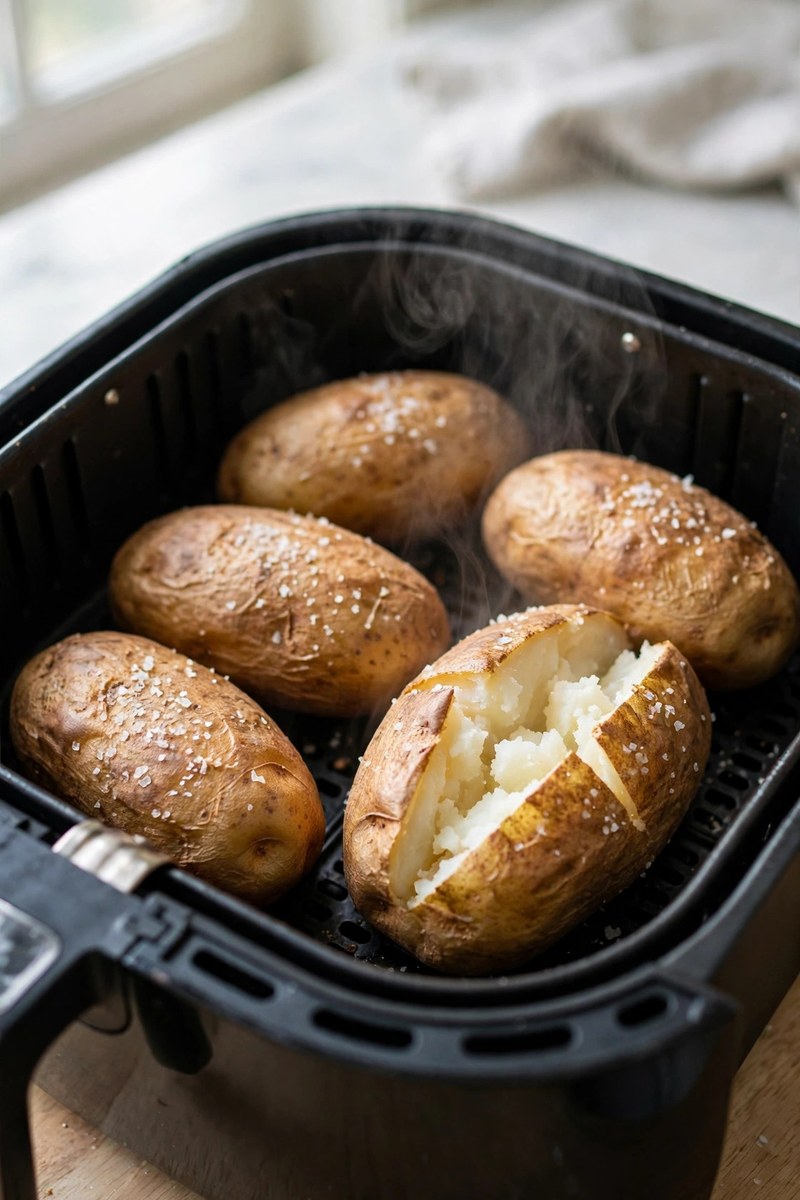
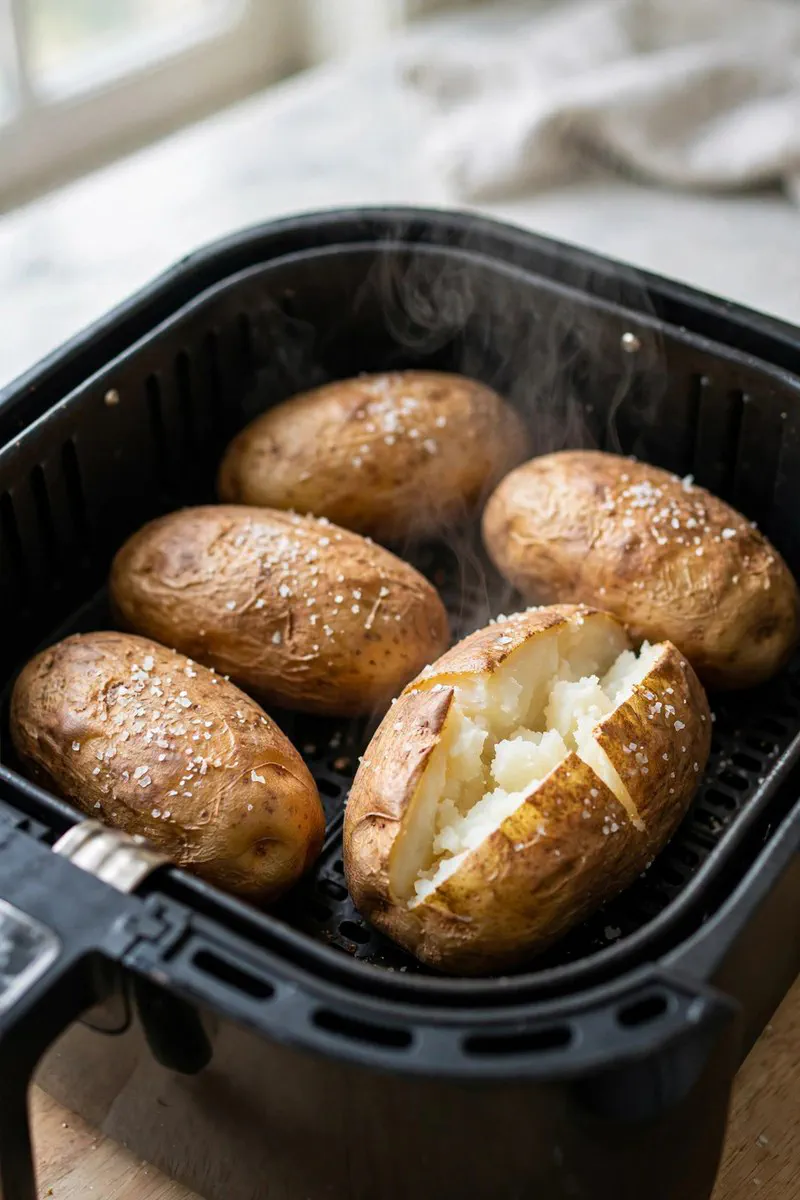
Yes. Scrub russet potatoes under water, dry the skins well, prick each one in several spots, and rub the outside with a little oil and salt. Cook them at 400°F (204°C) with space around each potato. A potato of about 5 to 6 ounces needs 30 to 35 minutes. A potato of about 7 to 8 ounces needs 35 to 40 minutes. A potato of about 9 to 11 ounces needs 40 to 50 minutes. A potato of about 12 to 14 ounces needs 50 to 60 minutes. Turn each potato once halfway through. The potato is done when the centre reads 205°F to 210°F (96°C to 99°C) and a thin knife slides to the middle with no resistance.
A baked potato asks very little of a cook and then takes its time about it. In an oven the skin slowly dries and crisps while the inside turns soft and fluffy, and the whole job can run past an hour for a large potato. The basket does the same work in less time, because the hot air moves around the potato on every side instead of sitting still around it. The skin dries faster, the salt stays where you put it, and the flesh cooks in its own steam inside the skin.
What the basket cannot do is rescue the wrong potato or a batch of mixed sizes left to guesswork. Variety decides the texture of the flesh and weight decides the minutes, and those two choices matter more here than any setting beyond the heat itself.
Start with russets and keep sizes close
Russets are the potato for this job. Their skins are thick enough to turn crisp and sturdy, and the flesh inside is starchy, so it bakes up dry and fluffy and separates into soft flakes when you open the potato. That structure is what holds butter and toppings without turning gummy.
Other potatoes still cook through, but they eat differently. A Yukon Gold has thinner skin and denser flesh, so the inside stays creamy and firm rather than fluffy. Red potatoes behave in much the same way. Save those for cutting up, as in air fryer mini potatoes and carrots, where small pieces and crisp edges are the point. For a whole baked potato with a skin you can eat and a centre you can fluff with a fork, stay with russets.
Size matters just as much. Two potatoes of the same weight finish together. A small potato beside a large one leaves you choosing between a small potato that sits in the heat too long and a large potato with a firm centre. Weighing is the surest way to group them, and a kitchen scale settles in seconds what guessing by eye gets wrong. When the sizes in the bag vary, cook the batch in groups of close weights rather than all at once.
Scrub, dry, prick, then salt the outside
Scrub each potato under running water and rub off any dirt with your hands or a brush. Potatoes grow underground and the skin is part of the meal here, so it earns a proper wash. Dry the skin fully with a towel or paper towel afterward. Salt sprinkled on a wet skin dissolves and slides off, and water left on the surface has to cook away before the skin can start to crisp.
Prick the skin 6 to 8 times with a fork, spread around the potato. Cooking builds steam inside the flesh, and the holes give that steam a way out. A potato splitting open in the basket is rare, but the pricks cost five seconds and remove the risk while also keeping the skin from ballooning away from the flesh in spots.
Rub each dry potato with about 1 teaspoon of oil, then scatter coarse salt over the skin and press it on lightly with your hands. The oil helps the salt stick and gives the skin a head start on crisping. Salt belongs on before cooking, not after. Salt added at the table sits loose on a dry skin and mostly ends up on the plate, while salt cooked onto the skin seasons the skin in every bite.
Weight sets the minutes
Heat stays at 400°F (204°C) for every size in the table. What changes is the time, and time follows weight because heat has farther to travel to reach the centre of a larger potato. Shape plays a part too. A long and narrow potato of 10 ounces can finish ahead of a round and thick potato of the same weight, because the thickest point of the round one sits farther from the hot air.
| Weight of each potato | Heat | Time |
|---|---|---|
| About 5 to 6 ounces | 400°F (204°C) | 30 to 35 minutes |
| About 7 to 8 ounces | 400°F (204°C) | 35 to 40 minutes |
| About 9 to 11 ounces | 400°F (204°C) | 40 to 50 minutes |
| About 12 to 14 ounces | 400°F (204°C) | 50 to 60 minutes |
Read those times as a window to start checking in, not as a finish line. Begin testing the largest potato about 5 minutes before the early end of its row. A crowded basket adds minutes, since potatoes that touch shield each other from the moving air, and a machine that runs cool adds a few more. Turn each potato once halfway through with tongs, working over a stable surface with a mitt on the hand that holds the basket steady, so the side that sat on the basket floor gets its share of the heat and the skin crisps all over.
The centre tells you more than the skin
Skin lies about doneness. It can look crisp and ready at the 25 minute mark while the middle of a large potato is still dense and firm, because the surface reaches crispness long before heat finishes the trip to the centre. Judge the potato at its centre instead.
Three checks agree with each other when a potato is done. The flesh gives under a gentle squeeze when you hold the potato in a mitt and press the sides. A thin knife or a skewer slides to the centre with no resistance at all. And a thermometer pushed into the centre of the largest potato reads 205°F to 210°F (96°C to 99°C). That reading is where the starch in the flesh turns fully soft and fluffy. A centre that stops short of it stays dense and a little chalky when you open the potato, no matter how good the skin looks.
If the centre lags, give the potato 5 more minutes and check again. Potatoes forgive extra minutes at this stage far more readily than most foods in the basket. The skin may darken a shade further, but the flesh inside stays moist in its own steam, so patience costs little and an underdone centre costs the whole potato.
Open it right away and fluff before toppings
A baked potato holds its texture best in the first minutes after it comes out. Move the potatoes to a plate with tongs, cut a slit along the top of each one, and push the two ends toward the middle so the flesh rises up through the opening. Run a fork through the flesh a few times to fluff it while steam escapes. Steam left trapped inside a closed potato keeps cooking the skin from within and softens the crisp surface you just built, so opening promptly protects both textures at once.
Butter goes in first, while the flesh is at its hottest, so it melts down through the fluffed centre instead of sitting in a pool on top. Toppings that want heat, such as grated cheese or leftover chili, can go on next and the potato can return to the basket at 400°F (204°C) for 2 to 3 minutes to melt and heat them through. Cold toppings belong on at the table, where the contrast does them good. A spoonful of sour cream onion dip in place of plain sour cream is an easy swap that brings the onion flavour along with the tang.
Leftovers need the fridge, not the counter
Let uneaten potatoes cool just until you can handle them, then put them in a sealed container in the fridge within 2 hours of cooking and use them within 3 to 4 days. Warm and moist flesh sitting out for hours is exactly the sort of place bacteria multiply, and cooling in the fridge slows that growth to a crawl. The general rules in the guide to reheating leftovers in an air fryer cover the same ground for other foods.
To reheat a whole chilled potato, put it in the basket at 350°F (177°C) for 10 to 15 minutes, until the centre is hot all the way through. A potato cut in half reheats in 6 to 8 minutes and gains crisp edges along the cut face at the same time. Skin that softened in the fridge firms up again in the moving air, and the flesh comes back close to its first day texture.
The method is mostly patience. The basket handles the heat, the salt handles the skin, and the centre reading handles the only real question, which is whether the middle has had enough time.